


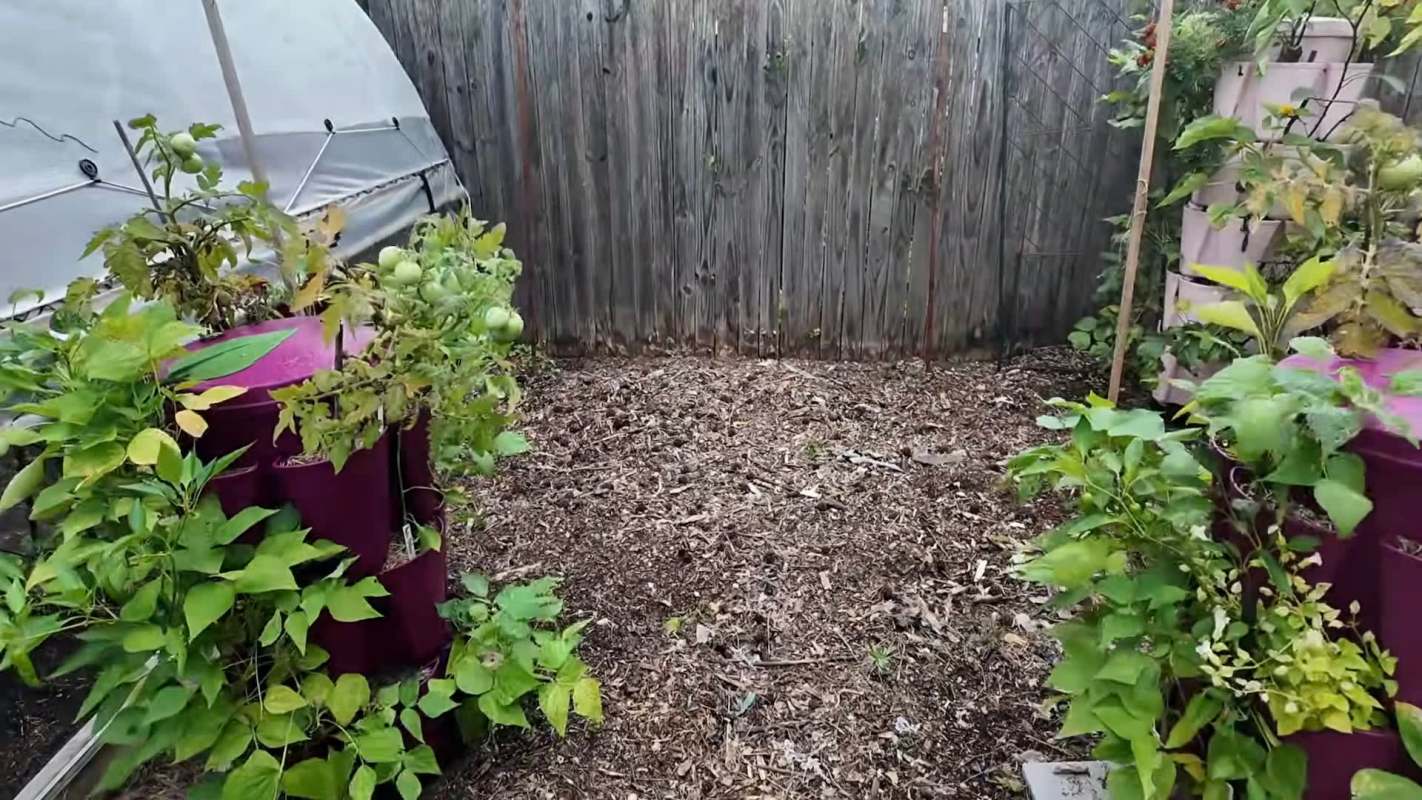
A late-July garden tour from Asia, the content creator behind Yellow Door Urban Homestead (@YellowDoorUrbanHomestead), offered the kind of reality check many home growers need this time of year: Some beds in her Virginia backyard were thriving, some plants were clearly done, and one free-roaming chicken was making a serious mess.
The update also showed how summer harvest and fall preparation can happen at the same time, with watermelons starting to develop, peppers still yielding, and cool-season seedlings already in progress.
What's happening?
On YouTube, Asia shared a walkthrough of her Zone 7B garden in Virginia.
The space includes in-ground areas, raised and no-dig beds, containers, vertical GreenStalk planters, and two greenhouses.
Much of her focus was already turning to fall. She had started seedlings for crops such as kale, collards, and broccoli, and said carrots and potatoes were next.
At the same time, she noted that the garden still looked good for the end of July despite a large harvest the day before, saying, "I grow 365 days a year here." Her plan is to replace fading summer containers with cooler-season crops.
TCD Picks » Quince Spotlight
💡These best-sellers from Quince deliver affordable, sustainable luxury for all




One highlight was spotting young fruit on a trellised vine, which led to her saying, "Look at that. That's a watermelon."
A more frustrating theme throughout the tour was Brooklyn, her chicken, who has been scratching through newly amended beds and digging in greenhouse soil.
Why does it matter?
It was also a look at the less polished side of gardening: flower plantings that fizzled, insect issues, crops started later than planned, and the steady work of rethinking how space is used.
Growing food at home can help cut grocery bills, especially for high-cost produce such as herbs, greens, and peppers.
It can also mean better-tasting food picked at peak ripeness instead of being shipped long distances.
There are health benefits as well. Gardening gets people moving, spending time outdoors, and building a routine that can support mental well-being.
Asia's tour also showed that growing your own food does not require a huge property — just a willingness to experiment with what fits your space and your household's needs.
What can I do?
Start small and grow what you actually eat. Herbs, lettuce, peppers, and patio tomatoes can all work in containers, while vertical systems can help make the most of tight spaces.
Late summer is also a great time to think beyond peak harvest season. In many regions, it is the perfect moment to start fall crops such as broccoli, kale, collards, and carrots.
Some plants did well, others did not, and a few areas clearly need reworking.
One commenter put it simply: "Asia, you found the secret. Only grow what you and your family eat."

Get TCD's free newsletters for easy tips, smart advice, and a chance to earn $5,000 toward home upgrades. To see more stories like this one, change your Google preferences here.






