


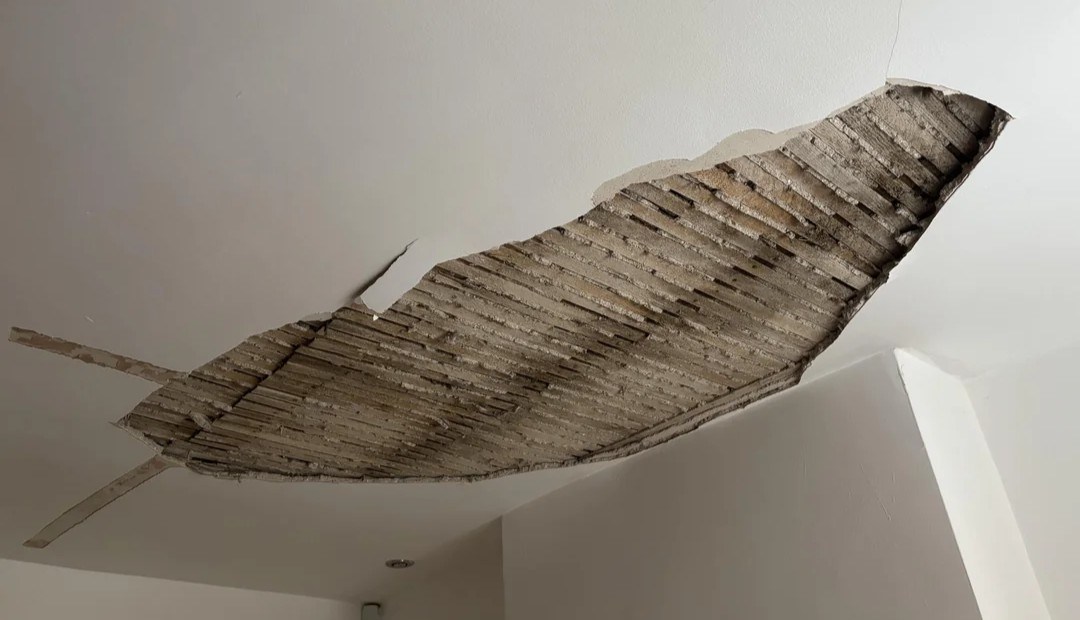
Was it safe to vacuum the debris, or could doing so expose someone to asbestos? A renter sought advice on those questions after part of the ceiling collapsed in their Victorian terraced house.
Commenters, however, pointed to another potential danger lurking in plain sight.
Here's what to know
The tenant's concern in a Reddit post on the r/DIYUK community was cleaning up the fallen debris themselves. They were waiting for a damage assessment their landlord had arranged.
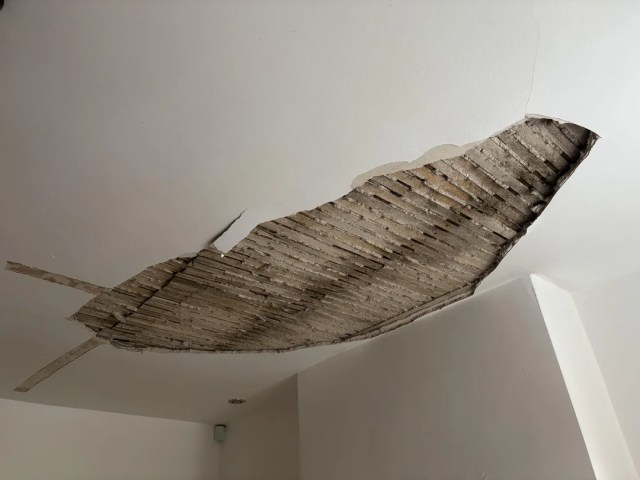
"I don't know how to safely clean up the debris and I'm concerned it could contain asbestos," the renter wrote.
Several commenters suggested the ceiling was made of lath and plaster, with some identifying the visible fibers as animal hair commonly used in older plaster. Those observations, however, were based purely on the picture shared by the renter.
"Good old lime plaster with horse hair would not have asbestos," the commenter assessed confidently, nonetheless. "I would be more concerned about spending any time stood under that though, the rest will be coming down sooner rather than later."
TCD Picks » Quince Spotlight
💡These best-sellers from Quince deliver affordable, sustainable luxury for all




The original poster called that assessment "reassuring," but said they had few options.
"Yeah, I'd rather not spend any time under it but unfortunately I don't have anywhere else to go," they added.
More background
A Victorian building's age does not establish what materials were added during later renovations. A commenter conceded there was a non-zero chance that asbestos could have made its way in later.
The same poster acknowledged the limits of identifying materials from photographs: "If I was living there I'd be confident enough, like 95% sure, that there was no asbestos in the debris, to clean it up myself. But you can't be 100% confident without testing. If you see fibres, they will be hair, probably horse."
Beyond the possible asbestos concern, other participants described the disruption caused by similar ceiling failures. One said they had dealt with the work in two rooms, with a hallway and two more rooms still to tackle.
For belongings left in the room, another commenter described two risks from falling plaster. They were dust spreading through possessions and damage to fragile items.
What can be done?
One commenter recommended keeping receipts for cleaning costs and documenting damage to clothing and possessions, along with contacting the local council. Commenters also encouraged the renter to press the landlord for a faster response.
"I mean your landlord should be getting someone out ASAP it's a serious hazard, if this was your bedroom I wouldn't even sleep under it," a user said.
Another user suggested a more aggressive approach of poking at more debris to get the landlord's attention and alleviate some of the more imminent danger spots. They were careful to specify that the OP should use a hard hat and remove valuables.
They explained: "It's then simultaneously safer (it can't fall unexpectedly if it's already fell) and will give the landlord even more reason to get it sorted sooner!"
Where can I learn more?
Other renters and homeowners have faced similar questions about ceiling damage and possible asbestos.
• Philadelphia tenants facing a collapsing ceiling were advised to call 311 and escrow rent.
• A renter heard a massive bang before discovering the basement ceiling had caved in.
• A London tenant faced falling ceiling debris, then said his landlord boarded him inside.
• A homebuyer concerned about suspected asbestos siding was advised to await test results.
• Homeowners weighing popcorn ceiling removal faced questions about what might be hiding underneath.

Get TCD's free newsletters for easy tips, smart advice, and a chance to earn $5,000 toward home upgrades. To see more stories like this one, change your Google preferences here.






