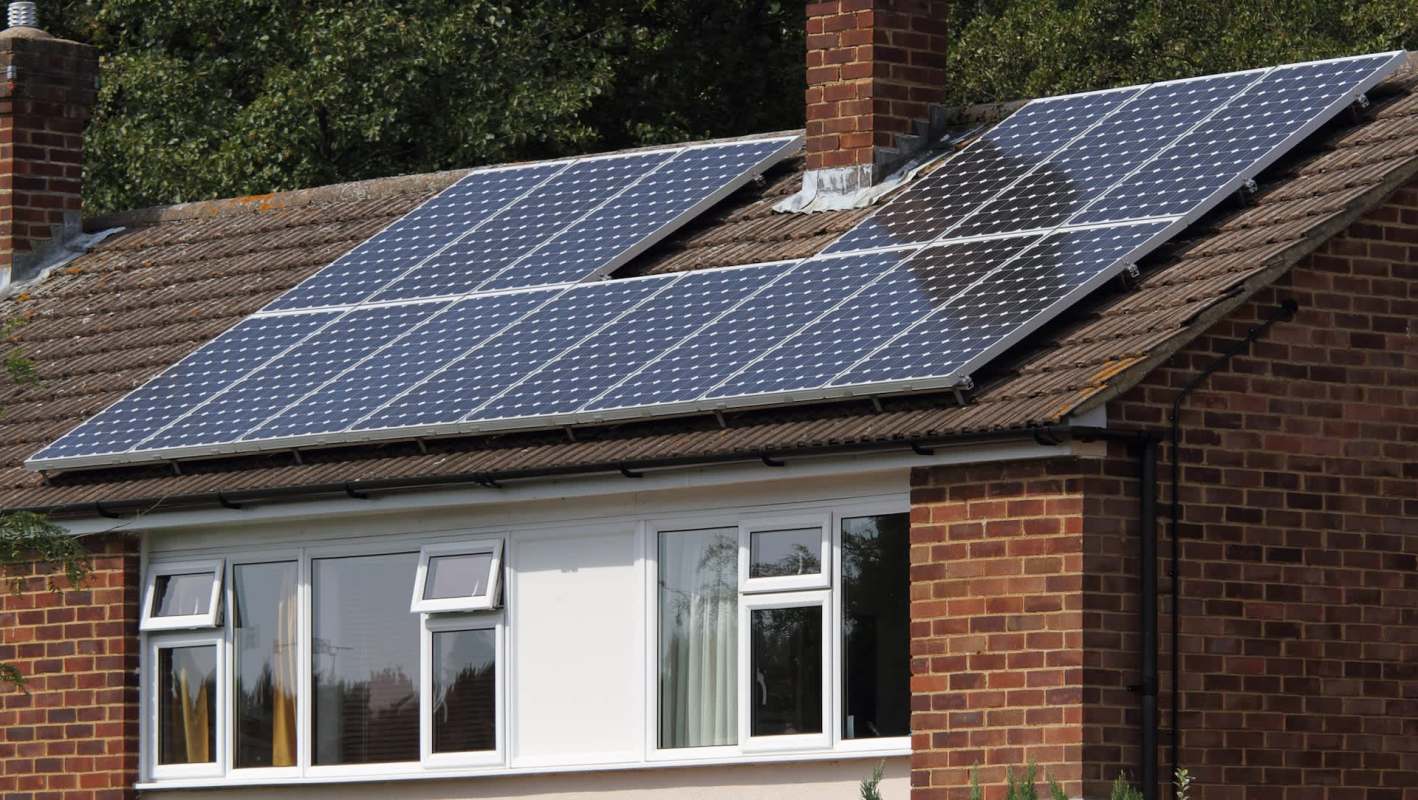
For a homeowner in the United Kingdom, a renewable energy question was shaped as much by curb appeal as by electricity production. The sticking point was whether fitting five extra solar panels would make the roof look too crowded.
That trade-off between appearance and capacity had a real cost: choosing the smaller setup meant about three additional years before the system would pay for itself.
Here's what to know
On Reddit, a homeowner said their roof could hold 15 panels, though a 10-panel arrangement would "be easy and more in keeping with the village." The two options were quoted at less than £1,000 (around $1,300) apart, but choosing the smaller system would extend the expected return on investment from roughly 7 years to 10 years.
One commenter argued for using all the available space, writing, "If 15 fits then do that. Pretty sure the vast majority of us get envy from seeing houses with more panels."
For households working through a similar calculation, going solar is one of the best ways to cut home energy costs. It may be worth exploring EnergySage to get free solar installation estimates and compare quotes before deciding on the most sensible system size.
More background
The post reflected more than a basic debate over whether solar was "worth it." The homeowner was balancing looks, future plans, and the possibility of later wishing they had gone bigger. They also worried that export payments from energy providers might no longer be available by the time the extra power generation really mattered.
Solar purchases are made based on current costs and policies, but the systems are designed to operate for decades. When homeowners are uncertain about future utility rates or how much they will be paid for sending electricity back to the grid, maximizing self-use and choosing the right system size from the beginning can feel even more critical.
The shape and orientation of a roof can make that choice even harder.
Save $10,000 on solar panels without even sharing your phone number Want to go solar but not sure who to trust? EnergySage has your back with free and transparent quotes from fully vetted providers that can help you save as much as $10k on installation. To get started, just answer a few questions about your home — no phone number required. Within a day or two, EnergySage will email you the best local options for your needs, and their expert advisers can help you compare quotes and pick a winner. |

"My North roof is bare and flat, the South roof has a peak, meaning I could only fit 10 rather than 14 on the South," one commenter said.
Solar is not just a technology purchase — even small differences in layout can shape energy savings for years.
What can be done?
One of the most practical steps is to compare multiple quotes and ask installers to model several system sizes. Seeing how a 10-panel system stacks up against a 15-panel system in terms of payback, self-consumption, and electricity bills can make the decision much easier.
That's where EnergySage's free services can be especially useful. With EnergySage's help, the average person can save up to $10,000 on solar purchases and installations. You can also use EnergySage's solar map, which shows the average cost of a home solar panel system on a state-by-state level, as well as details on solar panel incentives for each state. Together, those resources can help you get the best price for rooftop solar panels and access available incentives.
More From EnergySage
💡Go deep on the latest news and trends shaping the residential solar landscape

Adding battery storage to a solar setup is also one of the best ways to protect your home during outages, save money on energy, and go off-grid. Homeowners can explore EnergySage for information about home battery storage options, including competitive installation estimates.

Get TCD's free newsletters for easy tips, smart advice, and a chance to earn $5,000 toward home upgrades. To see more stories like this one, change your Google preferences here.