


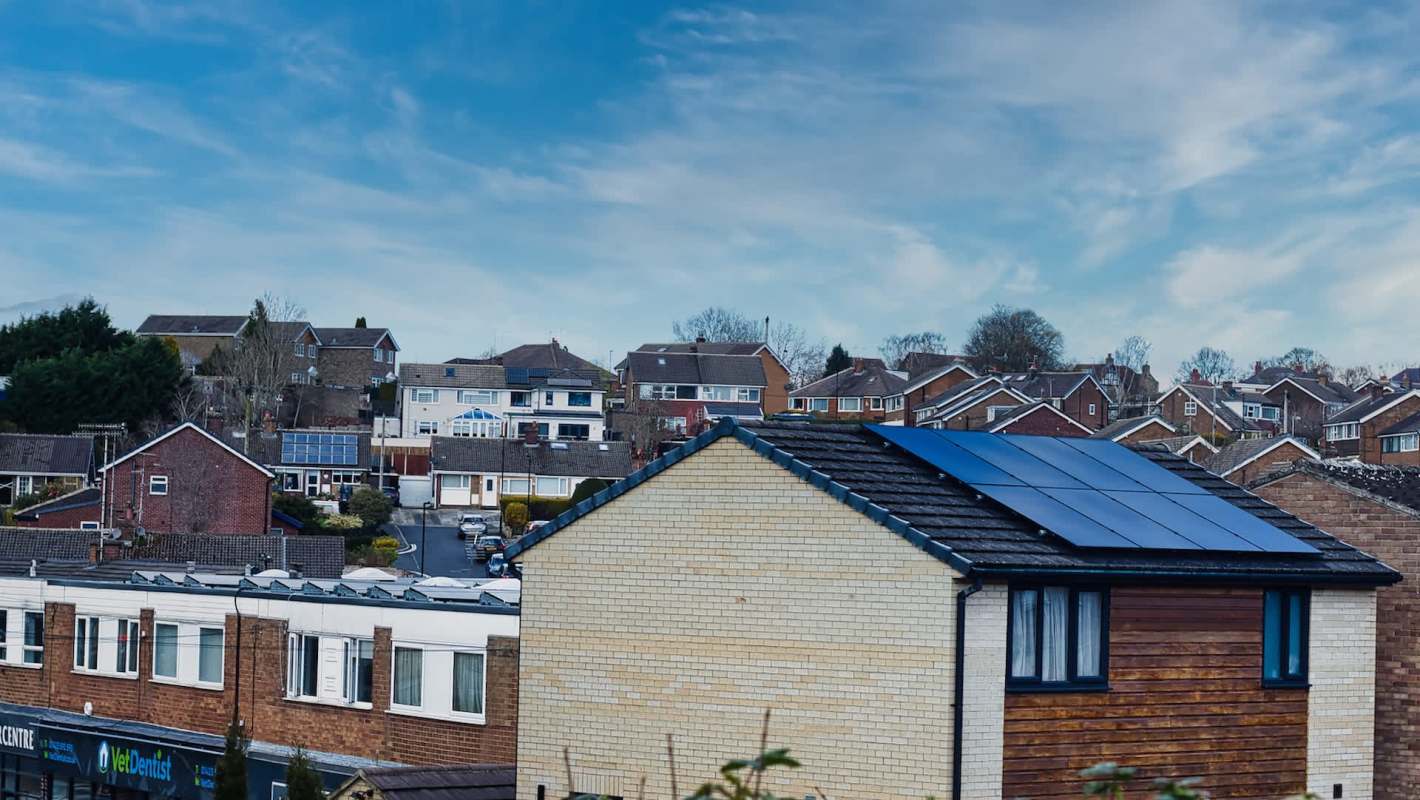
After running his home's numbers, one U.K. solar owner concluded that spending £2,500 (about $3,300 at current exchange rates) on a second home battery might cut costs by only about 90 pence ($1.21) on a bad solar day.
Here's what to know
The homeowner explained in a Reddit thread on r/SolarUK that he installed 18 panels rated at 485 watts each and a 9-kilowatt Sigenstor system. The OP said he is on Octopus Go, which lets him charge overnight at 7 pence (9 cents) per kilowatt-hour, and that the setup already covers almost all of his peak-rate electricity use.
He clarified that his household averages about 15 kWh per day. Using one low-generation day as an example, he said an overnight charge plus roughly 2 kWh of solar got the home into late afternoon, leaving about 3 kWh to be used during peak-rate hours.
For him, the question came down to this: "I'm struggling to understand the economics of paying £2.5k for a battery, which can only raise a few pence per KWH of export?"
Adding battery storage is one of the best ways to protect your home during outages, save money on energy, and gain more energy independence. Homeowners comparing systems can explore EnergySage for home battery storage options and competitive installation estimates, and EnergySage has teamed up with electrification brand Qmerit to help homeowners get the best price on home battery storage solutions.
More background
A common point in the replies was that a bigger battery makes far more sense for homes with heavier electricity demand. One commenter said their house imported around 20 kWh per day and ended up with a bill close to £2,000 ($2,658), so shifting the rest of that usage from 26p (35 cents) to 7p (9 cents) per kWh made added battery capacity worthwhile.
Another commenter cited yearlong modeling from October 2025 through September 2026 using real smart-meter data from 20 homes, along with 4-kWp solar systems and batteries ranging from 5 to 20 kWh. Their takeaway was: "Going from 9.5 to 20 kWh saved an extra £114 ($151) a year on average."
In the same analysis, homes using less than 4,000 kWh annually gained only about £30 ($40) in extra savings from the larger battery, while homes using more than 6,000 kWh saw about £260 ($346). Since the original poster appears to use roughly 15 kWh per day, his household seems to fall between those two groups, making more storage less compelling before export payments are enabled.
Crushed by your bills? See instant solar savings from vetted installers in just a few clicks With energy prices through the roof, there's never been a better time to go solar — and EasyHome can help you find the best prices from the best installers in your area. EasyHome takes the guesswork and headaches out of energy upgrades by showing you estimated savings from a network of vetted local partners. To get started, just enter your ZIP and share a few details about your home — seeing your estimate is really that easy. |

What can be done?
Commenters said the best way to size a battery is based on a home's actual electricity use, not what other solar owners install. The original poster said, "My usage matches my storage and generation really quite well,"
Rather than adding hardware, several people suggested enabling export payments first, checking export tariffs such as Agile Export, and considering battery-dispatch programs such as Axle Energy. One commenter said they had made "an additional £165 ($219) exporting to Axle since July" and added, "Each session earns me about £7 ($9.30)."
Adding battery storage can also give homeowners more control over when they buy electricity, when they use their own solar power, and how prepared they are for outages. For people who want backup without jumping straight to a whole-home system, Pila offers another option. Pila's plug-and-play batteries cost a fraction of a whole-home backup system.
Where can I learn more?
These stories show how other U.K. homeowners are weighing battery storage against tariff savings and export income.
• One homeowner weighed battery-only storage to dodge peak rates and hit G98/G99 hurdles.
• Battery owners called off-peak charging without solar a no-brainer under the right tariffs.
• On Octopus Go, one homeowner found what five cheap hours buys with an EcoFlow battery.

Get TCD's free newsletters for easy tips, smart advice, and a chance to earn $5,000 toward home upgrades. To see more stories like this one, change your Google preferences here.






