


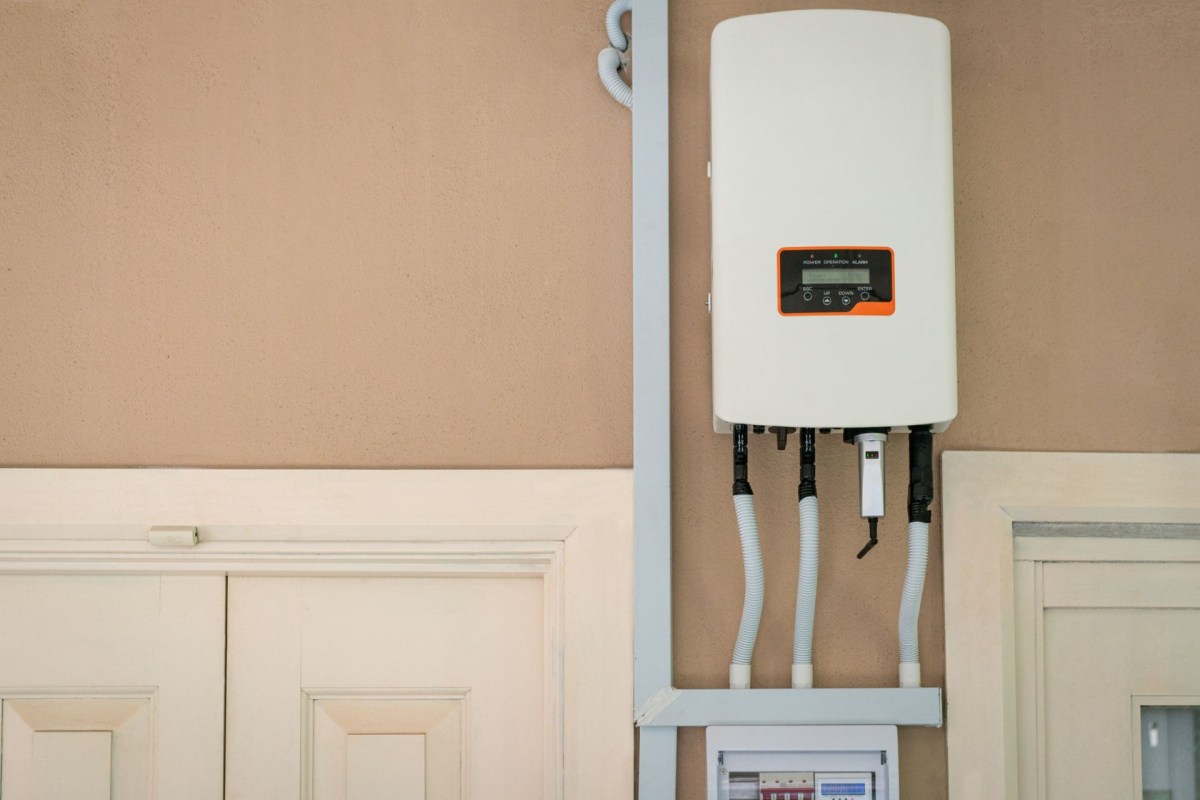
A U.K. homeowner looking to charge their new home battery twice a day received an unexpected reminder from fellow battery owners: Charging more does not necessarily mean lower electricity bills.
Here's what to know
In their Reddit post, they revealed daily household demand of 20-25 kilowatt-hours exceeded the new battery's 16-kilowatt-hour capacity. The homeowner had paired the battery with a 6-kilowatt inverter.
A daily standing charge of 61.23 pence (around 82 cents) applied to the EDF tariff. Electricity cost 30.16 pence (about 40 cents) per kilowatt-hour outside the 11 p.m. to 6 a.m. window, when the rate dropped to 6.66 pence (about 9 cents).
"Does anyone recommend a tariff where I can charge twice a day?" the original poster asked.
"Sounds like you either need more battery, you need to accept that the battery will offset your bills rather than cancel them out entirely, or you need to adjust your lifestyle a bit to reduce your base load," a commenter responded.
Adding battery storage can save money on energy and provide more energy independence. With backup equipment, it can also protect your home during outages.
For homeowners exploring storage, EnergySage offers information about home battery options, including competitive installation estimates. EnergySage has teamed up with electrification brand Qmerit to help homeowners get the best price on home battery storage solutions.
More background
Other Reddit users noted that the homeowner's electricity use was not necessarily unusual for an electrified home.
Crushed by your bills? See instant solar savings from vetted installers in just a few clicks With energy prices through the roof, there's never been a better time to go solar — and EasyHome can help you find the best prices from the best installers in your area. EasyHome takes the guesswork and headaches out of energy upgrades by showing you estimated savings from a network of vetted local partners. To get started, just enter your ZIP and share a few details about your home — seeing your estimate is really that easy. |

With no mains gas available on their island, one commenter from Orkney relied on electric appliances and heat-pump heating in a detached, four-bedroom home.
More than 95% of days could be covered by 32 kilowatt-hours of storage, according to modeling by a commenter who had installed that capacity alongside solar panels. Their estimate for a 16-kilowatt-hour battery was roughly 75% of days.
Peace of mind was part of the reason they bought more storage. With the second battery's purchase price absorbing much of the additional savings, the modeled payback stayed at around five to eight years, depending on the scenario.
For a different backup approach, Pila offers strong battery backup options. Pila's plug-and-play batteries are priced at a fraction of what a whole-home backup system would cost.
What can be done?
One commenter shared that the Octopus Cosy tariff has three cheaper charging windows each day, but a heat pump is required to qualify.
At an assumed Cosy rate of 15 pence per kilowatt-hour, buying 25 kilowatt-hours would cost £3.75 (about $5), another commenter calculated. Their comparison for the homeowner's existing tariff came to a modestly higher £3.78, with 16 kilowatt-hours bought at the overnight rate and 9 at the daytime rate.
Other commenters suggested shifting appliance use to EDF's overnight window or monitoring electricity consumption before investing in additional storage.
EDF's electric-vehicle tariff came out at least £150 (~$200) cheaper than its heat-pump tariff with two lower-cost windows in one heat-pump owner's calculations.
"I think you've misunderstood the goal - it isn't to always be using your battery, it's to make your energy cost as cheap as possible," one Redditor clarified. "20% of your energy usage at 30p and 80% of it at 6.66p will be cheaper than any tariff with multiple daily recharge periods."
Where can I learn more?
Battery size and off-peak electricity rates both affect how much U.K. homeowners can save.
• A U.K. homeowner weighing battery sizes called the larger storage option a "comfort purchase."
• U.K. battery owners called off-peak charging without solar a "no-brainer" for cutting electricity costs.
• A U.K. homeowner learned five cheap charging hours could add just 4.5 kilowatt-hours with their battery system.
• U.K. battery owners said their batteries' unexpected 30p charging was chasing export rates rather than 7p electricity.

Get TCD's free newsletters for easy tips, smart advice, and a chance to earn $5,000 toward home upgrades. To see more stories like this one, change your Google preferences here.






