


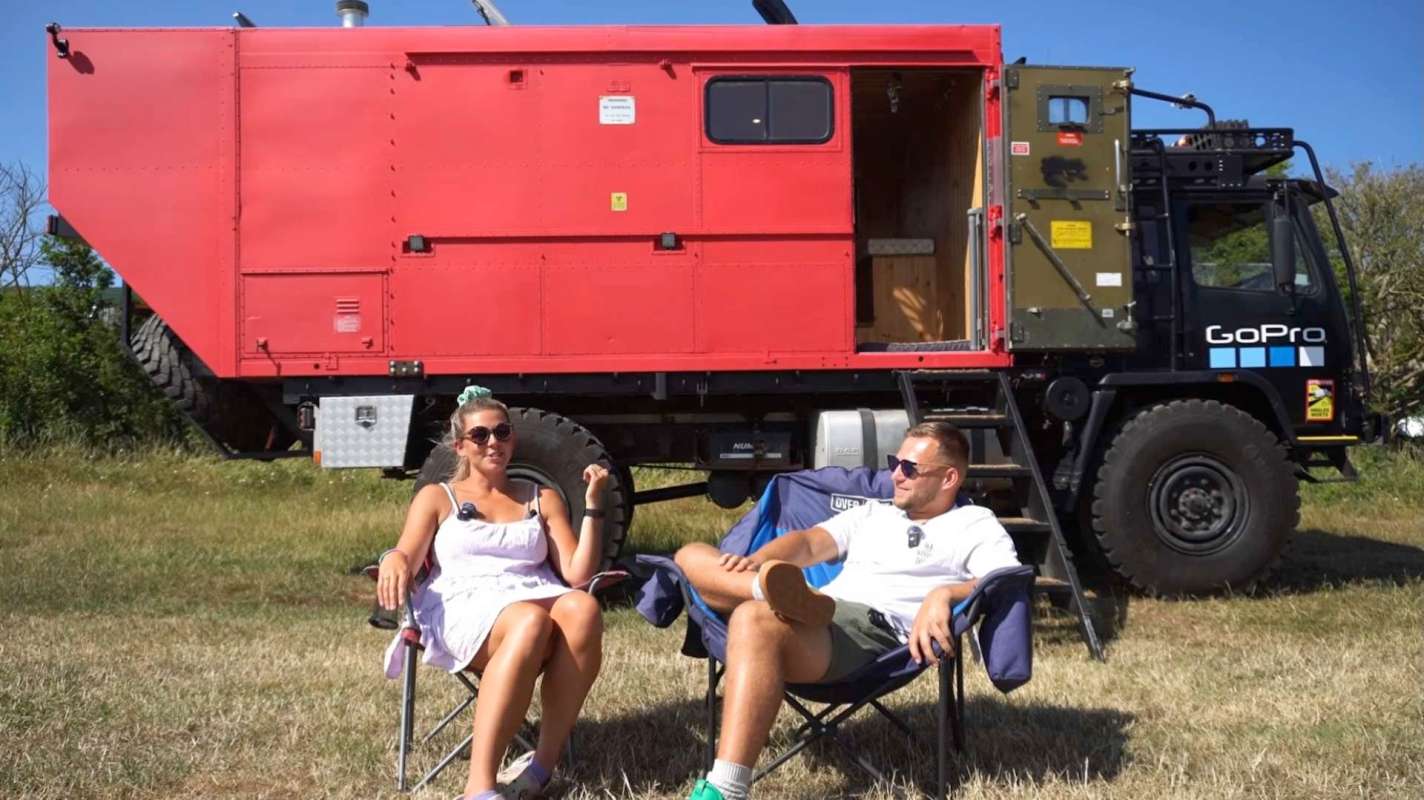
For many people, tiny and mobile homes are mainly about cutting housing costs. For one U.K. couple, however, the bigger appeal was the chance to feel less boxed in and spend more time outdoors.
Farrah and James, who already owned a traditional home, decided conventional living left them feeling too confined, so they transformed an ex-military truck into a full-time off-grid home.
Here's what to know
According to Autoevolution, Farrah and James began with a former military Leland DAF T244 truck they named Roxy. They bought it for £7,750 (roughly $10,370) and carried out the conversion in their spare time.
To create the living area, they fitted the vehicle with a flatbed and a box. The result is a heavy-duty overland-style rig built for extended travel and rougher routes.
Rather than feeling like a military vehicle, the interior reads as a compact cabin. Wood finishes warm the space, which includes a raised dinette, an L-shaped kitchen with sage green cabinets and butcher block countertops, a bathroom with a shower and toilet, and a rear bedroom with a queen-size bed and storage underneath.
Roxy also includes roof-mounted 1,300-watt solar panels, a 24-volt generator, 105 gallons (400 liters) of freshwater, 66 gallons (250 liters) of gray water storage, and two fuel tanks holding 92 and 53 gallons (350 and 200 liters) to support longer trips.
TCD Picks » Quince Spotlight
💡These best-sellers from Quince deliver affordable, sustainable luxury for all




Farrah and James live in the vehicle full time with their two dogs.
More background
In Farrah and James' case, the truck offers freedom and durability, but it is not necessarily a simple or inexpensive option for everyone. Autoevolution noted that a vehicle this large is not especially fuel-efficient, long drives can be exhausting, and replacement mechanical parts can be hard to source.
Mobile living can lower some household costs and make it easier to prioritize experiences over possessions, but highly specialized rigs also require hefty upfront spending, mechanical knowledge, and a willingness to deal with uncertainty.
What can be done?
Fuel, insurance, repairs, water systems, heating, and parking or campsite fees can add up quickly, even in a smaller home. Endeavors that seem less expensive at first may not always end up costing less than staying in a conventional house.
Farrah and James' build works because it aligns with what they value most: a home that lets them travel, stay close to nature, and keep the comforts that matter most to them.
Where can I learn more?
These stories dig into the practical side of off-grid living, from inspections to power storage. They follow homeowners and families working through solar, batteries, water, and daily energy use in self-sufficient homes.
• A homeowner on Reddit learned what to inspect first when planning an off-grid build.
• One off-grid builder created an impressive battery garage that now even charges visiting EVs.
• A Reddit homeowner discovered there was a lot to learn before sizing solar for off-grid life.
• One family off the grid prioritized battery usage and meal planning to stretch power.
• After two off-grid years, one homeowner showed solar still works in winter despite common doubts.

Get TCD's free newsletters for easy tips, smart advice, and a chance to earn $5,000 toward home upgrades. To see more stories like this one, change your Google preferences here.






