


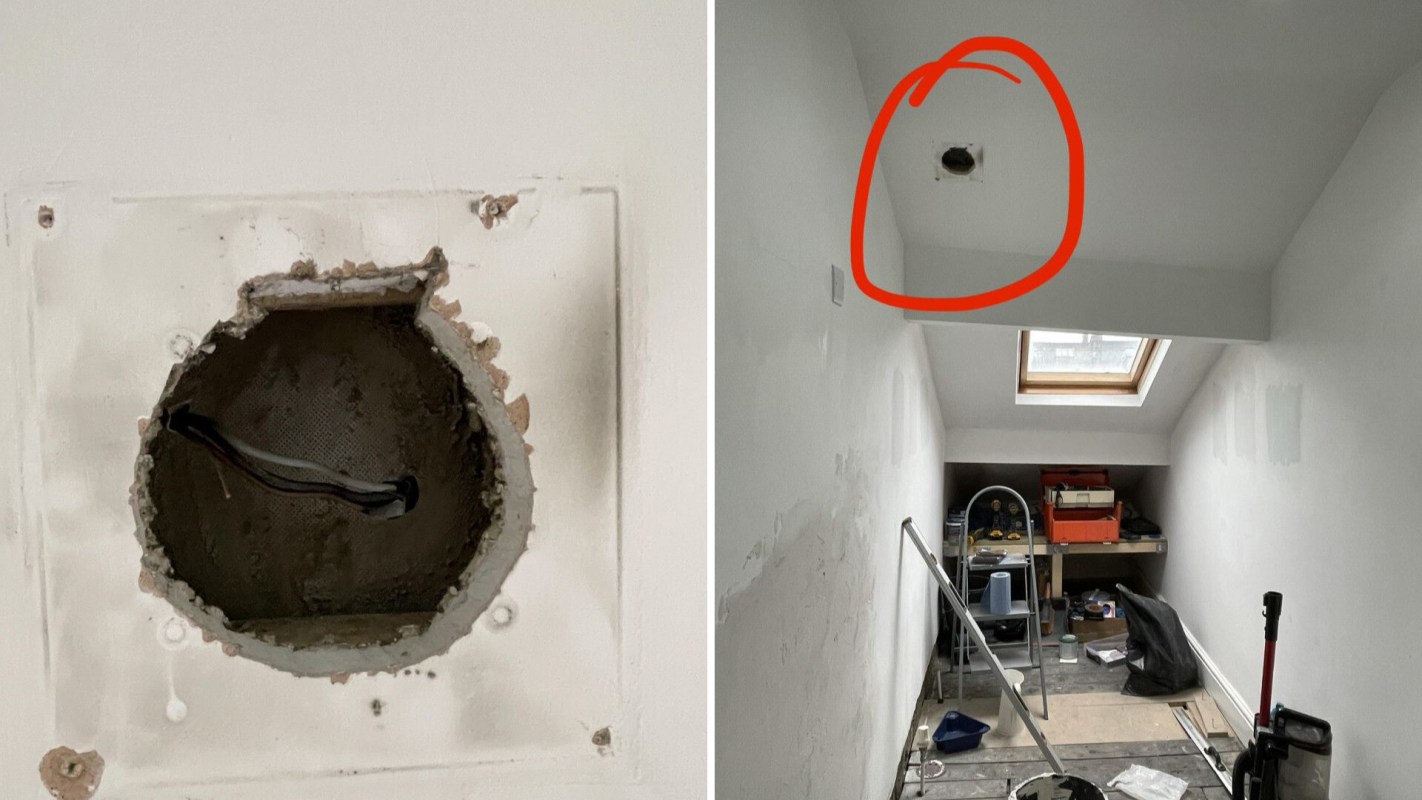
A U.K. homeowner reported that only a couple of inches separated the bathroom extractor from the roof felt receiving its warm, moist exhaust. As a result, the air was not reaching the outdoors, a problem the homeowner only discovered while planning to upgrade the fan.
Here's what to know
In a post on Reddit's r/DIYUK community, the homeowner explained that they were renovating their bathroom and planned to install a stronger extractor with a more attractive vent.
Extractor fans were unfamiliar territory for the homeowner, despite their otherwise reasonable DIY skills.
"What do I need to do to put it right?" the original poster asked.
With no loft access for longer ductwork and no exterior wall on either side, the bathroom offered limited options for routing the exhaust. The existing opening is in a sloping roof covered with slate.
The homeowner rated their roofing skills as "basically zero." A Velux window nevertheless provides access to the roof.
TCD Picks » Quince Spotlight
💡These best-sellers from Quince deliver affordable, sustainable luxury for all




More background
Other commenters shared similar discoveries. In one account, a damp patch in the loft marked the spot where a bathroom ventilation duct had been releasing warm, humid air. The commenter said they found the duct's endpoint years after a bathroom fitter had hidden it beneath the insulation.
"I looked the fitter up to complain but found he was now in prison, bankrupt, and many terrible and similar reviews on Checkatrade," the poster recalled.
Another commenter divulged that they had discovered a similar scenario in their kitchen.
"Haha, this tickled me as in my house we have an extractor fan for the oven that just vents in the base of the cupboard above," they wrote.
That example of indoor discharge, however, did not necessarily point to an improper installation.
"Sure it's not just one in recirculation mode that pulls the air through grease and carbon filters?" a user asked. "Pretty standard design, obviously not as good at venting externally, but better than leaving it open and covering everything in the kitchen in grease."
What can be done?
Connecting the fan to an outdoor outlet would require suitable fittings as well as a way through the slate roof. Commenters proposed a slate vent or ventilation terminal for that outlet. One commenter linked to Timloc's vent range and warned that duct adapters might not be included.
An adapter and ducting would form the connection between the fan and the roof vent, the same commenter explained. The roof work would require removing a slate and properly opening the membrane, with the vent installed according to the manufacturer's instructions. Even with the Velux nearby, access and skill would determine how difficult the work would be.
"Access is good thanks to the Velux, roofing skill level is basically zero," the original poster conceded.
Even in the DIY forum, a commenter suggested that this might be best left to a pro with the OP's limitations in mind.
"Without going against DIY values, I'd get a roofer as slate needs a specific tool called a slate ripper to remove them and the slates need to be cut around the slate vent itself," they advised. "It's not a job to make a mess of."
Where can I learn more?
Other homeowners have run into problems with ductwork and moisture.
• A new homeowner fixing a roof vent discovered an unconnected bathroom fan.
• After two summers of drips, a homeowner opened the ceiling and found ductwork without insulation.
• In Houston, a homeowner replaced attic fans with ridge vents amid conflicting advice about sweating ducts.

Get TCD's free newsletters for easy tips, smart advice, and a chance to earn $5,000 toward home upgrades. To see more stories like this one, change your Google preferences here.






