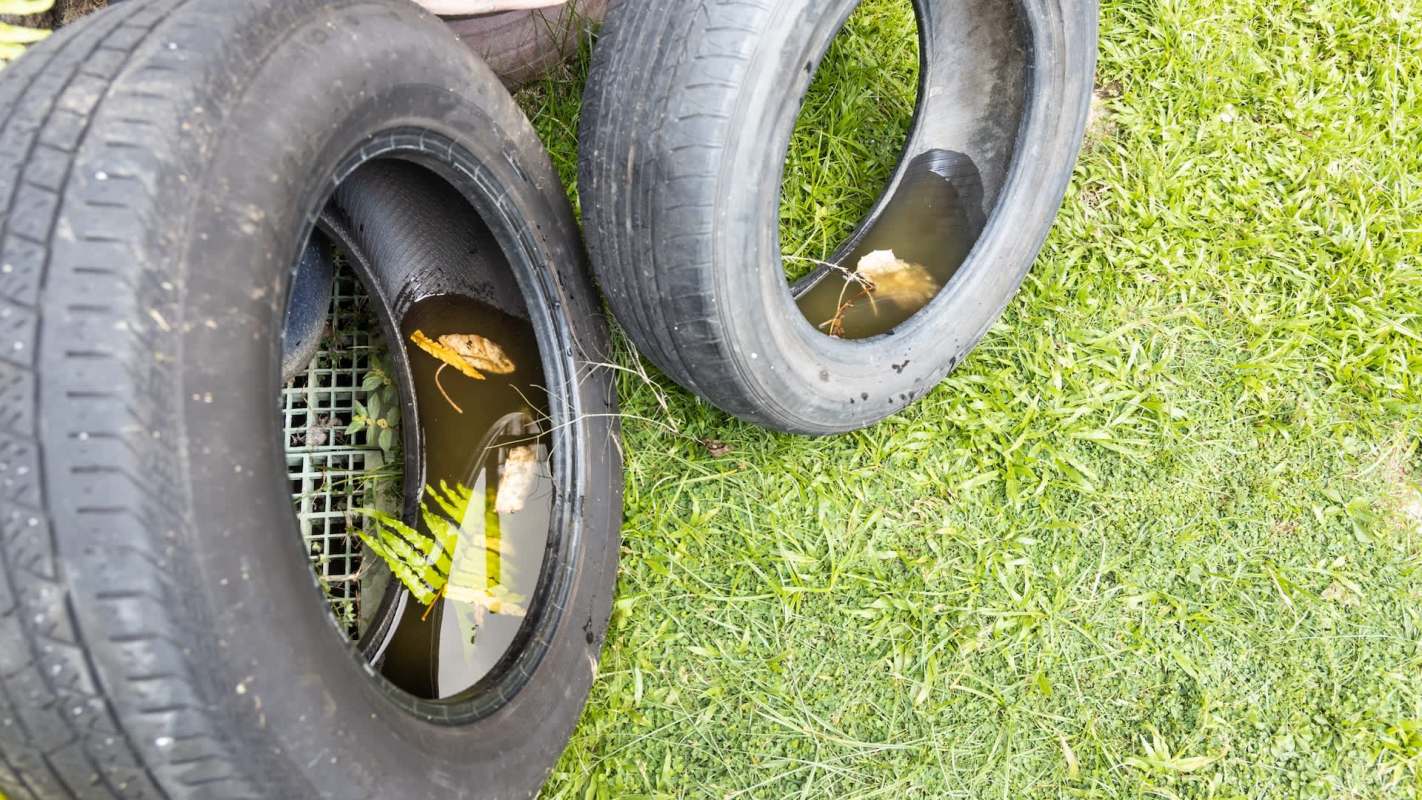
Old tires can become one of the easiest places for mosquitoes to breed and multiply.
In a new effort to control growing mosquito populations and limit dengue fever spread, one Florida county is fully waiving the cost for residents to dispose of tires responsibly.
Here's what to know
On September 24, Pinellas County, Florida, declared a state of emergency tied to dengue fever, WFLA reported.
In response, between September 28 and October 30, 2026, the Pinellas County government is eliminating the cost for residents to dispose of tires. The move comes as officials work to reduce dengue fever risk in the region already dealing with confirmed cases and warning signs of other mosquito-borne illnesses.
According to the Pinellas County website, "One tire collecting water can lead to the breeding of thousands of mosquitoes over a single season… Removing these tires helps reduce the risk of mosquito-borne illnesses, such as dengue fever.
During this time, Pinellas County residents with a valid driver's license can drop off up to four residential tires for free at the Pinellas County Solid Waste Disposal Complex, located at 3095 114th Ave. N. Each tire must be 36 inches in diameter or smaller.
TCD Picks » Quince Spotlight
💡These best-sellers from Quince deliver affordable, sustainable luxury for all




As WFLA reported, the county said tires should be kept separate from other trash or waste, though rims can remain attached. The fee waiver applies only to residential drop-offs, not businesses.
People planning to use the program should separate their tires from other waste before arriving. Closed-toe shoes are also required at the facility, and the county said residents should follow posted safety requirements.
Residents can visit the county's website for more details on commercial tire disposal fees and rules.
More background
Old tires are a particular concern because they can stay outdoors for long stretches and fill with rainwater, creating ideal mosquito habitat close to homes. In a state already dealing with persistent mosquito pressure, removing even a few backyard breeding sites can help lower local risks.
And unfortunately, per a Pinellas County government press release, "The Tampa Bay region has 179 confirmed [dengue fever] cases across Pinellas, Pasco and Hillsborough counties. Additionally, Pinellas County has observed increased West Nile virus activity in our sentinel chicken coops, which is an early warning for potential human transmission," per WFLA.
Where can I learn more?
Other communities are trying a range of approaches to dengue and mosquito control.
• Homeowners are using mosquito dunks in standing water to cut backyard breeding.
• In Lee County, Florida, the mosquito district began releasing sterile mosquitoes by drone to suppress populations.
• In the Philippines, one village launched a bounty program for mosquitoes as dengue cases surged.

Get TCD's free newsletters for easy tips, smart advice, and a chance to earn $5,000 toward home upgrades. To see more stories like this one, change your Google preferences here.