


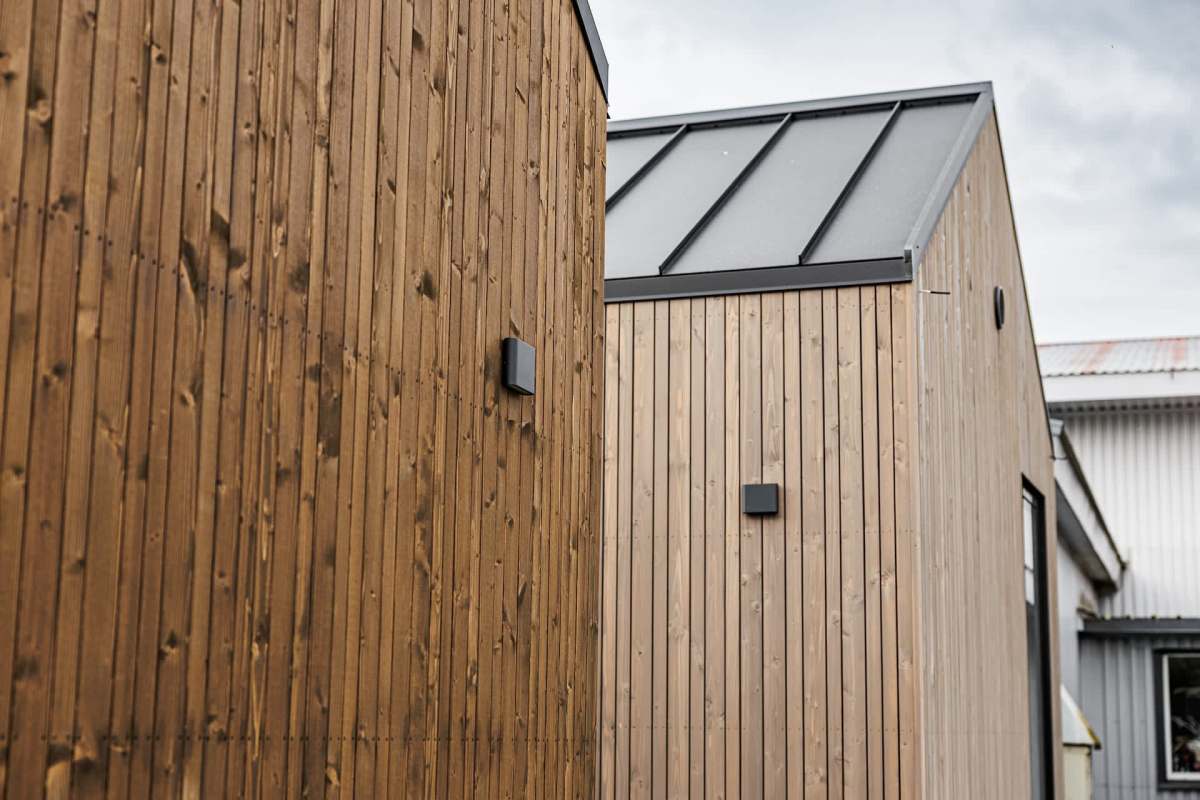
Priscilla, a widow on a fixed income, said a 255-square-foot tiny home offered a practical way to retire in Durango, Colorado, where most conventional homes cost well over $1 million.
She paid $96,000 for the house and another $10,000 to have it shipped from Virginia. It sits at the Island Cove tiny home community, where her lot rent is $865 a month.
Here's what to know
As detailed in a YouTube video by Tiny Home Tours (@TinyHomeTours), after both of her parents died within a year, Priscilla decided she did not want to move back into a full-size house. Before that, she had sold her Southern California home when her husband died. She had spent three and a half years in an RV, and then moved to Massachusetts to help care for her parents.
She eventually bought a Compass Tiny Homes house in Durango, where she and her small dog have been living for nearly two years.
Priscilla said the setup works for her because of the cost. Her lot rent is $865, and although propane, electricity, and water are separate, she said those bills stay "very low" because of the home's small size. The house itself measures 30 feet by 8.5 feet and stands 13.5 feet tall.
She said the space also works because it feels comfortable, not minimal. The living area has a small hide-a-bed sofa for guests, while the kitchen has a farmhouse sink, a three-burner RV range with oven, and an apartment-size fridge with storage underneath.
TCD Picks » Quince Spotlight
💡These best-sellers from Quince deliver affordable, sustainable luxury for all




Some viewers said the layout seemed especially well suited to later life. One commenter wrote, "Perfect for aging in place," though others questioned whether $865 a month was expensive for the lot alone.
More background
Colorado entered the search because Priscilla and her late husband had talked about retiring there. She had first looked at Acony Bell, a tiny home community in North Carolina, but decided it was too far from her three children in Southern California, and California itself had few tiny home communities.
After learning that Durango had five tiny home communities, she spent a weekend touring them and then chose Island Cove.
Getting into the community was not immediate. Its only open lot had already been claimed, but the owner later called to say the space was available after all, and Priscilla said she started paying for it before she had a house lined up.
She later found the home on Tiny Home Listings. Compass Tiny Homes had already begun building it, which fit her timeline. However, she still got input on some hardware and cabinet placement, and she even traveled to Virginia to see the house before it was finished.
Among the home's main draws were its bright interior and adaptable floor plan. Priscilla said stairs were nonnegotiable for the loft, and she liked that the room at the far end could someday become a downstairs bedroom if needed.
What can be done?
To create more storage, she made a few deliberate compromises. Priscilla skipped a dishwasher to keep cabinet space, stores larger pots and pans in a bottom drawer, and uses the built-in bar as both a dining spot and extra prep area.
The community covers some of the things a 255-square-foot home cannot easily handle. Priscilla has a washer-dryer combo in the house, but Island Cove's shared machines work for bulky items like comforters. Outside, she has a fenced patio, guest seating, and a shed for extra storage.
Her path was not about chasing an idealized version of tiny-home living. It was about matching a smaller home to a fixed income, a specific location, and a stage of life that called for flexibility.
"I think if you have a dream and you want to live that dream, then you need to go take a chance and try things," Priscilla said. "And sometimes you'll hit obstacles, but if you just keep working and pushing through, you finally get to where you want to be."
Where can I learn more?
Priscilla isn't the only homeowner using a smaller setup to make retirement work.
• A retired couple found a tiny home community where costs dropped to about $200 a month.
• Skeptical homeowners said ditching traditional homes made life simpler and monthly costs easier to manage.
• An elderly couple found that rooftop solar paved the way to a worry-free retirement.

Get TCD's free newsletters for easy tips, smart advice, and a chance to earn $5,000 toward home upgrades. To see more stories like this one, change your Google preferences here.






