


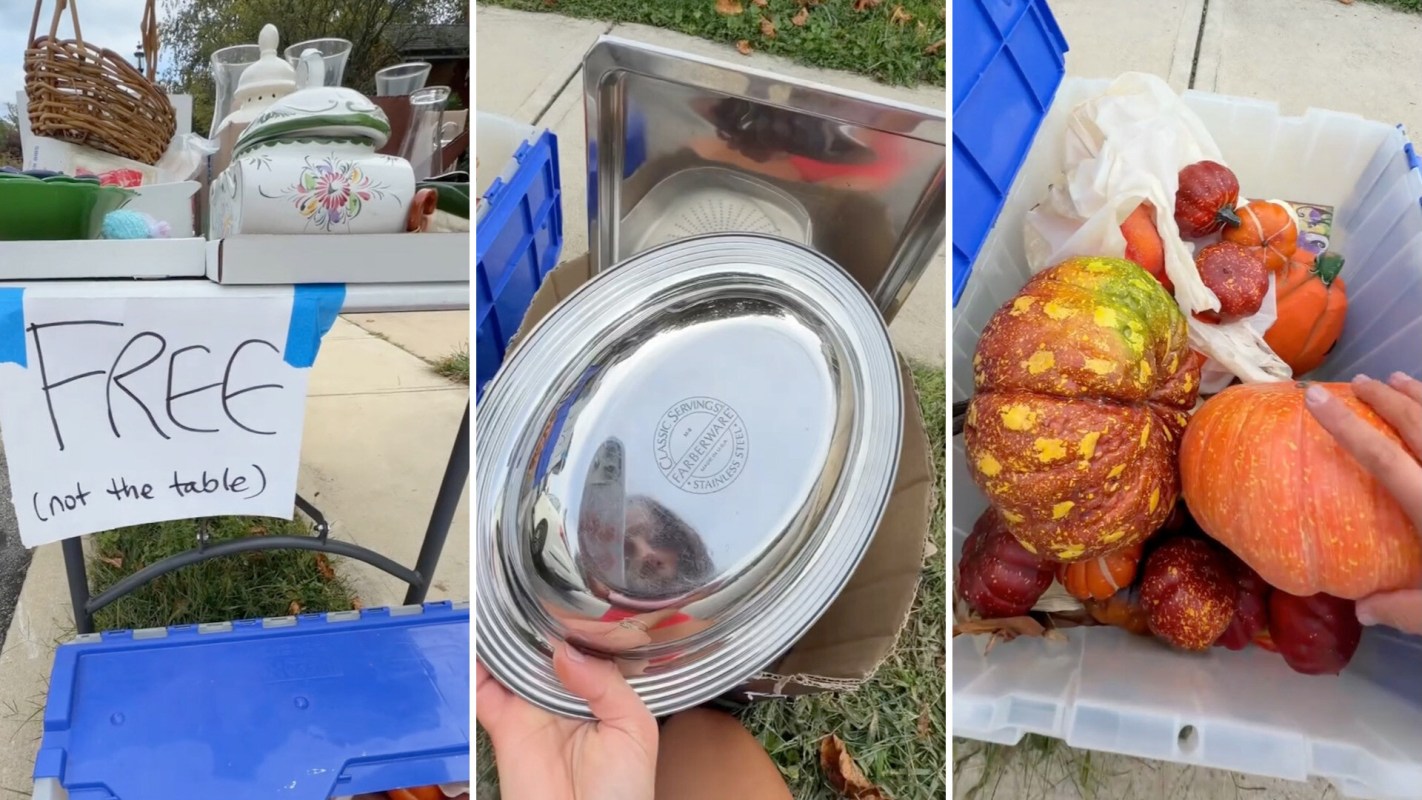
What happens when a curbside free table keeps growing with trays, baskets, seasonal decor, and collectible dishware? For one TikTok thrifter, part five of a neighbor's giveaway became a reminder of just how much value can be left on the curb — and how hard it can be to walk away.
In a recent TikTok, Emory Pepper (@emorypepper_) documented her latest round of browsing after what she said had been two weeks of checking the table. "Literally part five, and this one looks like the biggest lot yet. Says free. All of this is free."
Here's what to know
What stands out in the haul is how many of the items still seem worth using or displaying. As she looks through the selection, the video features decorative kitchen pieces, magnets, shelving, baskets, pumpkins and gourds, stainless steel items, and a silver tray, showing that the draw is not only the fact that everything is free but also that much of it remains attractive and practical.
"Been doing this for two weeks now, and I've gotten some amazing finds," she said.
@emorypepper_ we love a "free" table part 5 #thrift #free #fyp #thrifting #haul ♬ original sound - emory pepper
Her commentary is as much about restraint as it is about scoring a good find. Even when something catches her eye, she often pauses to consider whether she would actually use it, leaving certain pieces behind despite admiring them. Referring to one set of decorative items, she says, "I know people who, like, collect these and love these. I don't need them."
Commenters pointed out pieces they considered especially valuable or hard to find. One commenter wrote, "THE CABBAGE SET. You go back right now!"
TCD Picks » Quince Spotlight
💡These best-sellers from Quince deliver affordable, sustainable luxury for all




More background
Free tables like this are an ultra-local version of thrifting, with many of the same benefits. Shoppers can save money on everyday necessities, seasonal decorations, and home goods while also turning up rare or distinctive items at steep discounts — or, in this case, at no cost at all.
They also help reduce waste. When usable items are rehomed instead of thrown away, fewer goods end up in landfills, and fewer new products need to be manufactured and shipped. One tray, basket, or decor item may seem insignificant on its own, but across neighborhoods, secondhand reuse can make a meaningful dent in clutter and unnecessary spending.
Passing on items that are appealing but impractical can be just as important as finding a bargain. Saving money works best when secondhand shopping replaces something you actually needed to buy, rather than adding items that may go unused.
The creator's own decision-making may offer the clearest secondhand lesson. While figuring out what to bring home, she asks, "Should I just pick what I want or take all of it?" and then answers herself a moment later: "Like, okay, we're gonna go through it and pick what we want."
If you want more ideas for stretching your budget while cutting waste, check out the TCD Guide's page on shopping at thrift stores for more tips and discussion from other readers.

Get TCD's free newsletters for easy tips, smart advice, and a chance to earn $5,000 toward home upgrades. To see more stories like this one, change your Google preferences here.






