


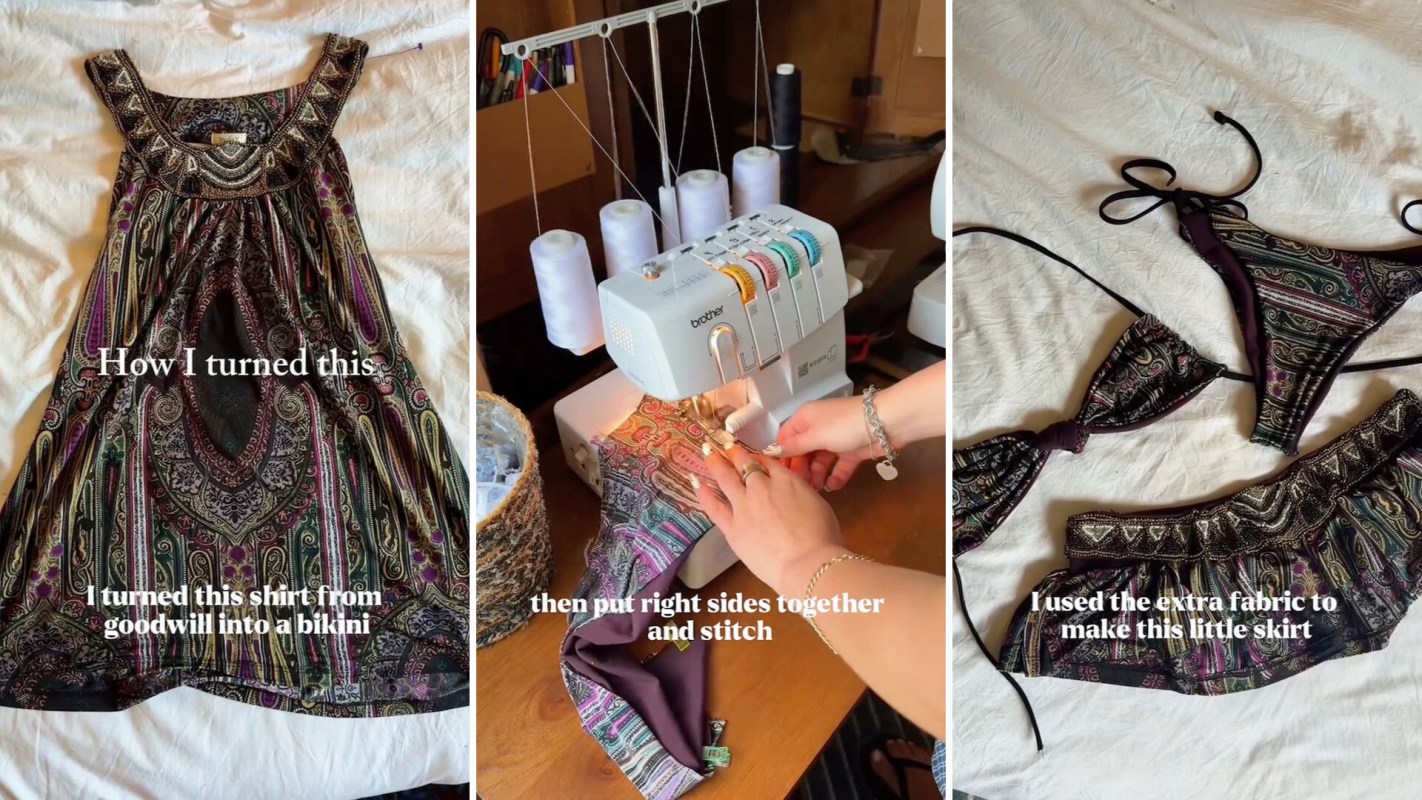
A do-it-yourself thrift flip is showing how old fabric can be reused in a fresh way — and highlighting that a personalized swimsuit does not have to cost as much as buying one new.
What happened?
A recent TikTok post demonstrated how secondhand material can become a one-of-a-kind bikini for people with some basic sewing skills.
Hobbyist msfr1zz (@msfr1zz) shared a TikTok video showing each step of making a bikini from thrifted fabric, including cutting, shaping, and sewing.
The creator wrote, "Full tutorial for this bikini thrift flip."
@msfr1zz Full tutorial for this bikini thrift flip 👙 #sewing #thriftflip #sewingtutorial #bikini #upcycledfashion ♬ original sound - user90818384328074
Because swimsuits can be pricey and hard to find in the right fit, color, or design, projects like this can appeal to shoppers who want something more tailored while starting with less expensive materials.
The video also fits into a broader upcycling trend, as more people look for ways to update what they wear without defaulting to brand-new purchases.
TCD Picks » Quince Spotlight
💡These best-sellers from Quince deliver affordable, sustainable luxury for all




Why does it matter?
One benefit is cost. A thrifted textile or secondhand garment may cost only a few dollars. For anyone who already owns a sewing machine — or even basic hand-sewing supplies — that difference can add up to meaningful savings.
There is also the benefit of getting more use out of materials that might otherwise be discarded or forgotten. Reworking fabric into something wearable can help extend the life of textiles and ease the pressure to keep purchasing new clothes for every season or vacation.
Clothing production comes with a significant environmental footprint, from resource use to shipping and waste. While one thrift flip will not transform the fashion industry on its own, tutorials like this can make lower-waste habits feel more accessible.
Unlike some sustainability advice, this approach can also feel creative, practical, and fun — especially for people who enjoy DIY projects and want clothing that feels more unique.
What can I do?
For anyone interested in trying a thrift flip, it can help to start small. Look for stretchy, durable material at a thrift store, or repurpose fabric from something already sitting in your closet but no longer being worn. Starting with an inexpensive secondhand piece can lower the stakes if the first attempt doesn't turn out perfectly.
It can also help to treat tutorials like this as a guide rather than a strict set of rules. Focus on fit, comfort, and whether the fabric is suitable for swimwear — or at least close enough for a practice version. Even making a test piece can build useful sewing skills without requiring expensive supplies.
Buying secondhand, mending clothes, and repurposing textiles can all help reduce waste and cut costs. Over time, those habits can save money while helping build a wardrobe that is more durable and less disposable.

Get TCD's free newsletters for easy tips, smart advice, and a chance to earn $5,000 toward home upgrades. To see more stories like this one, change your Google preferences here.






