


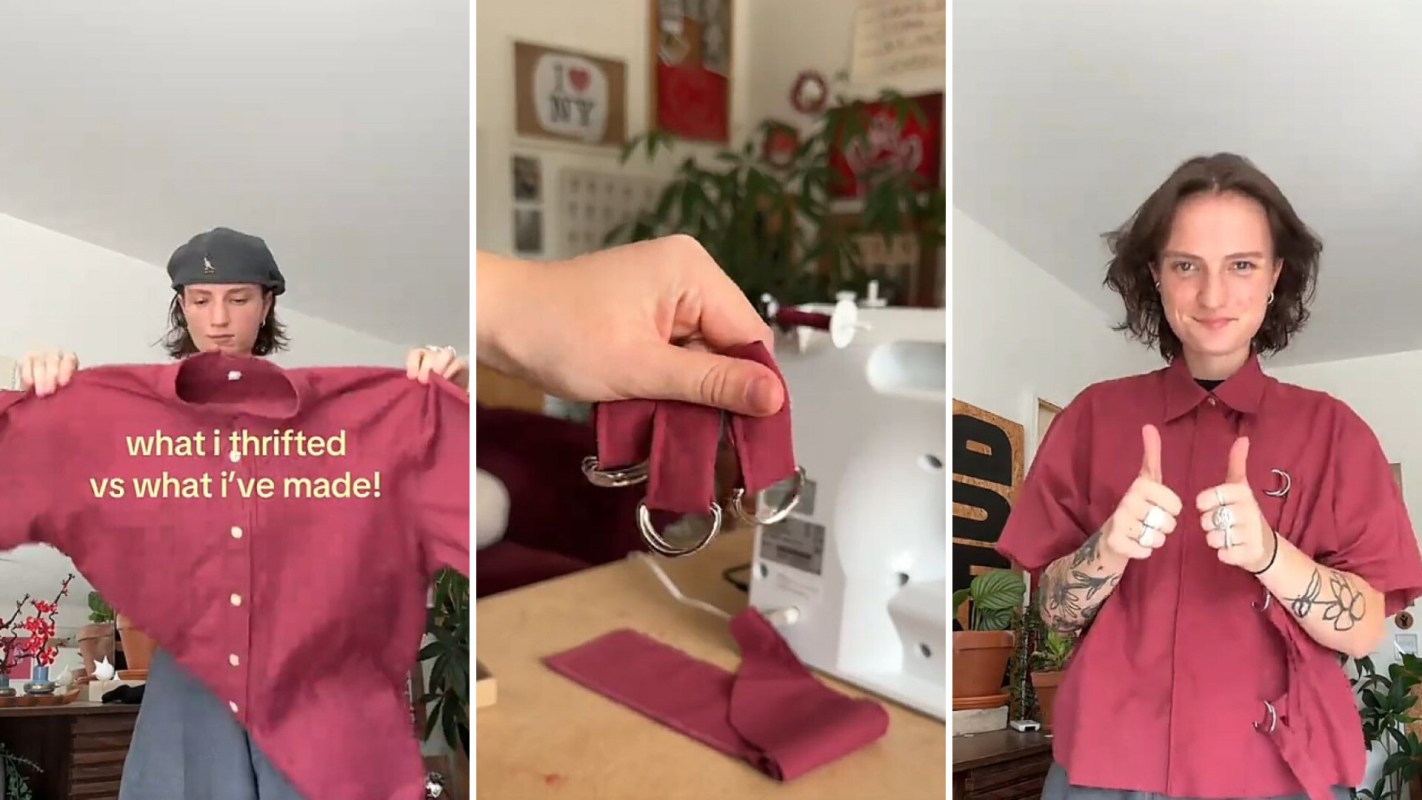
A sewist on TikTok turned a thrift-store find into a completely different top using just a sewing machine and some creativity, offering viewers a hands-on example of how secondhand clothing can be reworked instead of discarded.
The result is the kind of makeover slow-fashion fans love: stylish, practical, and a reminder that a "new" piece does not have to come straight off a store shelf.
What happened?
Instead of leaving a thrifted item as-is, TikTok creator Louise (@loufnss) shared a video where they reworked the secondhand garment into a different piece and showed viewers how the transformation came together.
The video treats the original clothing less as a finished product and more as a starting point, showing how a few alterations can make it feel more customized and personal.
@loufnss thrift flip! #sewinginspo #sewingprojects #thriftflip ♬ RMB (Ring My Bell) - Aitch
One commenter wrote, "Stop I'm obsessed and must remake asap."
Another commenter wrote, "Wish I knew how to sew. I would buy so much more from the thrift store."
TCD Picks » Quince Spotlight
💡These best-sellers from Quince deliver affordable, sustainable luxury for all




Why does it matter?
Seeing an older piece turned into something wearable again challenges the fast-fashion mindset that clothes are disposable. With some time and skill, an overlooked thrift-store find can become useful and stylish once more.
If a thrifted item costs less than a similar trendy piece bought new, a simple upcycle can keep money in your pocket. Those savings can add up quickly.
There is an environmental benefit, too. Keeping existing clothes in use longer can reduce demand for brand-new production and delay when wearable textiles end up in the trash.
DIY alterations can also help people get a better fit than they would off the rack, making secondhand shopping a more realistic option for everyday wear.
What can I do?
The easiest place to start is small. Oversized tops, dresses, or button-downs from thrift stores can be especially useful because the extra fabric gives you more room to experiment without needing advanced sewing skills.
A basic sewing kit can go a long way. Thread, pins, fabric scissors, and a needle — or access to a sewing machine — are often enough for beginner projects such as shortening a hem, taking in a side seam, or reshaping sleeves. Even if supplies cost money up front, reusing them across multiple projects can still make thrift flips far cheaper than buying several new pieces.
It also helps to practice on low-stakes pieces first. Starting with a garment that cost just a few dollars can make mistakes feel less stressful and let you build confidence before moving on to more ambitious remakes.
If sewing feels intimidating, local classes, online tutorials, or even a few simple hand-sewing basics can open up more options in the thrift aisle.

Get TCD's free newsletters for easy tips, smart advice, and a chance to earn $5,000 toward home upgrades. To see more stories like this one, change your Google preferences here.






