


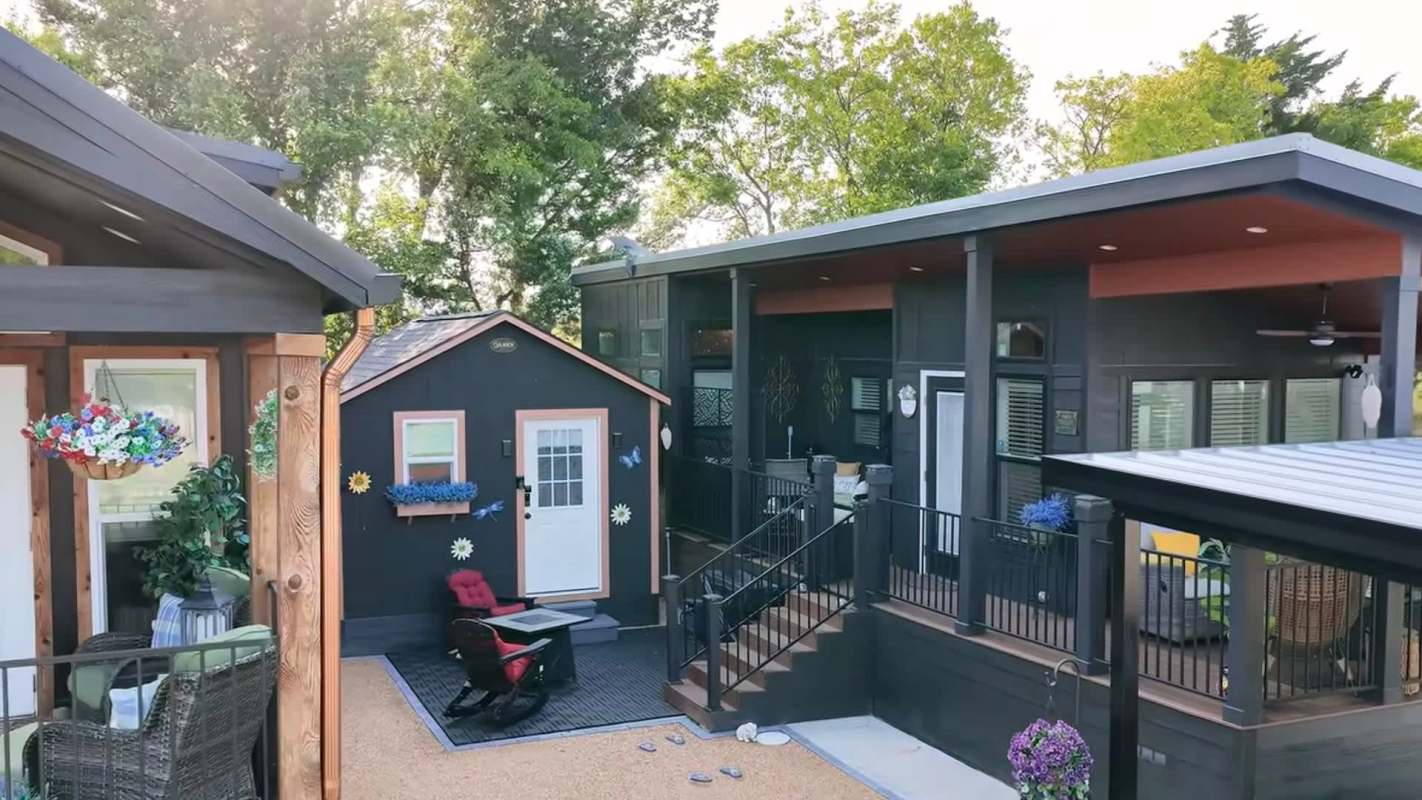
After losing her mother and brother and leaving behind a four-bedroom rental that cost nearly $3,000 a month, Texas woman Rosa found more stability in a 399-square-foot tiny home.
Here's what to know
In a home tour on the YouTube channel Tiny House Giant Journey (@TinyHouseGiantJourney), Rosa said she bought her tiny home for $98,000. She had decided she no longer wanted to keep paying high rent for a larger place that no longer matched her life.
Her regular housing costs dropped, too. Rosa said she now pays about $675 in lot rent, and her utility bills are much lower than they were at the rental.
The video shows a compact layout that does not feel sparse, with room for a porch, a craft room, plenty of smart storage, and a full-size kitchen, bedroom, and bathroom.
More background
A lower purchase price can make homeownership feel more attainable, especially for people priced out of conventional homes or worn down by rising rents.
Tiny homes can also bring lower ongoing costs. In many cases, smaller spaces require less energy to heat and cool, which can lead to lower monthly utility bills. A smaller footprint can also mean using fewer materials upfront and consuming fewer resources over time.
TCD Picks » Quince Spotlight
💡These best-sellers from Quince deliver affordable, sustainable luxury for all




Still, tiny-home living is not a one-size-fits-all solution.
Lot rent, insurance, financing, local zoning rules, and storage limits can all shape whether the move makes sense for a particular buyer.
What can be done?
The first step is to look beyond the sticker price.
Monthly costs such as land or lot rent, utilities, maintenance, insurance, and transportation affect whether a tiny home is more affordable than renting or buying a traditional house.
Rosa's home works in part because it reflects what she truly needs now, rather than what she used to need.
Buyers considering a move to a smaller space may want to test the idea first by decluttering, tracking how much of their current home they actually use, or touring different layouts before deciding.
For some people, the appeal will be financial. For others, it may be emotional: less upkeep, less stress, and a space that feels easier to manage.
In Rosa's case, a much smaller home offered something her old rental could not: a simpler space she could truly call her own.
Where can I learn more?
Rosa's move was about cutting housing costs and finding a version of homeownership that felt doable again. Here are a few articles about renters and homeowners working through similar questions, from solar savings and resale value to the tradeoffs that can come with alternative housing choices.
• On Reddit, an off-grid buyer found a lot to learn before choosing solar panels.
• After unsustainable energy bills, a homeowner looked for the right solar incentives before spending.
• On Reddit, a renter questioned solar after homeowners had paid one electric bill in years.
Anyone considering a major housing change will want to look closely at monthly bills, trade-offs, and long-term value — not just square footage.

Get TCD's free newsletters for easy tips, smart advice, and a chance to earn $5,000 toward home upgrades. To see more stories like this one, change your Google preferences here.






