


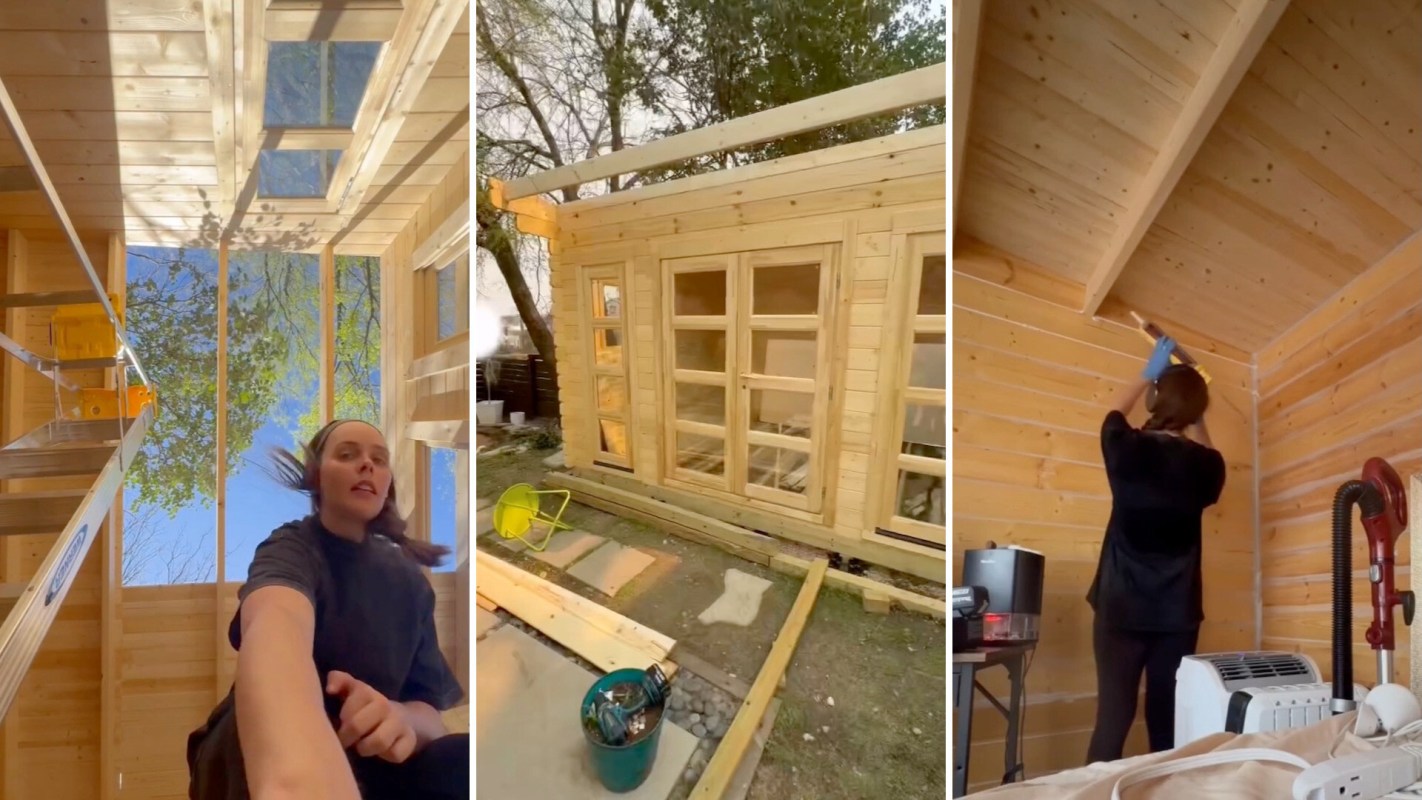
A Texas homeowner moved into a 100-square-foot backyard shed after a tech layoff left her struggling to pay the mortgage on her $400,000 bungalow.
Here's what to know
Renting out the main house has helped Lauren Patton keep her property. But living in the tiny space has brought substantial costs and its own discomfort.
Patton, 36, purchased the two-bedroom, 1,000-square-foot bungalow in 2022 after moving back to Texas from Chicago, according to Business Insider.
The early-2023 layoff upended what had seemed affordable to Patton on a data science manager's salary. She had put little money down on the house and committed to a 30-year mortgage with payments of about $4,000 a month.
With little savings and credit card debt, she began renting the bungalow on Airbnb. Repeated interviews had yielded no new job, and she had received only two months of severance, Business Insider reported.
A lower-paying accounting job in 2024 followed a period of unstable housing. She first rented a room elsewhere for six months, then stayed on couches and drove for Lyft to earn money. Foreclosure was still a worry after she had exhausted her savings and cashed out her 401(k).
TCD Picks » Quince Spotlight
💡These best-sellers from Quince deliver affordable, sustainable luxury for all




More background
To create a place to live on her property, Patton borrowed money to buy an $8,500 cabin-style shed kit, according to Business Insider.
The kit included lumber, beams, and windows, but turning it into a living space required more work. Patton had to build the foundation, floor, and roof as well as add an outhouse, outdoor shower, and fencing. She finished the project in March 2025.
The shed holds a bed, desk, television, and small refrigerator. It has no running water, so Patton keeps water jugs on hand, Business Insider noted.
Humidity also proved challenging. When she first used a portable air conditioner, humidity inside reached 80%. She now runs a dehumidifier around the clock.
Though she rents out the bungalow full-time, the Airbnb income still does not cover her mortgage payment. Home insurance pushed that payment up another $400 a month, while electricity and other utilities for the house and shed total $550, according to Business Insider.
What can be done?
During construction, Patton moved back into the bungalow and charged a roommate about $1,200 a month. With only two bedrooms, though, opportunities to bring in more rental income were limited.
Airbnb handles pricing for the main house, with rates typically around $200 for a weekend night and $125 on weekdays during the school year, per Business Insider.
An October boosted by the Austin City Limits music festival brought occupancy to about 96%, generating $6,516.70 in gross revenue. However, Airbnb deducted $619 in service fees, and seven cleanings cost about $100 each.
For any future home purchase, Patton wants mortgage payments below 30% of her income and a budget that leaves room for financial setbacks, according to Business Insider.
Her roughly century-old bungalow also requires frequent repairs. To help cover her expenses, Patton continues to earn money through a data analytics project and dog walking while building income from social media.
"One day, I'd like to move back into the main house and rent out the shed for a few hundred dollars to someone who needs an affordable place to live," she told Business Insider.
Where can I learn more?
Many people are looking to tiny homes to reduce bills.
• A Texas woman left a $3,000 rental and bought a tiny home for $98,000.
• Americans are turning $5,000 sheds into homes as rent and mortgages slip out of reach.
• In Colorado, a widow says her $96,000 tiny home made retirement possible on a fixed income.

Get TCD's free newsletters for easy tips, smart advice, and a chance to earn $5,000 toward home upgrades. To see more stories like this one, change your Google preferences here.
Cool Picks






