


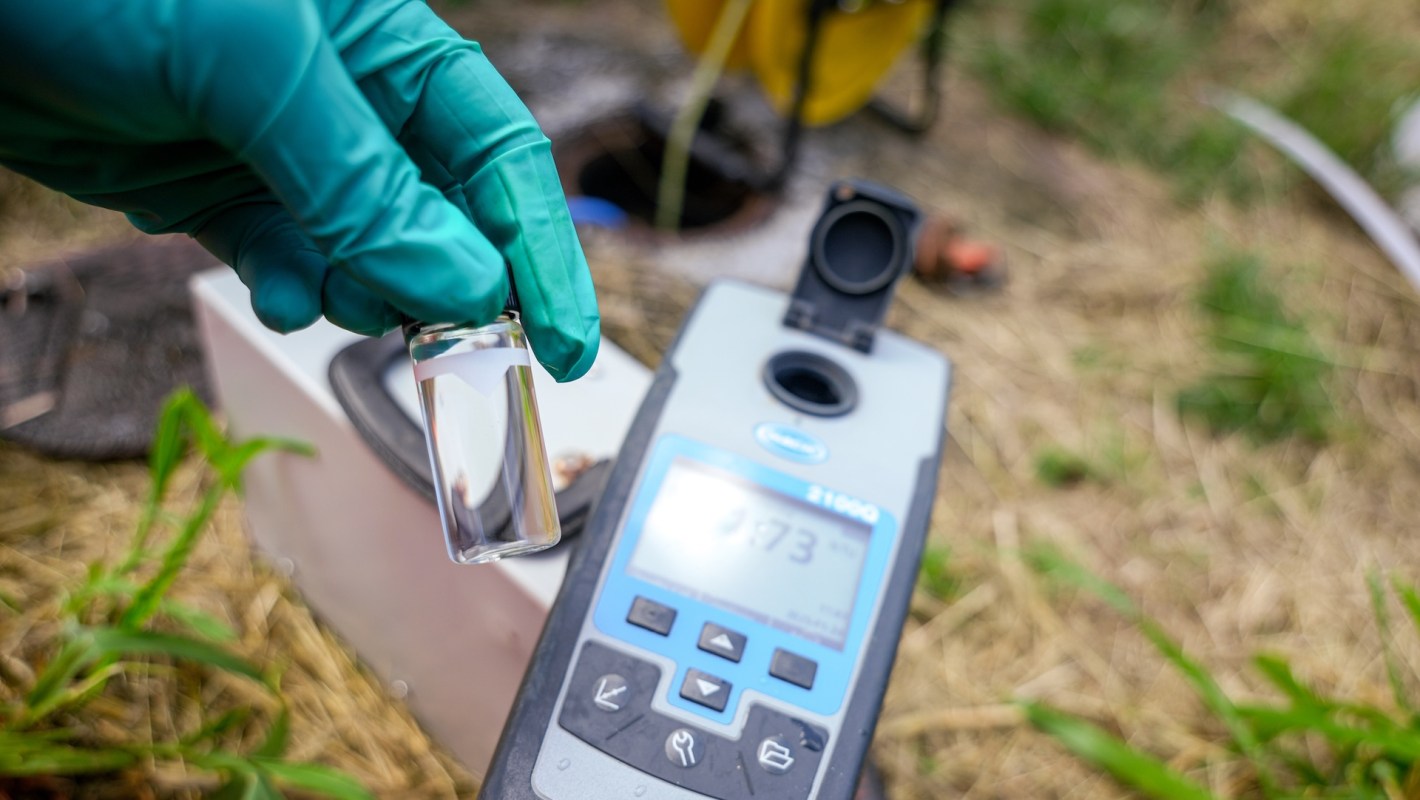
Shortly after moving into a newly built home in Texas Hill Country, a homeowner with a private well started experiencing hard water spots everywhere and a strong sulfur odor.
They posted on Reddit to ask for guidance on what water tests to run before deciding on treatment equipment.
Here's what to know
In the Reddit thread, the homeowner said the county lab offers a $100 private well analysis covering hardness, iron, sulfate, chloride, nitrate, fluoride, pH, conductivity, total dissolved solids, and drinking water bacteria such as total coliform and E. coli. The homeowner wanted to know which extra tests would make it easier to choose the right water treatment systems.
The central advice was to build from that panel rather than replace it. One commenter said, "The $100 package is the right base," and recommended adding manganese and alkalinity, plus arsenic if the family expects to drink from the tap. The commenter added that manganese "acts like iron on a softener or iron filter," while alkalinity helps indicate whether oxidizing media or an air-injection setup is suitable.
Because metals carry a "$20 digestion fee per sample," the commenter suggested putting manganese and arsenic "on the same bottle." A separate commenter also supported checking arsenic, particularly if agriculture or industry is nearby.
The smell issue also drew a different kind of recommendation: don't assume a whole-house filter is the answer. Since hydrogen sulfide can gas off before a lab test captures it, the suggested first move was to run hot water and cold water separately and compare the odor.
TCD Picks » Quince Spotlight
💡These best-sellers from Quince deliver affordable, sustainable luxury for all




More background
That simple hot-and-cold test helps narrow down the cause. If the rotten-egg smell appears only on the hot side, the commenter said it may be the water heater anode reacting with sulfate, which they described as common in Hill Country water.
If that is the source, the suggested fix is far smaller than installing a new filtration system. The commenter said "an aluminum/zinc or powered anode" could solve the smell "for way less than any filter."
If the cold water smells too, the problem points more toward hydrogen sulfide in the well itself, with the ideal treatment depending on how severe it is — potentially air injection, chlorine, or peroxide feed.
Another commenter, from Bulverde, said they tested their water before and after adding a whole-house filter and still measured ".006 ppm arsenic." That result, they said, led them to plan a reverse-osmosis system at the kitchen sink for drinking water.
What can be done?
The thread's practical takeaway was to get the testing sequence right before spending on equipment. The broad consensus was to begin with the $100 county package, add manganese and alkalinity at minimum, and include arsenic if the household plans to drink from the tap.
The discussion also included one softener-related detail: a commenter said hardness is reported in mg/L and can be converted to grains by dividing by 17.1.
The homeowner replied, "We suspect it is just the hot water producing the rotten egg smell, so we'll look into the hot water heater solution first!" If that suspicion is correct, the first money spent would go toward the water heater rather than a larger filtration system.
Tankless water heaters also came up as an option. A commenter said, "Tankless will almost certainly kill the smell." The same commenter also warned that very hard water can scale a tankless heat exchanger quickly, making a softener and scheduled descale flushes important before taking that route.
For anyone keeping the existing tank, the same commenter offered an affordable order of operations: "If you keep the tank for now, swapping the anode and flushing it is the cheap way to confirm the theory before spending real money."

Get TCD's free newsletters for easy tips, smart advice, and a chance to earn $5,000 toward home upgrades. To see more stories like this one, change your Google preferences here.






