


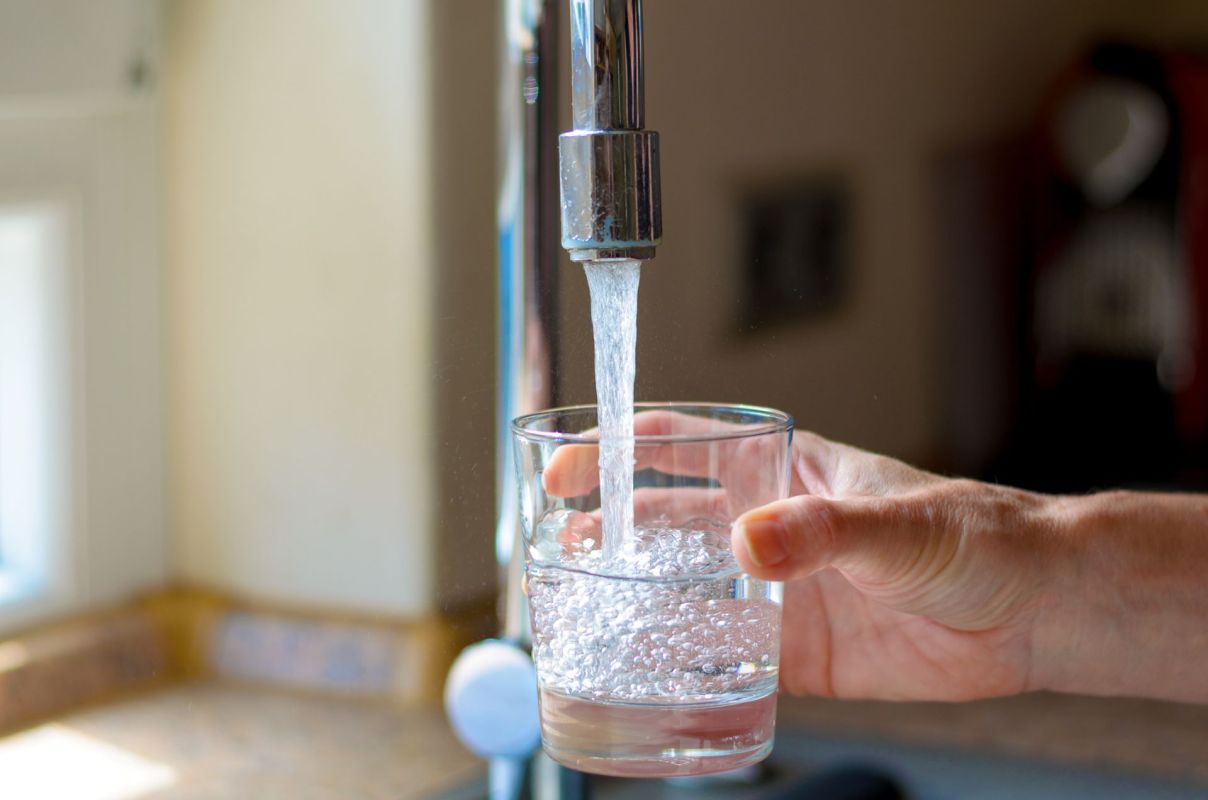
If you've ever wondered whether your tap water needs a filter, the answer isn't as straightforward as many households might expect.
Here's what to know
As experts told The Guardian, municipal systems in the United States often produce water that "tends to be really well treated," even though not every household faces the same conditions.
A household's need for a filter comes down to a few basic questions: what contaminants are present, what source supplies the water, and whether anyone at home has health issues that change the calculation.
That confidence in treated tap water extends to some specialists themselves. Kimberly Parker, a Washington University in St. Louis environmental engineer who studies chemical contaminants in drinking water, said that "many environmental engineers choose not to use filtered water," reflecting their trust in treated tap water.
Still, potential problems vary. The U.S. Geological Survey estimates PFAS are present in 45% of U.S. tap water; lead remains tied to aging infrastructure; and UCLA professor Yoram Cohen said private wells can face nitrate pollution, arsenic, chromium, and salinity.
Yolanda McDonald, lead investigator of the Drinking Water Justice Lab at Vanderbilt University, argued that broad assurances miss real disparities: "There has been a myth in the United States that drinking water is safe for everyone. We know that's not true."
TCD Picks » Quince Spotlight
💡These best-sellers from Quince deliver affordable, sustainable luxury for all




More background
Part of the issue is that contamination does not always start at the treatment plant itself.
Before water enters distribution systems, treatment plants test for more than 90 contaminants. But lead and other pollutants can be introduced later, as water travels through pipes and into older homes, so water that left the plant in good shape may be compromised at the tap.
Because no amount of lead is considered safe, McDonald said the need for pipe replacement remains widespread, and people in homes built before the 1990s may want to check whether lead pipes are present.
Not every risk comes from neglect or old pipes. Utilities use chlorine to eliminate harmful pathogens, but when it reacts with organic matter in water, it can form trihalomethanes, or THMs, a category of disinfection byproducts.
According to Parker, when systems do run into violations, "disinfection by-products, including THMs, are one of the most common causes."
People on private wells face a different oversight landscape. About 43 million Americans get their water this way, but wells have no federal monitoring requirement or public disclosure tool comparable to the Consumer Confidence Report.
What can be done?
For consumers trying to assess their own water, experts pointed first to the cheapest and easiest step: review the local Consumer Confidence Report and look up the water system in the Safe Drinking Water Information System.
Those records can indicate whether a local issue exists and needs attention.
When testing identifies contamination, experts advise matching the filter to the specific contaminant rather than buying one at random.
Parker cautioned against assuming every product solves the same problems: "A lot of people are really worried about lead, but some popular filters you can buy don't treat lead."
Among the more effective tools for removing PFAS, lead, and THMs are reverse osmosis systems, though they usually cost more upfront than pitcher-style models.
Pitcher filters usually offer the lowest-cost entry point, but they often need new cartridges every few months. Whole-house carbon filters and reverse osmosis membranes cost more at the start, though the filters may only need annual replacement and the membranes can last three to five years.
Some immediate measures cost little or nothing. Letting the water run after it has been sitting in the pipes is one of the simplest.
As Parker put it, "Lead concentrations can build up in that stagnant water that's just been sitting in the pipe."
Health status can also change the answer, especially for people dealing with a medical condition.
On that point, Daniel Giammar, principal investigator at Trusted Tap, said people should "consult with their physician about what type of water they're drinking" and whether it could affect their specific needs.
Where can I learn more?
Here are a few stories on PFAS in drinking water, contamination harms across the country, a Georgia tap-water emergency, bacteria in household drink containers, and nanoplastics in bottled water.
• An EPA analysis warned that PFAS in drinking water amounts to a public health disaster.
• Across the United States, researchers linked contaminated tap water to significant health harms.
• Near Atlanta's airport, a fuel spill left tap water unsafe to drink for residents.
• Scientists found some household containers can spread bacteria through stored drinks, raising concerns for children.
• A treatment-plant study found bottled water may hold more nanoplastics than expected compared with tap water.

Get TCD's free newsletters for easy tips, smart advice, and a chance to earn $5,000 toward home upgrades. To see more stories like this one, change your Google preferences here.






