


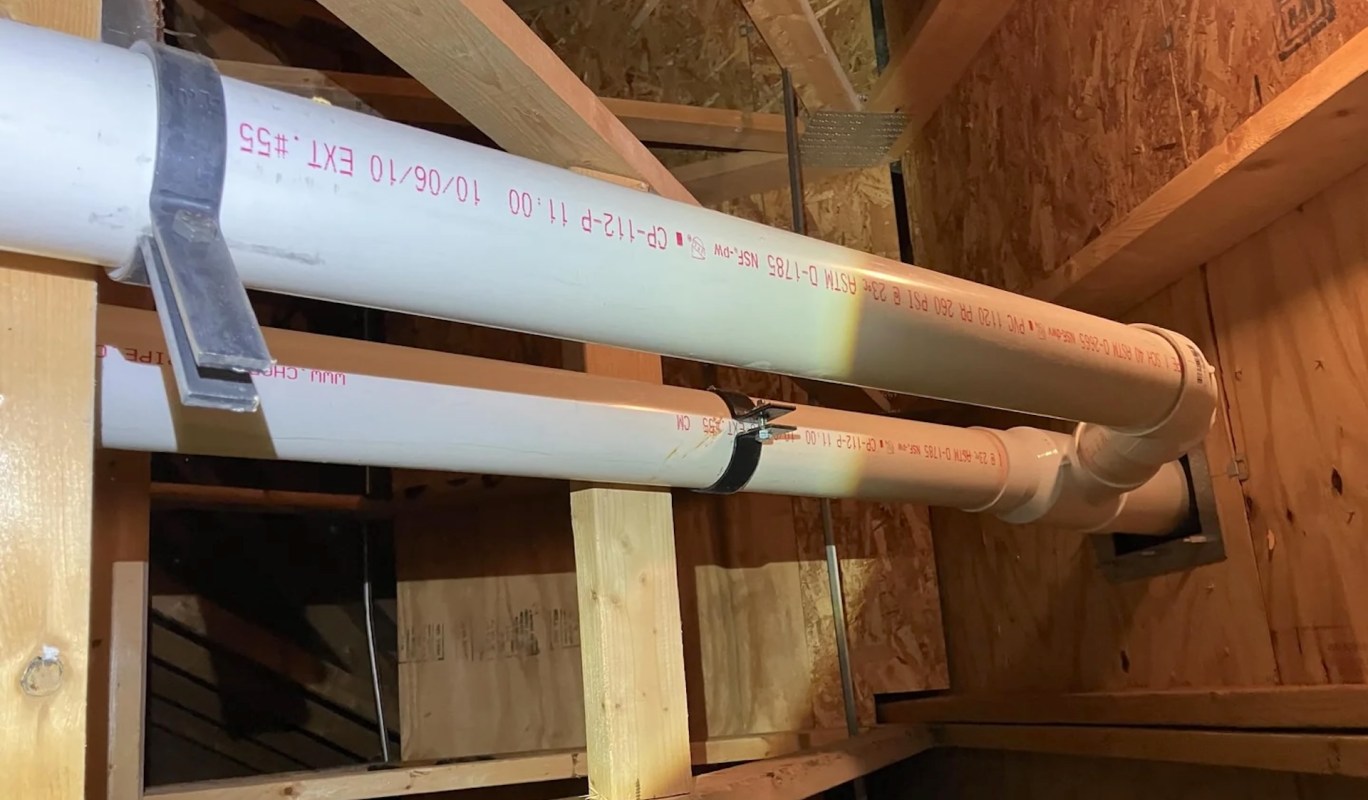
While checking an attic for possible leaks, a homeowner came across a venting arrangement that looked wrong. The intake and exhaust lines from a tankless water heater appeared to come together just beneath the roof.
Here's what to know
The question came up in a Reddit thread, where the homeowner said a Navien tankless unit's venting could "appear to be joined just under the roof" and worried, "Don't think exhaust should be sucked back in with inlet air." The replies said the installation was normal.
One commenter answered simply: "Concentric roof vent," with a diagram of how that vent works. Another commenter explained further: "Pipe within a pipe. Exhaust runs straight up in the center, and fresh air is drawn in around it."
This type of vent termination is common on sealed-combustion gas equipment, including tankless water heaters and some furnaces. It lets both intake and exhaust use one roof assembly while keeping the two air paths separated inside the vent.
More background
In this case, what looked like a dangerous shortcut was actually a standard direct-vent design.
Using one roof opening instead of two can also have a practical upside by reducing the number of possible leak points. Even so, homeowners should check unusual-looking venting against the manufacturer's instructions rather than judge it by appearance alone, which can help them avoid unnecessary repairs.
The homeowner also noted that the house's gas heating system seemed to use the same kind of setup, another clue that these vents are widely used across combustion appliances. The key question is whether the installation matches the manufacturer's approved method, not whether it looks odd during a quick attic inspection.
What can be done?
If something around your water heater looks off, start by checking the model number and installation guide. A quick review can show whether you are seeing an actual defect or just an unfamiliar design feature, potentially saving you from an unnecessary service call.
Crushed by your bills? See instant solar savings from vetted installers in just a few clicks With energy prices through the roof, there's never been a better time to go solar — and EasyHome can help you find the best prices from the best installers in your area. EasyHome takes the guesswork and headaches out of energy upgrades by showing you estimated savings from a network of vetted local partners. To get started, just enter your ZIP and share a few details about your home — seeing your estimate is really that easy. |

If your water heater is nearing the end of its life, it may also be a good time to compare replacement options based on monthly operating costs, not just upfront price. Heat pump water heaters can sharply cut electricity use, which is why cost-conscious homeowners are paying more attention to them.
For people exploring that route, Cala offers smart heat pump water heaters built around household demand. Its customizable smart heat pump water heaters help homeowners decrease their energy bills by heating water exactly when it's needed. This reduces wasted energy while keeping hot water ready for showers, dishes, and laundry.
As more households look for ways to lower utility bills without giving up comfort, smarter water-heating tech is becoming a more practical upgrade path. Options such as Cala show how replacement decisions can turn a routine home expense into a long-term money saver.
Where can I learn more?
For more on water-heater venting, safety concerns, and replacement choices, these stories dig into similar homeowner questions.
• One homeowner shut off a water heater after a chimney vent warning raised safety concerns.
• For many households, a tankless water heater can trim energy use and lower bills.
• On Reddit, a worried homeowner found that 180 ppm is too high near a new furnace.
• Health experts warn that a gas stove is still an indoor combustion source.

Get TCD's free newsletters for easy tips, smart advice, and a chance to earn $5,000 toward home upgrades. To see more stories like this one, change your Google preferences here.






