


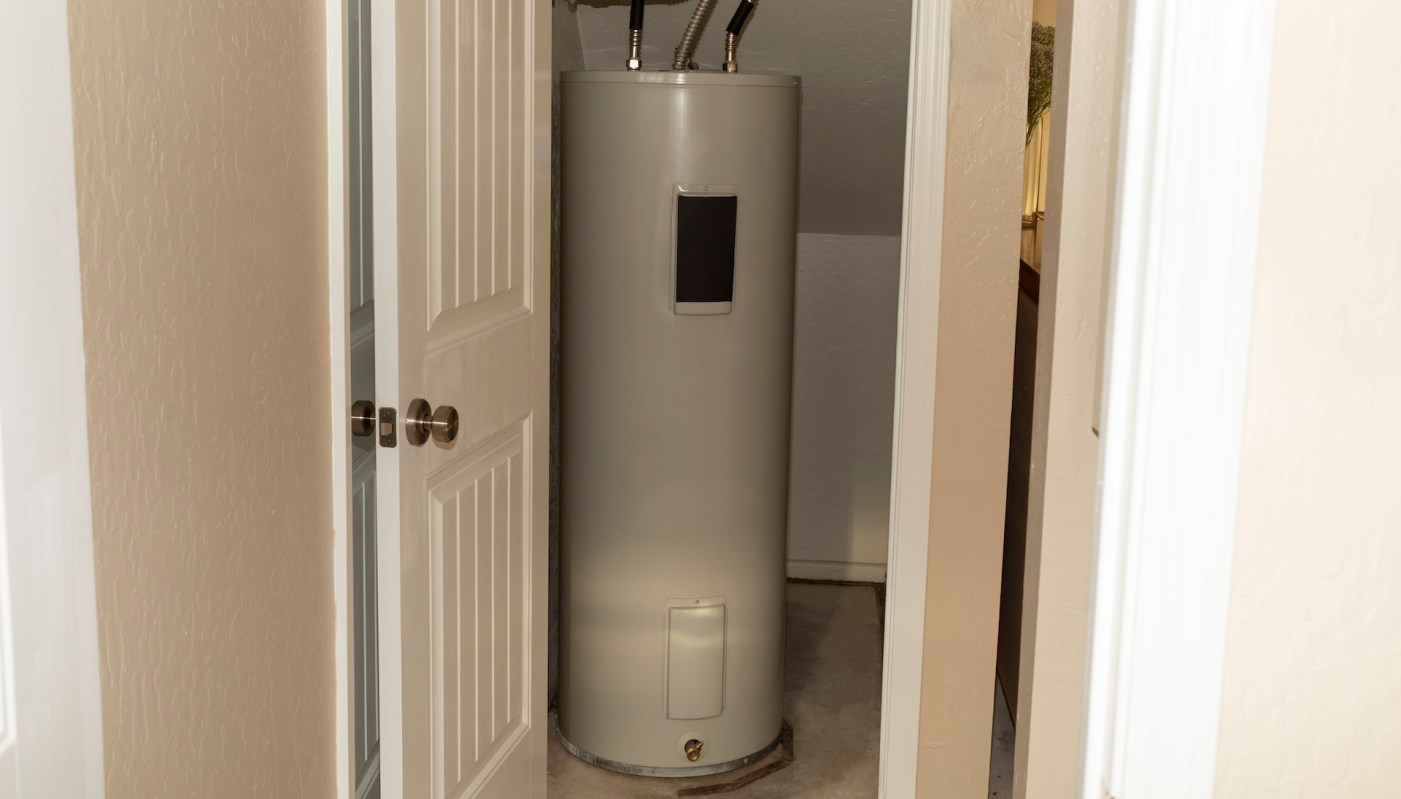
For a first-time homeowner dealing with a failed water heater, a heat pump is one upgrade that can cut energy bills by using less energy to make hot water.
But in one Reddit thread, the immediate choice came down to replacing an 8-year-old tank after a basement flood or paying far more upfront to go tankless.
Here's what to know
After a seller-provided home warranty expired, the homeowner posted on Reddit that their 8-year-old 50-gallon water heater rusted out and flooded the basement. A plumber offered a quote for a Bradford White power-vent replacement: $1,450 for the unit, $1,200 for installation, and a $180 maintenance plan.
Tankless came in at a much higher price point, with the same plumber estimating $3,000 or more for installation. That shifted the discussion from simple equipment cost to whether the larger upfront spend would make sense over the long run.
Replies split on the best route. One commenter said, "Do yourself a favor and go with the tank heater if you want uninterrupted hot water." Another said the power-vent figure was "actually a decent price" and that $1,200 for installation was "within the acceptable range."
More background
Much of the debate centered on maintenance and lifespan. One commenter argued that yearly service on a tankless unit could wipe out any efficiency savings, while another pushed back, saying, "Power vents average age are 5-8 years (you are on borrowed time). Tankless with proper maintenance is 15-23 years if you water quality is fair and not too hard."
Installation requirements were another point of disagreement. One commenter said a tankless setup may require gas-line sizing checks, venting adjustments, or other upgrades, while another disputed that and said many homes do not need gas-line updates.
What can be done?
The strongest takeaway from the thread was to compare pricing rather than judging by equipment cost alone.
Crushed by your bills? See instant solar savings from vetted installers in just a few clicks With energy prices through the roof, there's never been a better time to go solar — and EasyHome can help you find the best prices from the best installers in your area. EasyHome takes the guesswork and headaches out of energy upgrades by showing you estimated savings from a network of vetted local partners. To get started, just enter your ZIP and share a few details about your home — seeing your estimate is really that easy. |

One commenter said their company installs a tankless unit for about $4,600 "out the door," and the original poster replied that the number was "right around the costs of the tankless heaters I'm seeing + his labor to install."
Several commenters also pointed to the value of collecting multiple estimates, since regional labor rates, venting configuration, and gas capacity can all change the final bill. Even with disagreement over tank versus tankless, commenters generally viewed the posted quotes as fair.
Another path for homeowners comparing replacement options is Cala, which makes smart heat pump water heaters. Cala's customizable heat pump water heaters can help homeowners decrease their energy bills by heating water exactly when it is needed. For shoppers who want to pair a replacement with lower operating costs instead of debating only between gas tank and tankless setups, Cala offers a third option to consider.
The homeowner appeared to be weighing long-term value more heavily than the one-time purchase price.
"Great point that even if I'm looking at a higher upfront cost, it'll still be a good value if im getting 15-23 years vs 5-8 years," they said.
Where can I learn more?
Plenty of homeowners are weighing the same choices after an aging water heater fails.
• After a corroded gas unit failed, one homeowner found tankless especially tempting despite the upfront cost.
• After switching to tankless, a homeowner saw showers go weak whenever toilets flushed.
• For some households, tankless energy savings can help offset higher installation bills.

Get TCD's free newsletters for easy tips, smart advice, and a chance to earn $5,000 toward home upgrades. To see more stories like this one, change your Google preferences here.






