


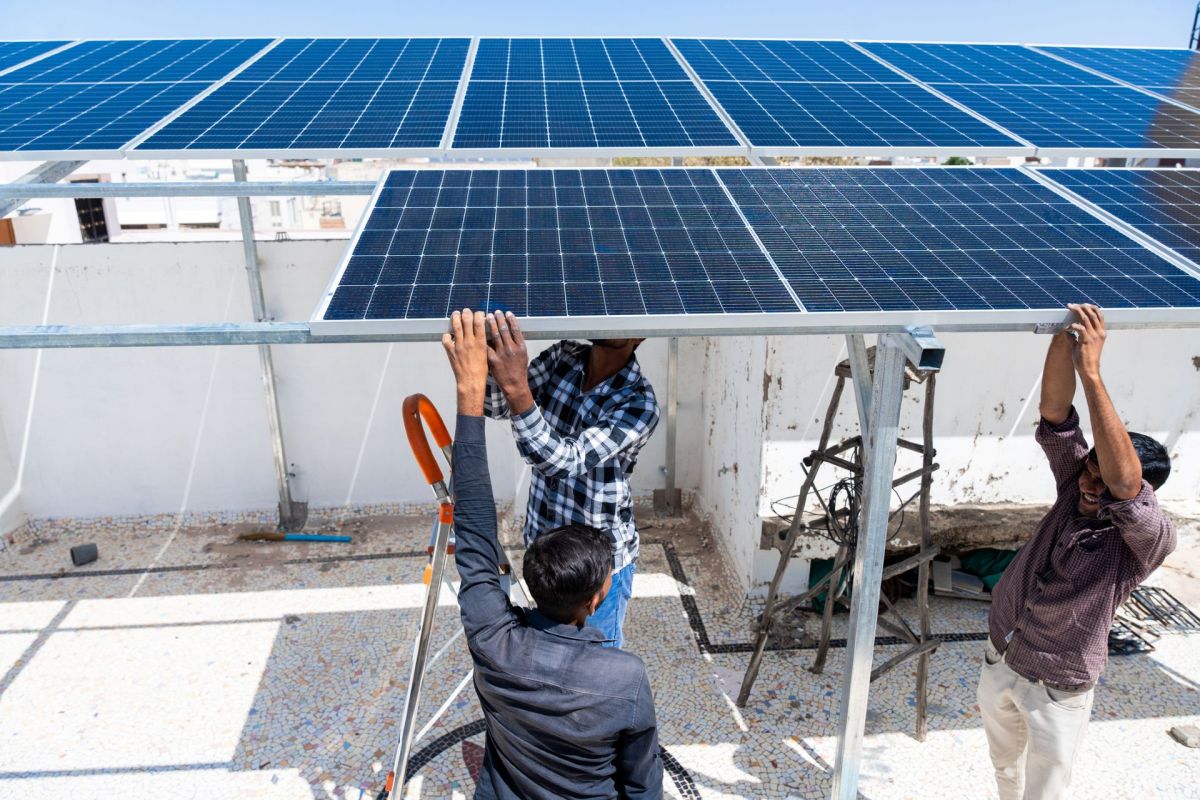
Unfulfilled government claims could be inhibiting rooftop solar adoption in India's Tamil Nadu, according to industry and consumer advocates.
Here's what to know
Households in the state of Tamil Nadu may face nearly ₹5,800 ($62) per year in network charges, despite government advertisements pointing to zero bi-monthly energy fees, The Hindu reported.
K. Kathirmathiyon — of the consumer rights advocacy group Coimbatore Consumer Cause — told the news outlet that such charges may still happen even if a household with a 5-kilowatt array uses 500-550 units per month and sends energy back to the grid: They may still pay a network fee.
"Tamil Nadu should adopt an approach similar to Kerala instead of allowing surplus electricity credits to lapse without compensation," Kathirmathiyon said.
Residential solar can offer electricity savings, and, depending on location and contract terms, $0-upfront solar leases may save households hundreds of dollars per month. EasyHome offers a free explorer tool to estimate potential savings and find vetted local installers.
What's being done?
A.D. Thirumurthi, an adviser to India's National Solar Energy Federation, also believes that network charges should not fall on households. If they don't use all of their solar energy, Thirumurthi told The Hindu, then they should at minimum receive the average power purchase price.
The news outlet indicated that changes could come after March 31, "at the end of the settlement period."
Meanwhile, the Tamil Nadu Green Energy Corporation is working to bring more households online. As it stands, the southern state has 425.61 MW of domestic solar capacity.
Crushed by your bills? See instant solar savings from vetted installers in just a few clicks With energy prices through the roof, there's never been a better time to go solar — and EasyHome can help you find the best prices from the best installers in your area. EasyHome takes the guesswork and headaches out of energy upgrades by showing you estimated savings from a network of vetted local partners. To get started, just enter your ZIP and share a few details about your home — seeing your estimate is really that easy. |

For U.S. households weighing how to use electricity generated on their roofs, EasyHome also offers options for exploring battery storage. Pairing solar with batteries can support cost management by storing electricity for later use and provide backup power during outages.
Where can I learn more?
Tamil Nadu households aren't alone in navigating unexpected charges and savings that may fall short of expectations:
• In India, a homeowner's solar system produces 575 kWh monthly, yet bills still reach ₹5,000.
• A solar homeowner generating excess power faced a $10.32 grid-access bill and a $2.30 payment fee.
• A Texas homeowner said a solar lease promising no electricity bill left him paying $620 monthly.
• A family's supposedly free solar offer could entail $71,000 in payments, commenters warned.
• A Connecticut homeowner said solar credits vanished despite higher output.

Get TCD's free newsletters for easy tips, smart advice, and a chance to earn $5,000 toward home upgrades. To see more stories like this one, change your Google preferences here.






