


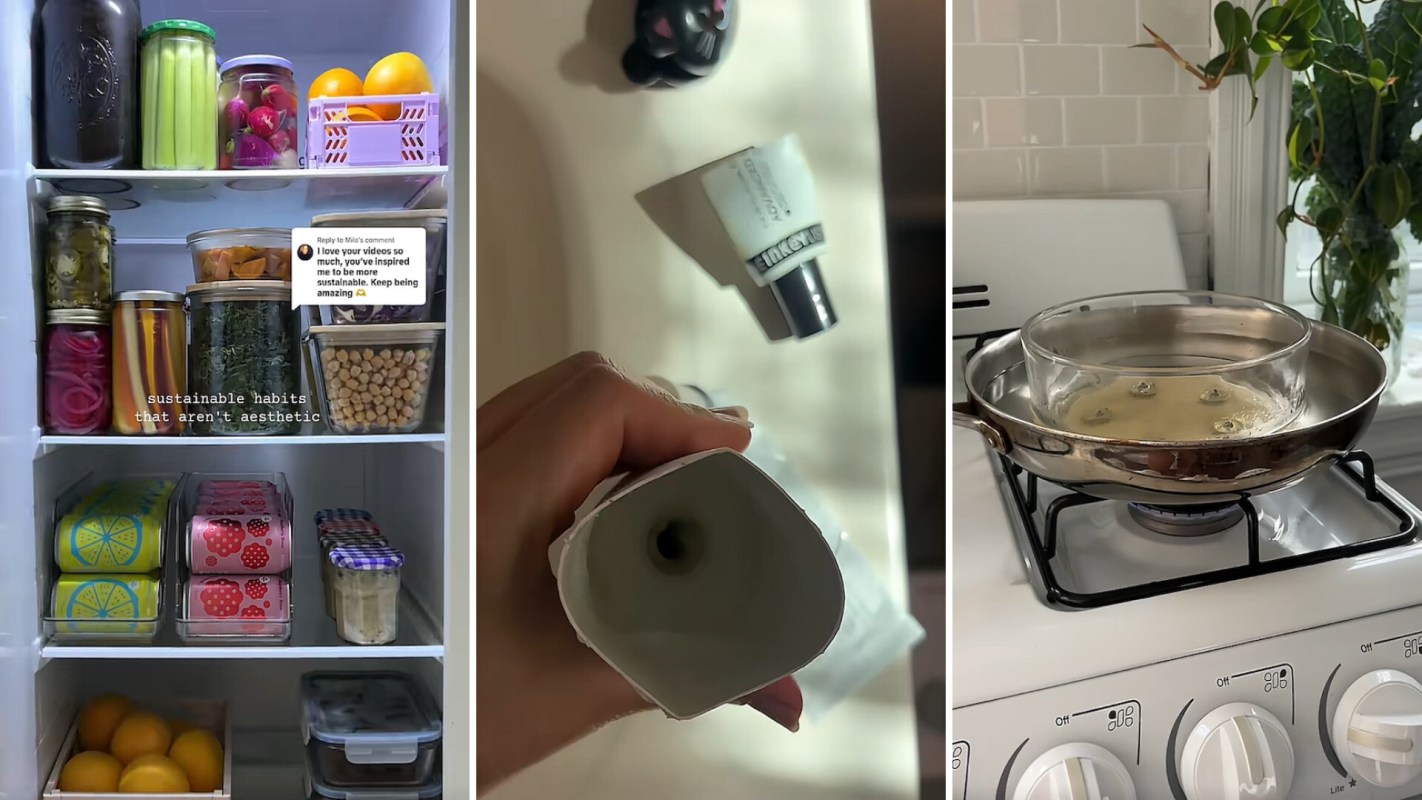
Sustainability is often presented as something polished, complete with matching jars, curated shelves, and photogenic swaps.
But TikTok creator Kelly (@plantbased.baby) is drawing attention to the less glamorous side of cutting waste — and showing that it can save money precisely because it is not always pretty.
Here's what to know
In a post, the creator focused on practical, not picture-perfect, ways she reduces waste at home. At the time of capture, the video had over 30,000 likes, as the concept clicked with viewers.
@plantbased.baby Replying to @Mila a few ~unsexy~ sustainable practices of mine recently, because it can't always be amber glass and upcycled jam jars #sustainability #ecofriendly #sustainable #reducereuserecycle #thrifted ♬ What Floor? - idokay
In a TikTok video, Kelly argued that usefulness matters more than appearance in low-waste living.
Some of the habits she highlighted included cutting open skincare tubes to get at leftover product, melting the wax left in old candles on the stove, saving ice packs from a PR package, reusing plastic bags for cat litter, and keeping a beat-up thrifted lampshade until she can flip it. She also used a gluten-free bread bag in a vinegar soak for her shower head.
"Sustainability can definitely be cute and aesthetic at times, but true sustainability often isn't,"
TCD Picks » Quince Spotlight
💡These best-sellers from Quince deliver affordable, sustainable luxury for all




Kelly explained.
One example of that tradeoff came with plastic bags: "I haven't bought a Ziploc bag in eight years because I've been using these reusable ones, but there are certain tasks that call for a plastic bag."
More background
Online, sustainability is often filtered through aesthetics. Matching containers and neatly labeled pantries may be appealing, but they can also make lower-waste habits feel expensive or unrealistic for people trying to stretch what they already have.
Some of the most useful waste-cutting habits are also the least attractive, or "unsexy," like Kelly put it in the post caption.
Getting the last bit out of a skincare tube by cutting it open can prevent a product from being tossed too soon, and wax left at the bottom of a candle jar can still serve a purpose instead of being discarded. The same thinking applies to home items, including a lamp that still works even if its current shade is "pretty ugly and pretty beat up."
What's being done
Commenters shared similar habits and suggestions.
"Girl your trick with baking soda and water soak for pans are life saving," one wrote. "I tried it and my pan looks brand new."
Another suggested ice packs: "Cat rescue organizations or local individuals in your area can use styrofoam coolers during the winter to make cat shelters so they can survive below freezing temperatures."
Kelly's tips are great ones to follow, too. Buying fewer disposable bags, replacing toiletries less often, and thrifting home goods instead of purchasing new ones can all reduce waste while also trimming routine spending.
Where can I learn more?
More examples of these everyday ideas come from the kitchen, the bathroom, and the pantry.
• In crowded bathrooms, sustainable skincare habits can stretch products and cut packaging waste.
• On Reddit, cooks are reusing plastic freezer bags to save money and sidestep disposables.
• In busy kitchens, resealable bags kept in rotation are keeping food fresh longer.
• On Reddit, reusable glass jars are keeping leftovers useful instead of heading straight to the trash.

Get TCD's free newsletters for easy tips, smart advice, and a chance to earn $5,000 toward home upgrades. To see more stories like this one, change your Google preferences here.






