


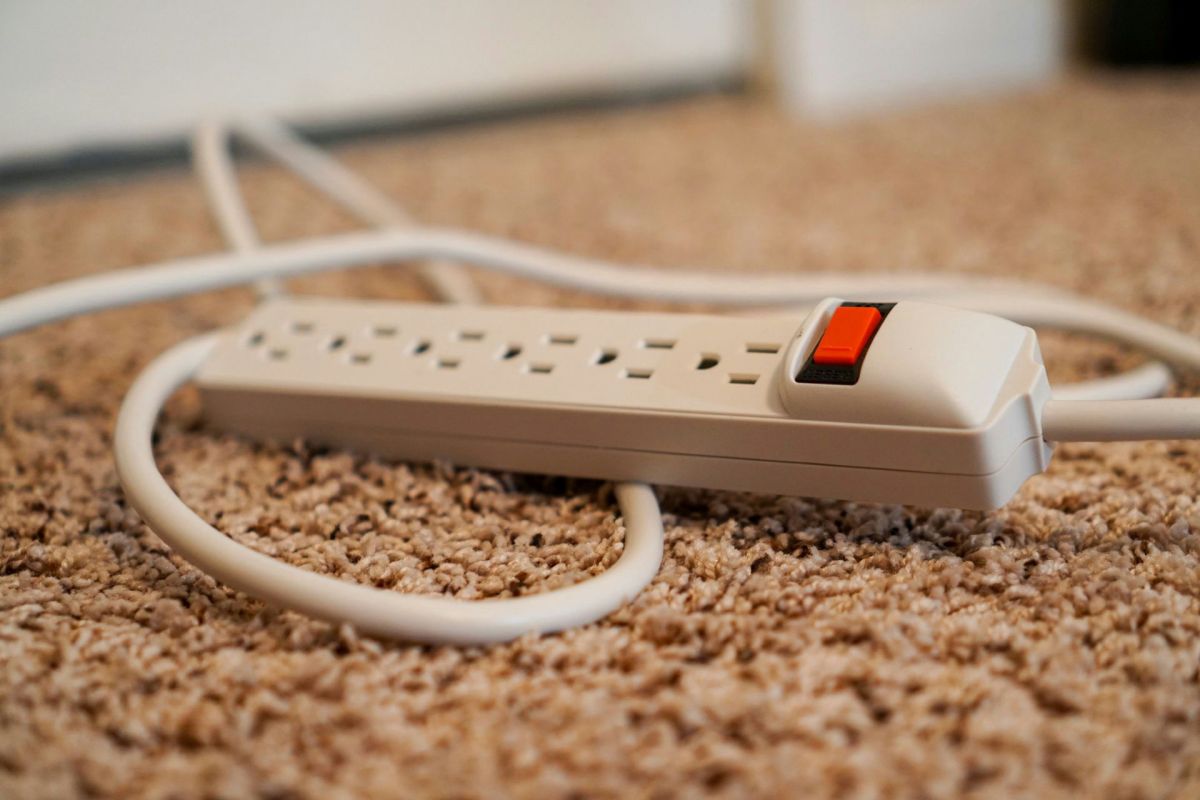
Backup power can feel like a smart move during storm season — until a nearby lightning strike takes out the very equipment meant to protect your devices.
One Reddit user learned this lesson the hard way. During a lightning storm, they reported hearing a sharp "POP" followed by the smell of ozone. When they looked further, they found their UPS/backup battery had burned out, along with several connected devices.
Here's what to know
In a post to the r/preppers subreddit, the original poster shared what they learned from the incident.
After researching what happened and how to avoid a similar situation in the future, the OP's main takeaway was that surge protectors wear out over time.
As the OP explained, surge protectors are built to withstand only a certain level of power surge. For example, cheaper consumer models often offer only about 500 to 600 joules of protection, while higher-end retail units can reach 2,000 to 3,000 joules.
The poster said their own 900-joule UPS lasted through years of repeated outages and brownouts before it finally failed.
TCD Picks » Quince Spotlight
💡These best-sellers from Quince deliver affordable, sustainable luxury for all




Importantly, the OP also pointed out that, even though some people use the terms "power strip" and "surge protector" interchangeably, some power strips offer no surge protection at all. Additionally, any surge protector, no matter its capacity, is far less useful if the wall outlet it is attached to isn't properly grounded.
Further, the OP added that, while whole-house surge protection might seem expensive at first, it may be worth weighing that expense against the cost of replacing a home's electronics and appliances or of filling one's house with separate, individual surge protectors.
One commenter chimed in to share just how severe power-surge-related damage can be.
"We lost all the tv's, washer, microwave, stove and freezer," they said. "Lost my iPhone and his android."
More background
Adding to the complications, damage from a power surge does not always show up right away. Even if a surge protector minimizes the impact of a single event, it can significantly reduce the protection that same surge protector can provide in the future.
"What stinks about power surges is that repeated events can silently degrade your equipment over time, and appliances are fine until they aren't," the OP wrote.
Replacing even a handful of damaged devices can quickly become a major expense. Commenters described losing TVs, phones, laptops, dishwashers, AC units, and kitchen appliances after storms or utility-related surges. Even without a prolonged outage, a brief spike can still leave behind serious damage.
However, some commenters mentioned turning to insurance carriers and utility companies for potential reimbursement.
"Power company covered everything," said one user. "Covered the AC repair. And sent my laptop off for repair."
What can be done?
Rather than treating surge protectors as permanent fixtures, the original poster said they plan to label each one with its installation month and year and keep a rough count of the power events each surge protector has gone through. That way, the OP hopes to replace the devices that have lost their protection capacity.
Other users recommended comparing joule and clamping ratings, checking that outlets are properly grounded, and verifying that a UPS will work with a generator or home battery setup.
For larger appliances, some users said whole-home surge protection installed at the main panel can provide another layer of defense and may still cost far less than replacing a refrigerator, stove, washer, AC system, or home office setup after a single severe event.
And, when strong storms are in the forecast, old-school methods like simply unplugging certain appliances still have their place.
Where can I learn more?
If repeated outages have you thinking beyond a basic surge strip, these articles explore other ways people keep the power on when the grid falters. They cover portable batteries, whole-home backup systems, off-grid living, and solar setups built for blackouts.
• For families riding out outages, a portable battery paired with solar can keep essentials running.
• Anker's battery system rivaling Tesla gives homeowners another way to prepare for grid failures.
• One homeowner said off-grid power kept life normal even through a scorching outage.
• In Puerto Rico, home batteries paired with solar are helping residents ride out widespread blackouts.
• Startup Pila says its plug-in home battery can keep a fridge running without rewiring.

Get TCD's free newsletters for easy tips, smart advice, and a chance to earn $5,000 toward home upgrades. To see more stories like this one, change your Google preferences here.






