


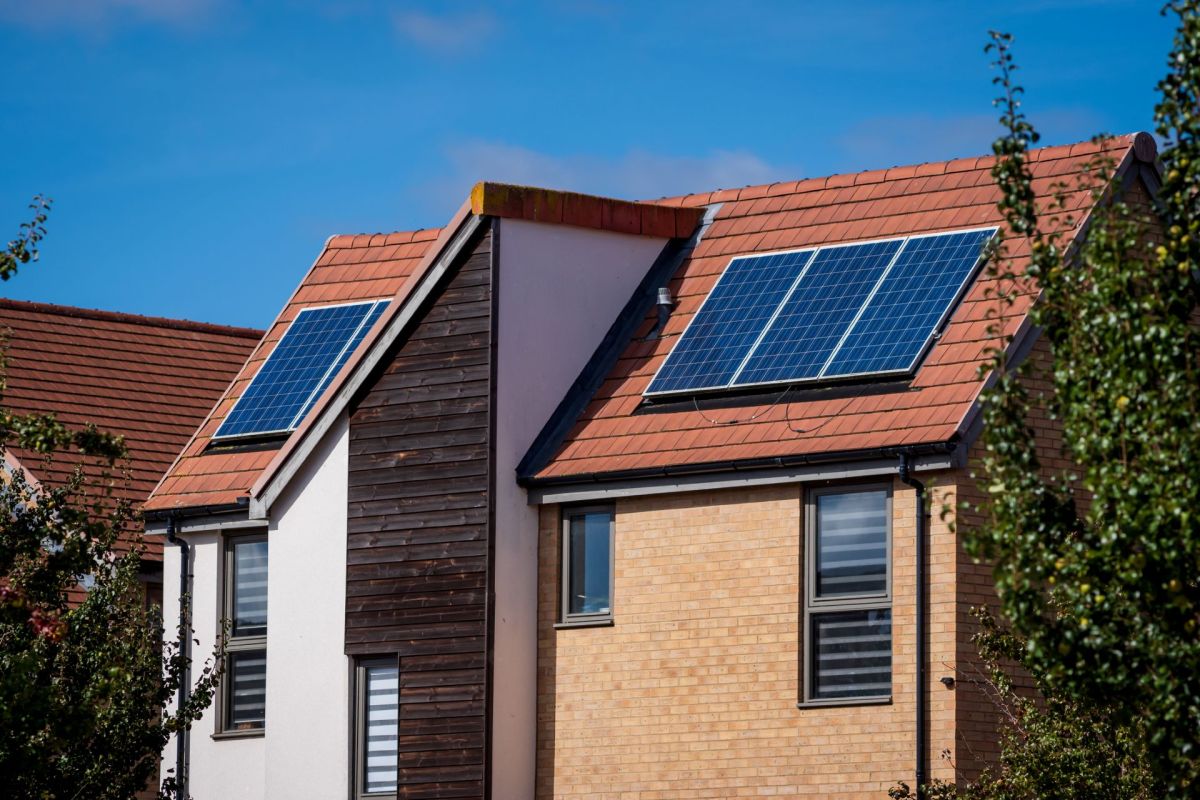
U.K. homeowners who have delayed installing solar panels could be missing out on thousands of pounds in potential energy bill savings.
An analysis shows the payback period for a typical system has fallen sharply, making rooftop solar a fast way to lower electricity costs.
Here's what to know
Households in Southampton and Hampshire are among those reaping financial returns from solar, according to the Solar Cost Index from Solar4Good, as the Daily Echo reported.
Solar4Good estimated that a typical 4-kilowatt system can now recover its cost in seven to 11 years, whereas in 2014 that timeline often ran beyond 15 years.
The shift reflects changes in both installation costs and energy prices. Installation costs have fallen to £5,000 to £8,000, while the Office of Gas and Electricity Markets' July-September price cap set electricity at 26.11 pence per kilowatt-hour. In 2014, a comparable install typically cost £9,000 to £13,000, and electricity averaged roughly 14-15 p/kWh.
If you're considering ways to get even more value from solar, it's worth exploring EnergySage's free tools to compare home battery storage options and competitive installation estimates. EnergySage has teamed up with the electrification brand Qmerit to guarantee you get the best price on home battery storage solutions.
Another option is Pila, which offers excellent battery backup choices. Its plug-and-play batteries are priced at a fraction of what whole-home backup systems cost.
More background
For most U.K. homes, a 4-kW system can produce roughly 3,400 to 3,600 kWh per year.
Save $10,000 on solar panels without even sharing your phone number Want to go solar but not sure who to trust? EnergySage has your back with free and transparent quotes from fully vetted providers in your area. To get started, just answer a few questions about your home — no phone number required. Within a day or two, EnergySage will email you the best options for your needs, and their expert advisers can help you compare quotes and pick a winner. Solar panels can save you more than $50k over their 25-year lifespan, and EnergySage can help you save as much as $10k on installation. Which begs the question — isn't that worth an email or two? |

When low electricity bills are combined with Smart Export Guarantee payments, the result could be worth £600 to £800 annually, and homes with heavier energy use could save more than £1,000 a year.
Over 25 years, the benefit could add up to £15,000 to £25,000, depending on how much electricity a household uses and how prices change over time. The analysis also found that solar power can cost under 10 p/kWh across a system's lifetime, which is well below the current grid price.
For July 1 through Sept. 30, OFGEM set the annual cap at £1,862 for a typical dual-fuel household paying by direct debit, which was 13% higher than the previous £1,641 level.
"What we're seeing is a fundamental shift in the economics of solar," Manan Shah, co-founder of Solar4Good, said.
What can be done?
One of the simplest ways for homeowners to boost the financial payoff from solar is to use more of the electricity their panels generate while it's being produced.
Using appliances during sunny hours, charging an electric vehicle at home, and combining solar with a heat pump can all raise savings by cutting the amount of electricity a household needs to buy from the grid.
Battery storage can also help households lower energy costs, keep power available during outages, and get closer to off-grid living. By storing solar electricity for later, a battery can reduce how much power is purchased at night or during peak-demand periods.
"Adding battery storage, for example, can significantly increase the proportion of solar energy used in the home, in some cases lifting self-consumption to 70% or more, significantly reducing reliance on grid electricity," Shah said.
He added that the upside may increase as more homes electrify heating and transportation, saying, "When more of your energy use is electrified and supplied by your own generation, the financial case becomes even stronger."

Get TCD's free newsletters for easy tips, smart advice, and a chance to earn $5,000 toward home upgrades. To see more stories like this one, change your Google preferences here.







