


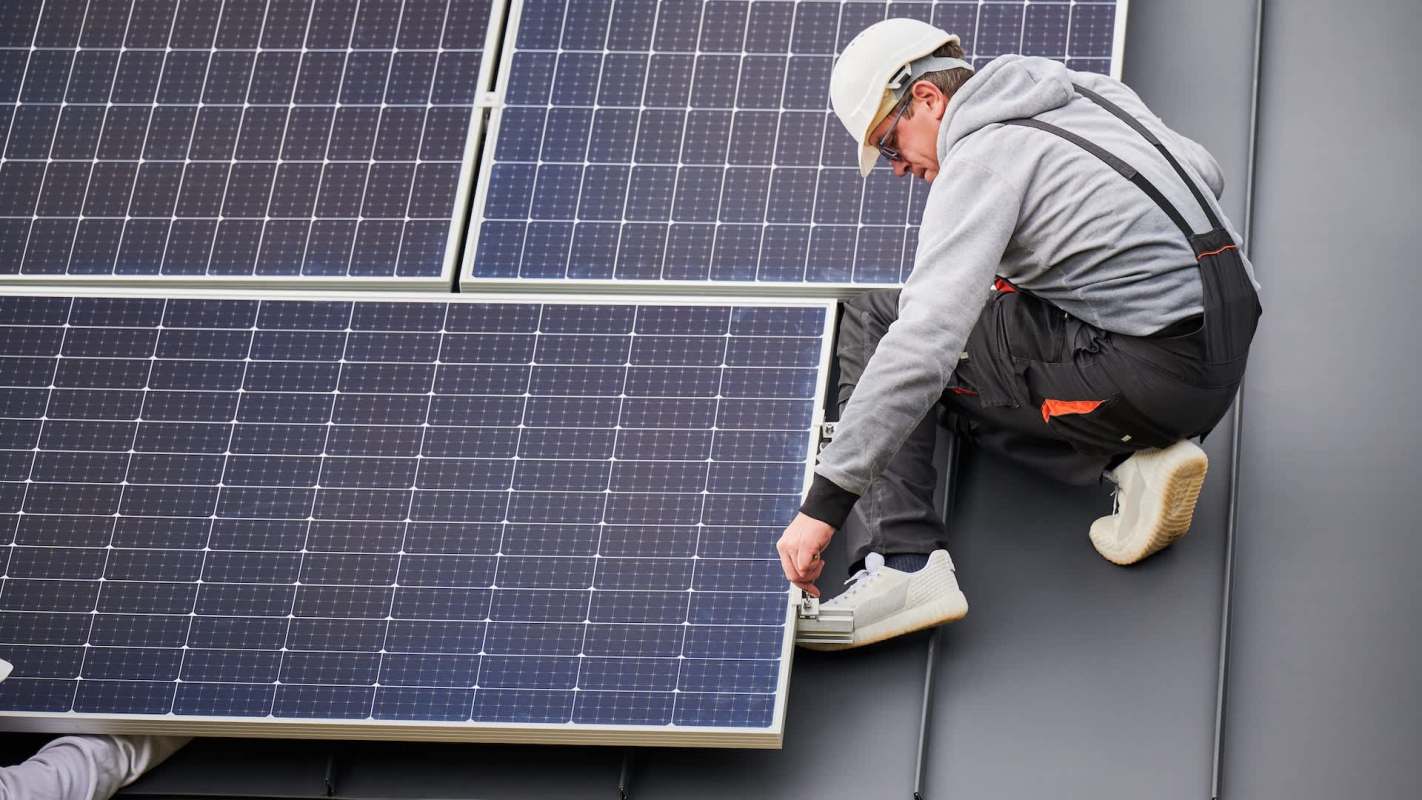
A steep metal roof can turn a routine solar installation into a balancing act. That was the situation facing one electrical contractor, who asked fellow installers for advice after a homemade step system kept slipping on a customer's roof.
The discussion highlighted that the complexity of a solar project often has less to do with the number of panels and more to do with the roof itself.
Here's what to know
In a Reddit post, the contractor laid out a project on a customer's metal roof that included six 8/12 pitches, while also noting that the homeowner did not want roof penetrations. "Customer doesn't want any holes in the roof which is why he went with metal," the original poster wrote, adding: "Any advice would be great!"
Rather than depending on a separate step system, several installers said the best move was to start with the lowest rail and use the installed rails to progress upward.
One commenter said, "We put the rails low side first and use them as a lattice," while another added, "Work your way up from the bottom rail. Makes it harder to layout a perfect square but it is what it is. Better safe than sorry."
The discussion also surfaced other possible solutions, including Cougar Paws, clamp-based footholds for standing seam roofs, hydraulic lifts, ladders, pump jack scaffolds, equipment rented through roofing suppliers, and even spraying Mountain Dew on the roof. The original poster replied, "Got it!! Thanks"
Going solar is still one of the best ways to save money on home energy over time. If you're considering panels, you can explore EnergySage to get free solar installation estimates and compare quotes.
More background
Steep roofs and metal surfaces create a very specific installation challenge because crews need secure footing while also protecting the roof and avoiding unnecessary penetrations. That often requires more planning, more specialized equipment, and more time on-site.
Save $10,000 on solar panels without even sharing your phone number Want to go solar but not sure who to trust? EnergySage has your back with free and transparent quotes from fully vetted providers that can help you save as much as $10k on installation. To get started, just answer a few questions about your home — no phone number required. Within a day or two, EnergySage will email you the best local options for your needs, and their expert advisers can help you compare quotes and pick a winner. |

A home with a simple asphalt-shingle roof may be cheaper and faster to outfit with solar than a home with a steep standing-seam metal roof, even if both systems generate similar amounts of electricity.
What can be done?
Installers may recommend very different mounting methods, safety setups, and equipment depending on your roof, and those differences can significantly affect cost.
That's where EnergySage's free services can be especially helpful. You can also use EnergySage's solar map, which shows the average cost of a home solar panel system on a state-by-state level, along with solar panel incentives for each state. Together, those tools can help readers get the best price for rooftop solar panels and access available incentives.
Readers can also explore EnergySage for information about home battery storage options, including competitive installation estimates.
More From EnergySage
💡Go deep on the latest news and trends shaping the residential solar landscape




Where can I learn more?
These articles highlight how crews work safely, which tools can ease the job, and how homeowners sort through advice when a solar install gets complicated. They also show how a tough installation can open up bigger questions about contractor judgment, new technology, and HOA rules.
• Installers on steep roofs often rethink how panels get up before work even begins.
• At Cosmic Robotics, new machines make solar jobs so much easier for overextended crews.
• Some homeowners still look for sneaky methods to avoid HOA barriers blocking rooftop panels.
Read alongside this one, they offer a clearer picture of what can shape a solar project before the first panel goes up. That added context can help homeowners compare quotes, ask sharper questions, and plan around a tricky roof.

Get TCD's free newsletters for easy tips, smart advice, and a chance to earn $5,000 toward home upgrades. To see more stories like this one, change your Google preferences here.






