


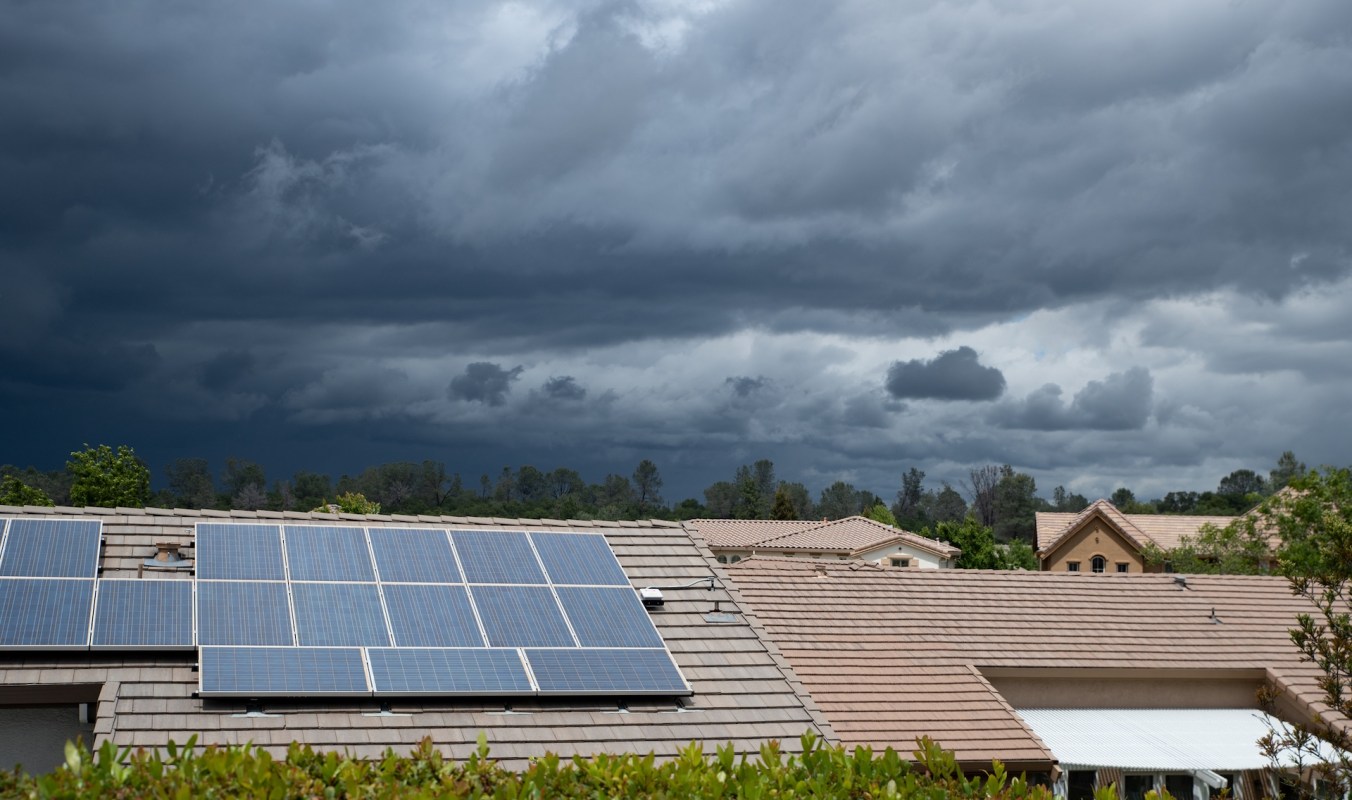
A Reddit discussion about home solar suggests that for many homeowners, rooftop panels are no longer just a math problem about payback periods. Instead, some owners say solar-plus-battery systems are increasingly acting as insurance against outages, letting them keep power when the rest of the block goes dark.
That shift came through clearly in the discussion, where solar owners said one of the biggest benefits can be so seamless they hardly notice it.
Here's what to know
On Reddit, a post in r/solarenergy focused on whether backup power is starting to matter more than monthly savings for people considering solar. The OP said they had begun "looking at solar less as just a way to lower electricity costs and more as a way to have some backup when the grid goes down."
For some respondents, reliability was a deciding factor, especially in areas where outages happen often or follow severe weather.
One user with a 45-kilowatt-hour battery system said they get through about three short outages each month without any interruption at home: "I only know about those outages from notifications from my solar system app."
One user said a four-day wind-storm outage pushed them to compare options after they "Couldn't get gas for my generator," noting that a propane generator was quoted at $12,000 while "Batteries+solar cost about the same."
Another user said their Tesla Powerwall had handled 74 outages over six years, totaling 19 hours of disruptions.
More background
The discussion also included people who viewed solar-plus-storage as a way to stay powered during outages while also guarding against higher utility bills.
Save $10,000 on solar panels without even sharing your phone number Want to go solar but not sure who to trust? EnergySage has your back with free and transparent quotes from fully vetted providers that can help you save as much as $10k on installation. To get started, just answer a few questions about your home — no phone number required. Within a day or two, EnergySage will email you the best local options for your needs, and their expert advisers can help you compare quotes and pick a winner. |

A user in South Africa said their 2022 installation was prompted by increasingly regular outages and noted that electricity prices had risen 14.5% per year since 2008, compared with 5% annual CPI.
Going solar is still one of the best ways to save money on home energy, especially if you are also trying to reduce dependence on an unreliable grid. Homeowners can try EnergySage to get free solar installation estimates and compare quotes.
Users also pointed out that backup power depends on more than simply having panels installed.
One user in the U.K. said "Solar can't normally be used in the U.K. to power a house if the grid is down" because inverters must shut off when the main fuse is pulled.
More From EnergySage
💡Go deep on the latest news and trends shaping the residential solar landscape

Others in the thread said batteries were not necessary for their situations.
One user reported "less than one outage/year" and decided to skip storage, while another user in Arizona said their 2020 solar-and-battery setup had experienced just one outage longer than 24 hours in five years and that steep electricity-price increases still helped them reach break-even.
What can be done?
Users described a wide range of backup setups. One said their whole-house system uses 20 kilowatts of solar and a 27-kWh battery bank, with the option to expand to 54 kWh.
Adding battery storage to a solar setup is one of the best ways to protect your home during outages, save money on energy, and go off-grid. It can also keep essentials like fridges, internet, ceiling fans, and communications running during multiday outages or hour-long tropical power cuts. Homeowners can explore EnergySage for information about home battery storage options, including competitive installation estimates.
EnergySage is also useful on the shopping side: With EnergySage's help, the average person can save up to $10,000 on solar purchases and installations. EnergySage's solar map shows the average cost of a home solar panel system on a state-by-state level, as well as details on solar panel incentives for each state. Together, those resources can help homeowners get the best price for rooftop solar panels and access available incentives.
Where can I learn more?
Here are a few examples of how solar and battery systems can matter most when the grid fails. They follow homeowners using rooftop panels and storage to ride out hurricanes, neighborhood blackouts, and long storm outages.
• After a hurricane, one homeowner called the real payoff when solar kept lights on.
• In California, a homeowner became one of the few houses with power after a blackout.
• In Australia, a 20-kilowatt setup made blackouts invisible while one month delivered a $545 credit.
• Homeowners weighing generators against solar said we never have to worry when storms hit.

Get TCD's free newsletters for easy tips, smart advice, and a chance to earn $5,000 toward home upgrades. To see more stories like this one, change your Google preferences here.






