


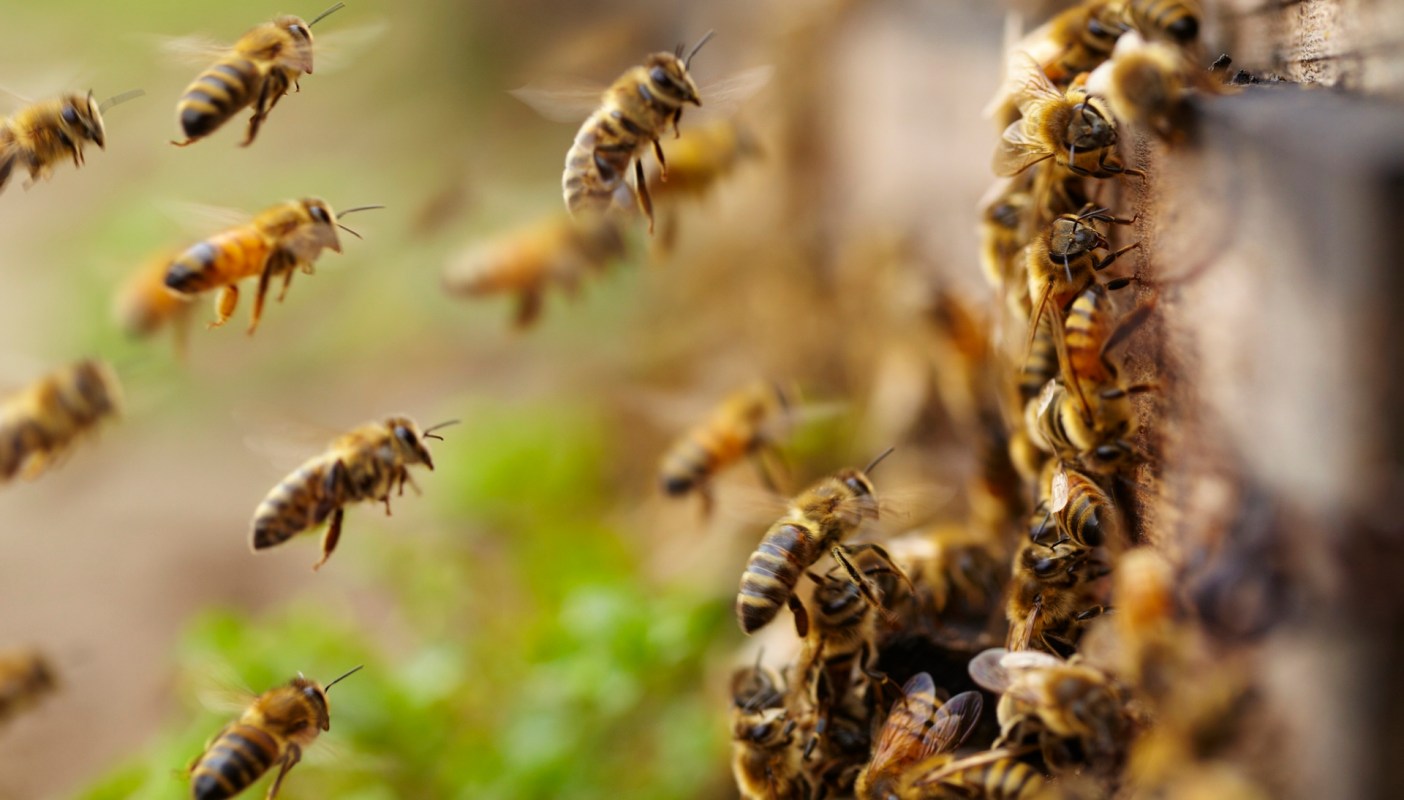
A woman in Singapore found an unsettling surprise in her bathroom: what appeared to be a beehive tucked into a corner, according to Shin Min Daily News.
What she first thought was a shadow turned out to be thousands of bees packed together on the wall, swarming and covering part of her bathroom.
Here's what to know
The resident, identified only as Liu, said she had returned home at about 7 p.m. and gone to wash up when she noticed a strange dark patch above her, according to Mothership. She then realized it was a cluster of bees.
"There were also a few insects flying around, and upon closer inspection, they turned out to be bees," Liu said.
Footage Liu shared showed the insects covering the toilet wall in a thick cluster that appeared to be forming a nest. Startled, she rushed out of the bathroom and shut the door to keep the bees from flying into the rest of the home.
She then called a pest control company, and workers arrived at about 9 p.m. to remove the swarm. The process took roughly half an hour, though Shin Min reported that thousands of bees remained after fumigation. Liu said the pest control workers told her the bees may have entered her home while searching for a different place to live.
TCD Picks » Quince Spotlight
💡These best-sellers from Quince deliver affordable, sustainable luxury for all




More background
Despite this alarming sight, bees are not considered pests. They play a major role as pollinators, helping plants reproduce, and they can also act as predators of other invertebrates.
People and wildlife are increasingly crossing paths in dense urban areas, especially when animals are displaced or forced to look for new shelter. Human activity can contribute to these encounters by reducing or disturbing natural habitats and pushing animals toward buildings and other artificial spaces.
Experts have discussed a similar pattern in reporting on why wild animals attack humans. As development expands into natural areas, unexpected contact between people and wildlife can become more common.
What can be done?
If you spot a hive or cluster of bees, the safest first step is to keep your distance. Sudden movements or attempts to break up the swarm may aggravate the bees and worsen the situation.
In Singapore, people who see a hive in a park are advised to inform NParks by calling 1800-471-7300. If bees gather at home, residents should stay calm and avoid trying to remove them themselves.
Mothership reported that beekeepers in Singapore can help relocate bees humanely. That option is especially important because bees are valuable pollinators, and preserving them whenever possible helps support ecosystems and food production.
If wildlife shows up indoors, call trained professionals instead of trying to handle the situation yourself.
"I immediately searched online and found out that bees usually build their nests outdoors, so I don't know why they were in the toilet," Liu said.
Where can I learn more?
What happened in Liu's bathroom was unusual, but bees do sometimes turn up in unexpected corners of human-built spaces. Similar cases have involved swarms settling in roofs, yards, and even commercial buildings, sometimes requiring careful removal or management.
• In Southern California, bee removal turned urgent when workers found a hidden colony and honey in the roof.
• A gardener's pollinator patch drew a massive bee swarm into the yard instead.
• At Hilton Salt Lake City Center, 40,000 bees on its roof turned the building into managed habitat.
• One homeowner watched strange bee behavior unfold in the garden during peak pollinator activity.
A swarm inside the house can be alarming, but the safest response is to try to remain calm and call a professional. When possible, humane relocation can protect both people and these essential pollinators for our environment.

Get TCD's free newsletters for easy tips, smart advice, and a chance to earn $5,000 toward home upgrades. To see more stories like this one, change your Google preferences here.






