


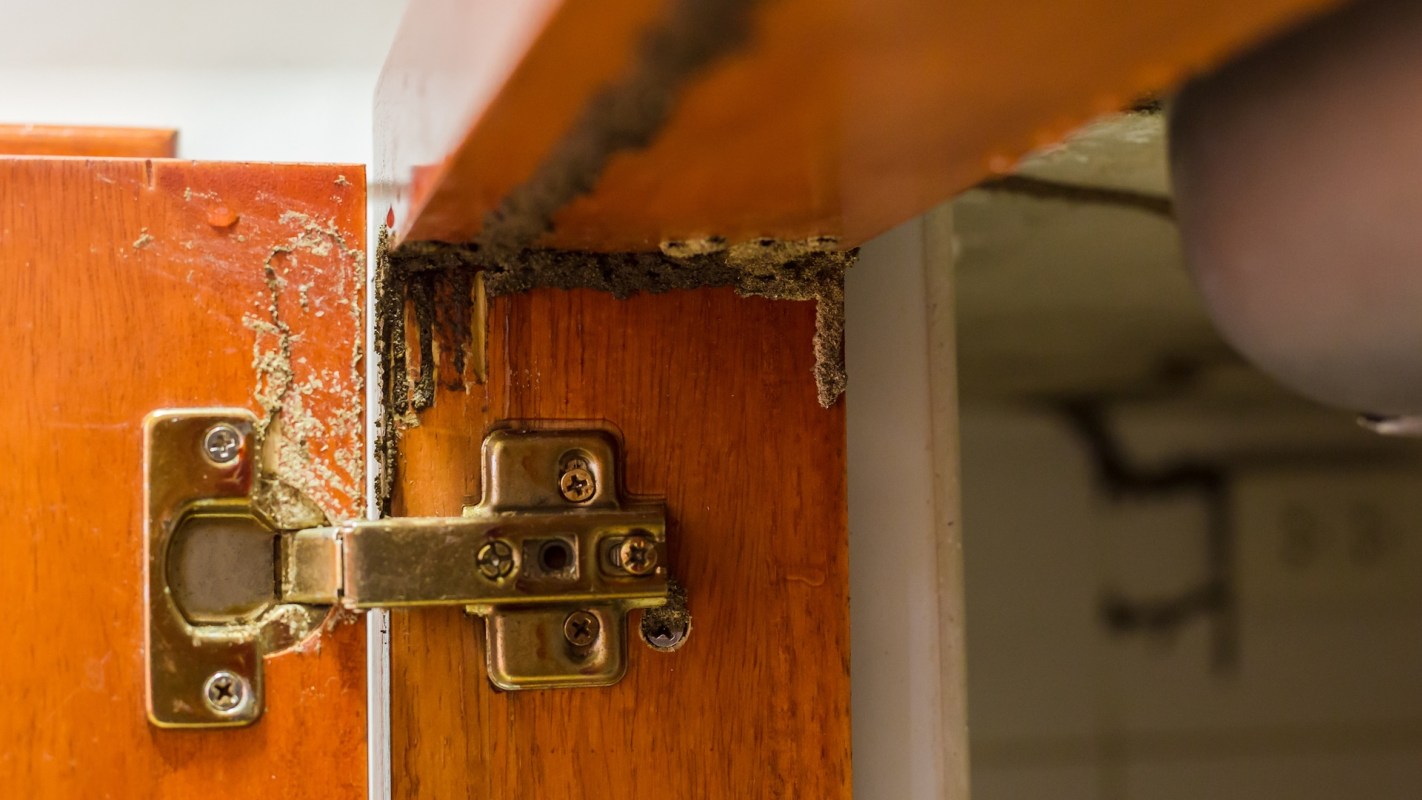
In a dispute over termite damage at a Singapore condominium, a court rejected the management corporation's claim that a couple's "unauthorised and illegal" kitchen work was to blame.
Instead, the judge held that the management corporation hadn't kept the shared property free of termites and ordered it to compensate the homeowners for the damage.
What happened?
After termites were found in December 2023, homeowners Glenford Tan Ming Loon and Vivien Loo Hwee-Wen sued the Management Corporation Strata Title of Freesia Woods over damage in their top-floor Clementi unit, including harm to cabinetry, a sink, and a marble top, according to Channel News Asia.
Entomologist Teh Jo Lynn testified in the trial. He found that subterranean termites nesting in the ground were responsible for the damage and that the condo management had failed to keep the common property free of them.
While the condo management accepted that the home had been infested, it argued that the couple's "unauthorised and illegal" kitchen installation had made the unit damper and therefore more susceptible to termite infestation. However, District Judge Chiah Kok Khun was skeptical of the condo's expert, who also owned the pest control company that had inspected the property for years without detecting the infestation.
The couple received S$10,978, as well as about S$42,750 in costs and disbursements.
TCD Picks » Quince Spotlight
💡These best-sellers from Quince deliver affordable, sustainable luxury for all




Why does it matter?
The judgment appears to be Singapore's first reported case deciding whether property managers have a duty to prevent termites, not just repair the damage they cause, according to Channel News Asia.
The judge accepted testimony that proper termite management requires a three-part monitoring and treatment program, rather than simply reacting once pests appear.
Across the U.S., homeowners associations have drawn criticism for blocking money-saving home improvements such as rooftop solar panels and native plant lawns. If you live under similar rules, there are practical steps for working with HOAs and navigating those disputes.
What's being done?
The judge's ruling suggests that condo boards and similar property managers may need to treat prevention as part of routine maintenance, particularly where there is a known history of infestation.
To support that view, Chiah pointed to Australian legal reasoning suggesting that maintenance can cover steps meant to reduce future damage, not just repairs done after problems emerge.
He also found little evidence that the couple's renovation was illegal. The judge said the sitting area, sink, and cabinetry were within the owners' private property, and even the condo management's own witness could not say with certainty that the installation violated any rules.
Chiah said the pest contractor's approach was merely "search and destroy," and he described the condo management's conduct in the case as "highly unsatisfactory."

Get TCD's free newsletters for easy tips, smart advice, and a chance to earn $5,000 toward home upgrades. To see more stories like this one, change your Google preferences here.






