


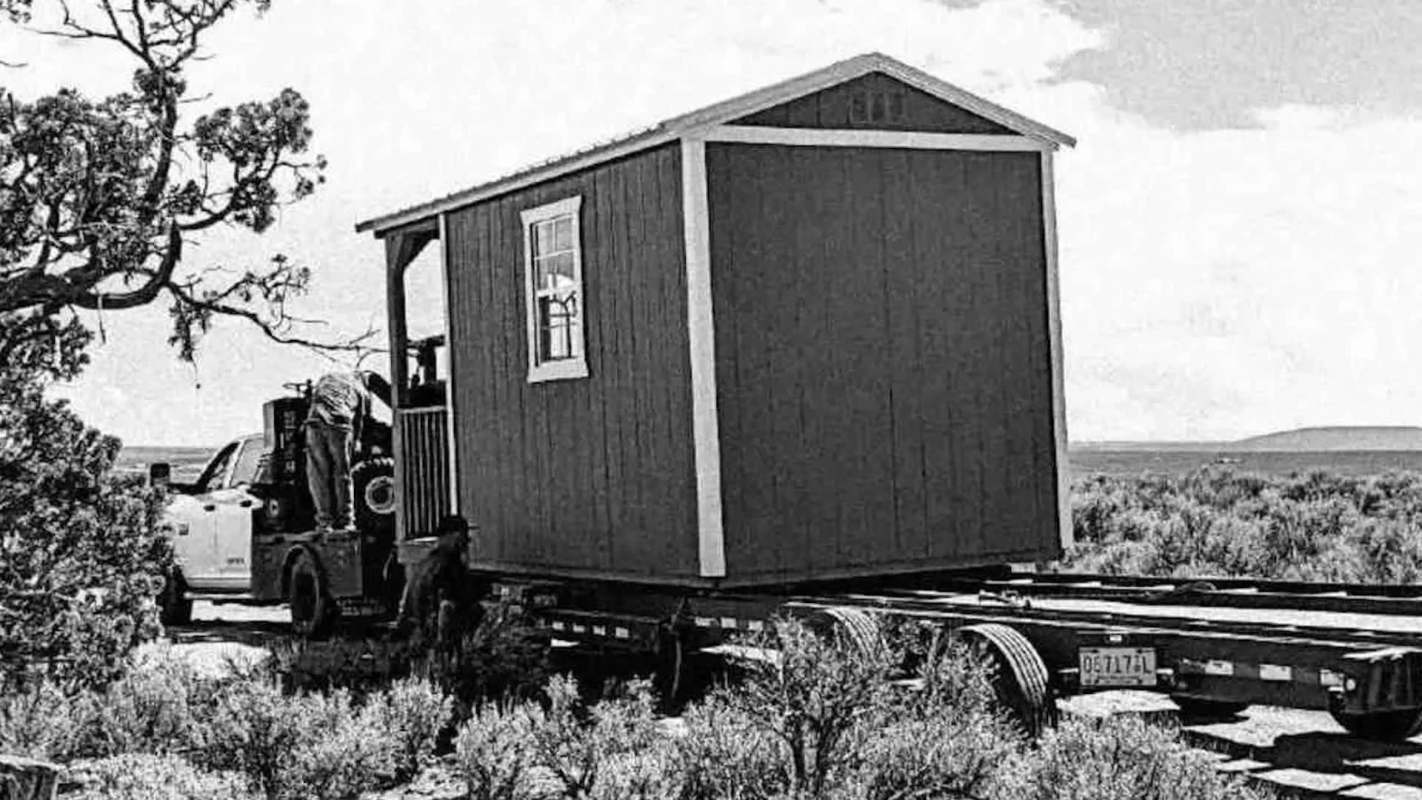
After seven years of living out of a minivan, one Reddit user said he left the road behind for a plot of land outside Taos, New Mexico, where he turned a prebuilt shed into an off-grid cabin for about $12,000 in cash.
Here's what to know
In an essay posted to r/OffGridCabins, the original poster described a race to set up a livable shelter after buying land there in April 2023. With October snow in mind, he considered earth-building, a tipi, and a yurt before deciding a prebuilt shed was the most workable option.
They said the building was a "dry cabin," meaning it came without built-in plumbing or electrical wiring. The delivered shell cost about $5,000, and he spent roughly another $2,000 on paint, insulation, flooring, and other interior finish work. In total, he said it was an 8-by-16-foot shed with a 4-foot porch and about 8 by 12 feet of indoor living area, leaving less than 100 square feet inside.
To get through the first winter, he said, he used his van's solar equipment for basic electricity and a spirit lamp for heat. He added a 400-watt solar setup with 400 amp-hours of battery storage for about $3,000, plus roughly $500 for gutters and rain barrels. "Let's round up and call it $12,000," he wrote.
More background
The poster said several limits boxed in the project at once: only five or six months before winter, not much money, modest handyman ability, a bad back, and the likelihood that any extra help would need to be hired.
He said yurts and tipis were the first alternatives he explored. A small yurt still looked like it would run close to $20,000 and require a proper foundation, while a tipi appeared cheaper at around $3,000 to $4,000 until a neighbor identified as J warned him, "You're gonna get snakes in there."
TCD Picks » Quince Spotlight
💡These best-sellers from Quince deliver affordable, sustainable luxury for all




He said adobe and other earth-based building methods were also on the table, especially in a place where those approaches are common. Even with Taos Pueblo and nearby Earthship Biotecture making that route feel like a natural fit, he said the labor involved seemed too intense to finish before winter.
One commenter wrote, "Too bad the earth build was beyond what you could take on. You're in the perfect spot for it."
What can be done?
The OP also shared practical details about how the cabin works. In a reply, he said the structure sits on 4-by-4 skids over road-base gravel, is secured with hurricane anchors, and is skirted with steel flashing that still allows ventilation. He said the bathroom setup is separate, with a composting toilet in a storage shed.
For the original poster, the cabin's biggest benefit was not novelty but breathing room and autonomy: "No rent. No mortgage. No debt."
Where can I learn more?
The tradeoffs in this Taos cabin echo many of the same off-grid questions about water, power, and daily routines explored in these stories.
• At one off-grid cabin, no water connection meant rethinking every single gallon.
• One homeowner found that solar for an off-grid home came with a steep learning curve.
• In the Rocky Mountains, 1,000 watts of solar powered an off-grid home for five.

Get TCD's free newsletters for easy tips, smart advice, and a chance to earn $5,000 toward home upgrades. To see more stories like this one, change your Google preferences here.






