


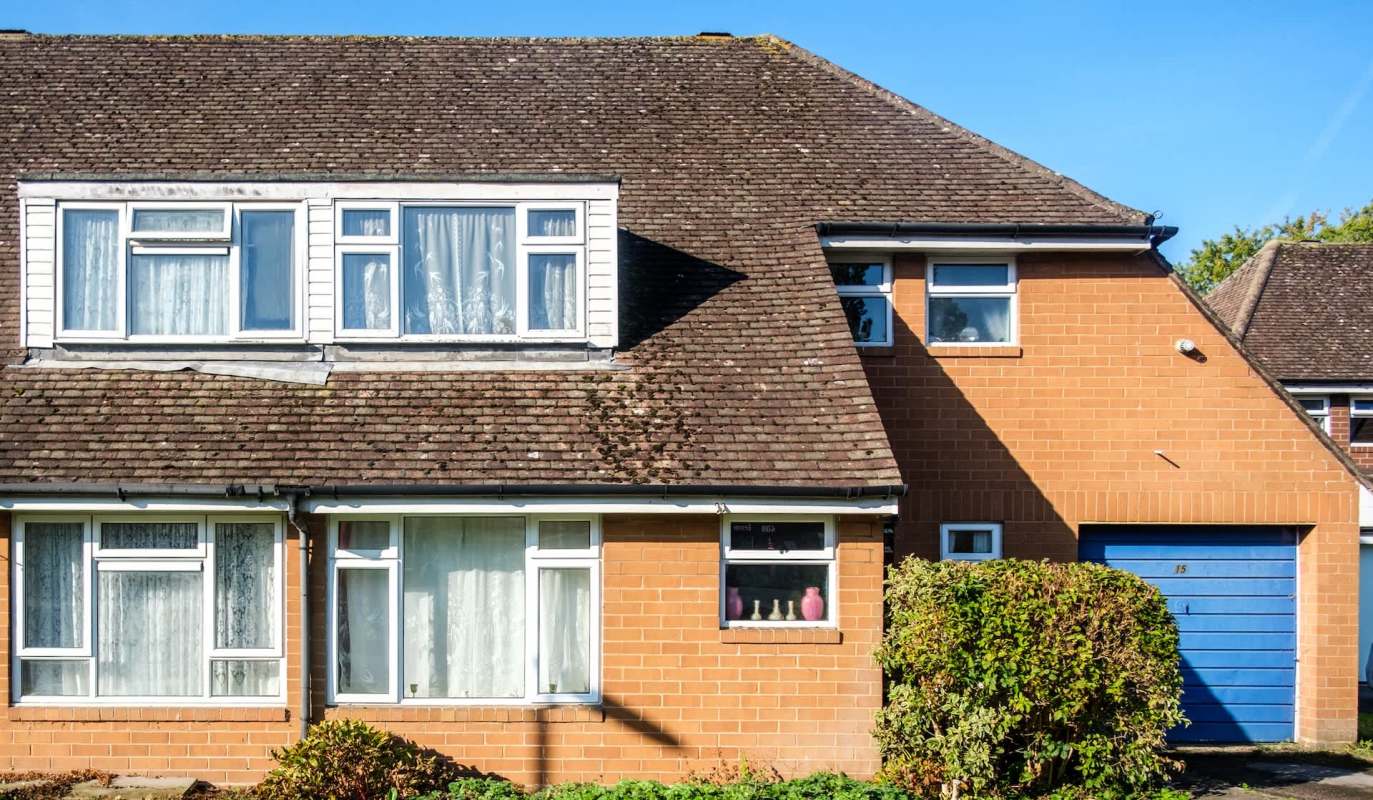
A homeowner preparing to sell a house thought a few roof repairs might be enough. Then they learned that a 17-year-old roof can raise a bigger issue than shingles or flashing for an insurer.
Here's what to know
On the r/HomeImprovement Reddit forum, a seller asked whether a full replacement might be necessary before listing, even though the 17-year-old roof seemed to need only "a few minor repairs," specifically "flashing around the chimney" and the "ridge cap."
Several commenters on the Reddit post said insurers and buyers may care less about the roof's visible condition than its age.
"A 17 year old roof could cost OP the sale," one commenter warned. "A lot of insurance companies won't take over 15 years."
Age cutoffs varied across the replies. One commenter wrote that roofs have around a "20-25yr 'lifespan' before Insurance companies start complaining," while another said the answer changes depending on whether the roof is metal, concrete tile, or shingles.
One person who bought a house with a 16-year-old roof said they received "a concession on the price for part of the cost to replace it" but not the full amount.
TCD Picks » Quince Spotlight
💡These best-sellers from Quince deliver affordable, sustainable luxury for all




More background
The discussion focused on how roof age can affect financing.
Some replies emphasized perception as much as condition. One commenter said buyers may treat "anything older than 15" as replacement territory, while another argued that if the roof is not leaking and insurance is still available, it may not be too old in practical terms.
To show how insurance can derail a deal, one commenter described a house listed at $300,000 that "got an offer the first day on the market," but the sale unraveled because "no one would insure it."
Even after the seller paid for a new roof, the property sat for several more weeks, and the commenter said their friend later bought it for $285,000.
Ultimately, waiting on the roof may have cost the seller roughly what the replacement itself would have, even in an area where nearby homes were still selling for over asking.
Buyer perception came up in another reply as well, with one commenter saying the fact that a roof already needs repairs "may not look good to buyers."
What can be done?
The most common advice in the thread was not to jump straight to a full replacement without first considering the market.
Rather than reroofing before listing, one commenter suggested testing the market first and replacing it only "if your home is listed for a month with no serious offers, that's when you replace." Others leaned toward negotiation instead of a major presale project.
Some replies also focused on practical checks. One commenter said to look for "cupping, tears, gravel loss" as signs of wear, while another suggested asking a real estate agent what has to be disclosed and how to present the issue "in the best possible light."
The simplest test seemed to be if the original poster could find an insurer who would play ball because commenters couldn't agree on whether a replacement was necessary.
"If roof no leak, no need new roof!" one exclaimed.
Another commenter differed: "If a buyer can't insure it, they can't get a mortgage, so selling is a lot harder."
Where can I learn more?
Roof age is just one way insurance concerns can complicate a home sale or make homeowners' lives more difficult.
• In Colorado, a homeowner saw coverage dropped over property conditions, sending repair estimates soaring.
• Around the country, insurers are cutting ties with vulnerable homes and rattling owners.
• In Florida, nonrenewals are rising quickly, leaving more homeowners near the brink.
• In Leavenworth, Washington, homeowners are struggling to find coverage as options keep shrinking.

Get TCD's free newsletters for easy tips, smart advice, and a chance to earn $5,000 toward home upgrades. To see more stories like this one, change your Google preferences here.






