A new tankless water heater can feel like a major home upgrade, offering faster hot water, less wasted energy, and a more compact setup. But for one homeowner, an otherwise successful installation raised questions about the small details that can shape performance.
What's happening?
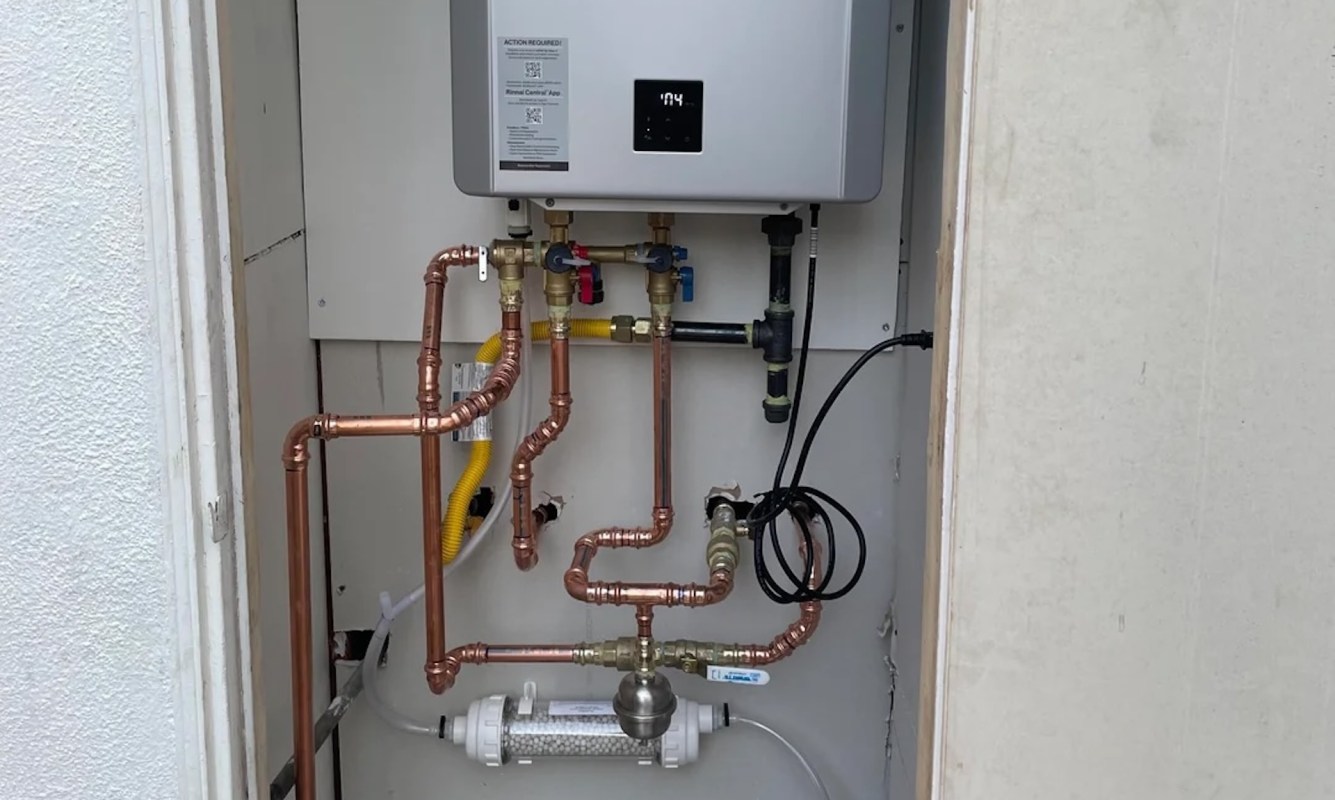
After installing a Rinnai RXP199iN condensing tankless water heater with a dedicated recirculation line, a homeowner went online to seek a second opinion on Reddit. The poster said the unit was running without any error codes, but they still wanted feedback on whether any part of the job could be improved.
The homeowner also asked about an unidentified black plug on the unit and the condensate drain, while commenters also weighed in on the recirculation arrangement and the gas and venting connections.
A condensing tankless unit can help a household save space, reduce standby energy losses, and improve comfort by delivering hot water more efficiently than a traditional storage tank.
The replies split a bit by topic. Commenters generally appeared to view the black piece as a factory cap or plug for an unused port, but there was more disagreement over the condensate setup, with some saying the small hole on the connector should not simply be treated as meeting the manual's air-gap requirement.
Why does it matter?
Tankless systems involve gas, combustion venting, condensate drainage, and sometimes recirculation controls. Even when a setup appears fine, there can still be safety, code, or efficiency concerns.
TCD Picks » Quince Spotlight
💡These best-sellers from Quince deliver affordable, sustainable luxury for all




When tankless units are installed well, they can lower energy bills, free up storage space, and make everyday routines easier by reducing wait times for hot water. On the flip side, a poorly adjusted recirculation loop can decrease those savings by keeping water moving or causing extra runtime when it is not necessary.
The condensate issue is especially important. To prevent backups, contamination, and maintenance issues, ensure there is proper drainage and air-gap protection. Likewise, gas sizing and venting details can affect both performance and safety over time.
What can I do?
When a tankless water heater is installed or evaluated, the finished work is typically compared with both the manufacturer's manual and local plumbing and mechanical codes. A unit that powers on and heats water is not always the same as a fully compliant, optimized installation.
A licensed plumber or HVAC professional can inspect things like condensate drain, vent termination, gas line sizing, service valves, and recirculation controls. Do that kind of focused review may cost far less than fixing preventable problems later.
To keep up on maintenance, annual flushing, filter cleaning, and confirming that recirculation settings match actual household use can help preserve efficiency, comfort, and the equipment's lifespan.
As the original poster put it, "it works fine, no error codes," but they were still "hoping to get any thoughts or critiques on anything I might've done wrong or how I could improve on it."

Get TCD's free newsletters for easy tips, smart advice, and a chance to earn $5,000 toward home upgrades. To see more stories like this one, change your Google preferences here.