


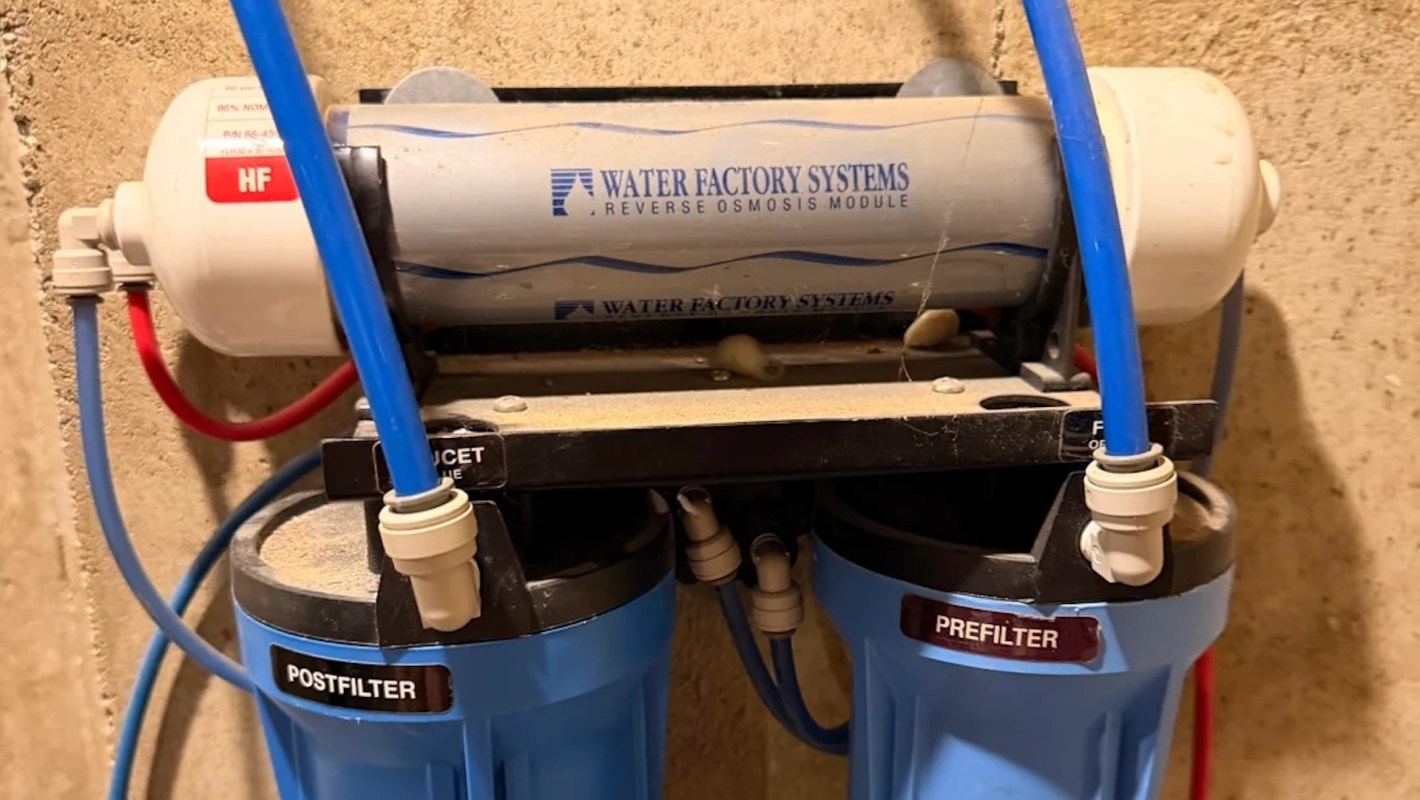
After a local water company told a homeowner that the reverse osmosis system in their mother's new home was "failing by a large margin" and that the options were a full replacement or a retrofit, Reddit users said the aging unit might not need a full replacement after all.
Here's what to know
According to a Reddit thread in r/WaterTreatment, the OP said a local water company tested the reverse osmosis system in their mother's home and reported that it was "failing by a large margin" at "somewhere around 114ppm." The unit was already installed in the basement and connected to the kitchen tap and refrigerator, and the company said the choices were either a full replacement or a universal retrofit for the membrane housing.
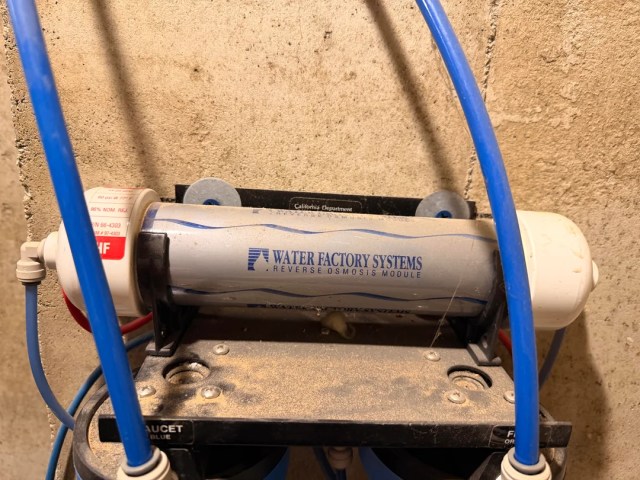
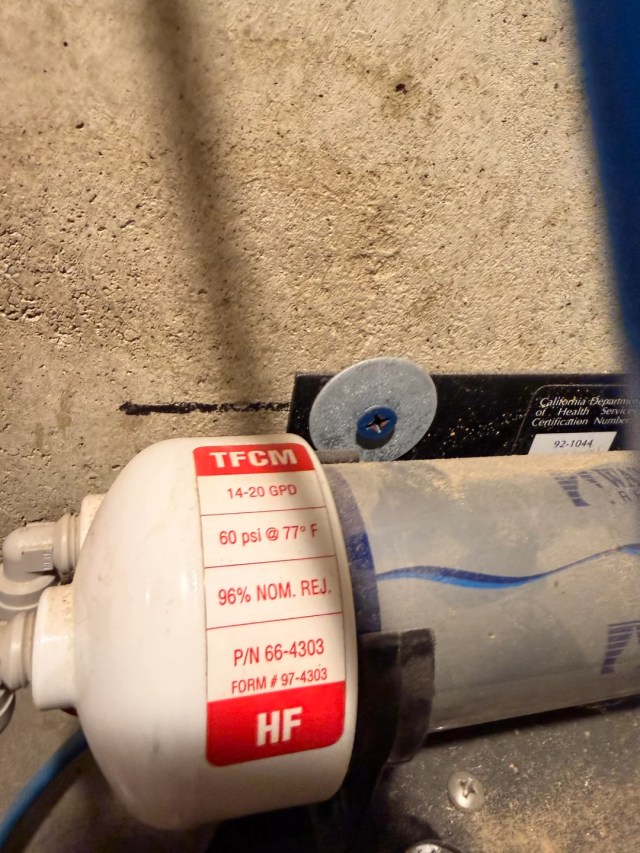
That recommendation left the OP doubtful. They said the same company had already tried to sell a new unit and said that "ideally I'd just like to find a non proprietary membrane and filters to just swap out and continue using as the unit itself had no true issues."
Rather than treating the setup as obsolete, users said it looked like a standard system that could be refreshed with commonly available parts.
One user said, "That system is entirely made out of industry standard parts so replacing the filters and membrane is doable."
Another user pointed to the cost difference: a replacement membrane can cost "about $30," while, as users in the thread noted, a whole new five-stage system may cost roughly $200 on Amazon. That is far below the $1,000-plus one user said a water filtration company may charge for installation, parts, and materials.
TCD Picks » Quince Spotlight
💡These best-sellers from Quince deliver affordable, sustainable luxury for all




More background
The system was not described as a custom setup. Instead, it appeared to be a basic drinking-water system in the basement already connected to key fixtures, meaning the homeowner may be able to keep using the existing lines instead of starting over.
A recurring warning in the replies was about getting locked into dealer-only parts. One user said that being pushed into a dealer-specific upgrade can be "a real trap" because "You'd be beholden to them to do future maintenance and even worse if the manufacturer or water company goes out of business, you could get stuck having to get a new system."
Users also stressed that age alone isn't the issue — filters and membranes are consumable parts and don't last forever.
One user who said they had maintained a similar system for decades: "My system is around 35 years old. It took no time at all to change the filters, add the pressure switch and add the membrane."
What can be done?
Before spending money on major changes, users said the first step is to check the output TDS, or total dissolved solids, to see whether the unit is actually underperforming. One user advised: "Check the TDS of the output flow. That'll tell you if it's working or not."
If the system does need work, the most common suggestion was to replace the filters and membrane before committing to a total replacement. One user said that on Amazon, a do-it-yourself refresh could cost "like 60ish bucks for filters and membrane," though they added that the job may also require food-grade silicone grease and plastic wrenches.
Even for people who choose to replace the whole setup, users said the existing plumbing could keep the project relatively simple and less expensive. One user said the job may come down to reconnecting four lines — the faucet line, tank line, drain line, and cold-water supply — and may require only a 1/4-inch to 3/8-inch push-connect adapter.
Where can I learn more?
That debate over whether to replace or refresh an RO system ties into wider advances in membrane and water-treatment technology. These stories look at new desalination materials, emerging filtration membranes, and other efforts to make clean water systems work better with less waste.
• Scientists have developed breakthrough desalination membranes that could widen access to clean water.
• Engineers created a PFAS-trapping membrane that could dramatically improve water filtration.
• Scientists unveiled lower-waste desalination technology that recovers fresh water while reducing brine.
• At Australian National University, researchers built a game-changing desalination method for cleaner water.

Get TCD's free newsletters for easy tips, smart advice, and a chance to earn $5,000 toward home upgrades. To see more stories like this one, change your Google preferences here.






