


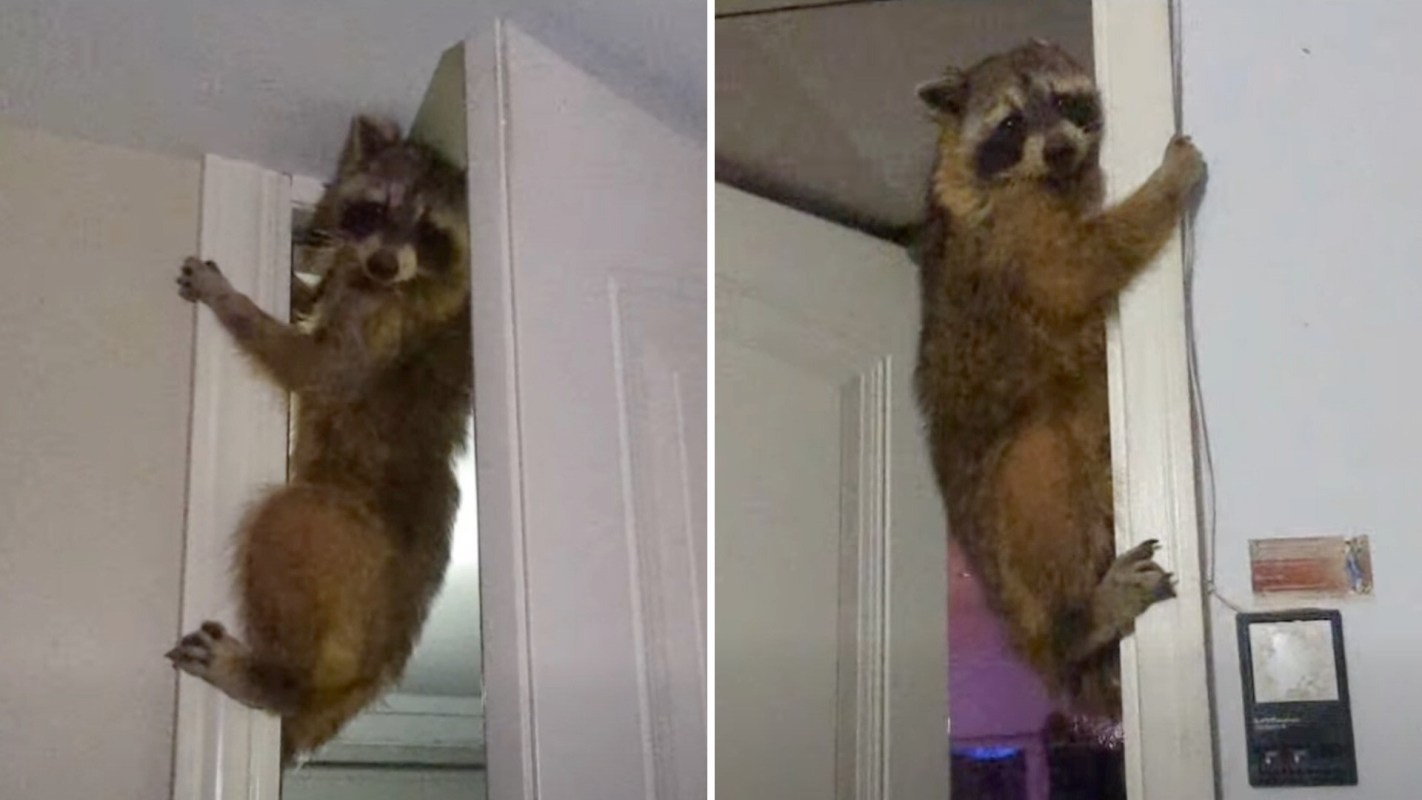
One Illinois family went to investigate a noise that sounded like a break-in but instead discovered a raccoon in the garage was opening doors and making its way inside the house.
What happened?
After hearing a loud disturbance, homeowner Cissy Rallo and her daughter headed downstairs because they thought someone might have gotten in.
But, as WGN-TV reported, the source of the commotion was a raccoon clinging to the door area between the garage and basement.
In cellphone footage which was shared with the outlet, the animal can be seen hanging from the door and frame as its paws keep setting off the garage-door button, sending the door up and down.
Rallo said it also pressed the handle on the door leading into the home, which opened while the raccoon was still attached. She was eventually able to coax the raccoon down and out of the garage.
"I think we both turned white," Rallo told WGN-TV. After she finally got the raccoon out, she added, "This can only happen in my Twilight Zone world."
TCD Picks » Quince Spotlight
💡These best-sellers from Quince deliver affordable, sustainable luxury for all




Why does it matter?
Wildlife encounters have become common in suburbs and cities. Raccoons are especially well adapted to neighborhoods, where they can find shelter, warmth, and food in garages, attics, trash bins, gardens, and pet bowls.
Often, these encounters are tied to human activity. Wild animals are pushed into closer contact with homes as development expands into natural habitats. Human environments offer tempting rewards, including easy calories, cozy hiding spots, and structures that animals can learn to manipulate.
BBC Future has an explainer that describes how many wildlife conflicts stem from the way people reshape landscapes and resources, which can lead to more stressful run-ins, property damage, and safety concerns.
What can I do?
To help, homeowners can secure trash and recycling bins, bring pet food indoors, clean up fallen fruit, and avoid leaving garages or side doors open longer than necessary. Not feeding wild animals is another critical step.
It's important to check that garage doors close fully, and interior doors latch properly. Homeowners need to seal any gaps that could allow animals into basements, crawl spaces, or attics. Motion lights and cameras can also provide an early warning before a curious animal gets farther inside.
If a raccoon or other wild animal does get into your home or garage, experts generally advise keeping your distance and giving it a clear path to leave rather than cornering it.
If the animal appears sick, injured, or unable to get out, calling local animal control or a licensed wildlife rehabilitator is almost always the safest next step.

Get TCD's free newsletters for easy tips, smart advice, and a chance to earn $5,000 toward home upgrades. To see more stories like this one, change your Google preferences here.






