


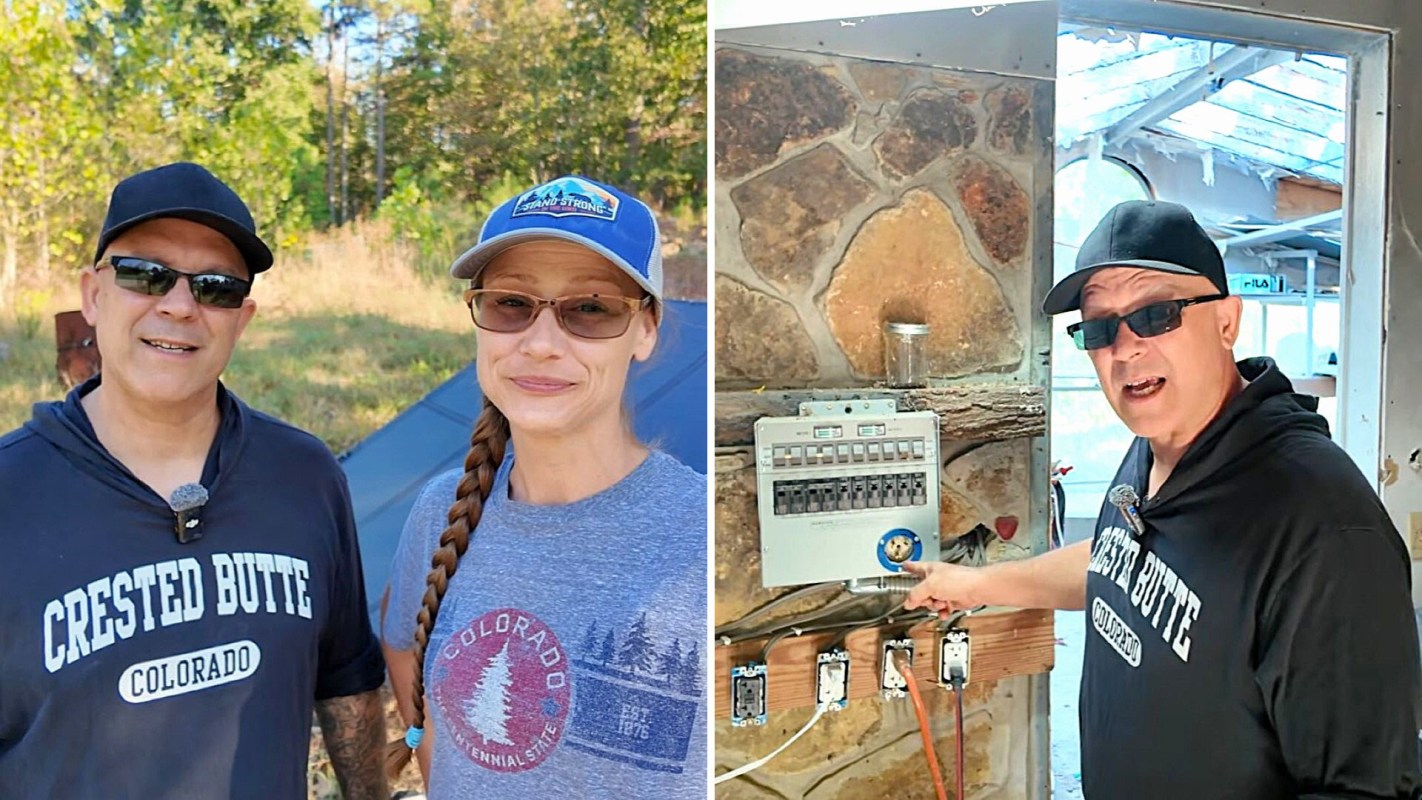
One household responded to climbing electricity costs by assembling a scaled-down backup setup instead of waiting for a full home-solar project. Their approach relied on portable solar panels paired with a power station.
The arrangement is designed for essential needs, not total household coverage, which may make it more realistic for people priced out of whole-house solar.
Here's what to know
Rather than holding off until a complete solar system became affordable, the household featured in a YouTube video by Good Enough For Now (@GoodEnoughForNow) built a smaller setup with portable panels, a power station, and a manual transfer switch. They describe the motivation this way: "Our electric bill had us asking a hard question: What can we do when the bill is getting too high, but whole-house solar is out of reach, too?"
In the demo, they powered their refrigerator and showed the runtime estimate dropping as they added more circuits. A manual transfer switch makes that possible by letting them decide which parts of the house draw from the stored energy.
Another point they highlighted was mobility. Because the power station is not fixed in one place, the setup can be moved and used where it is most helpful.
They also addressed practical limitations, including a panel-matching problem they encountered, what the setup may cost, and the possibility that used rigid panels could lower the price.
TCD Picks » Quince Spotlight
💡These best-sellers from Quince deliver affordable, sustainable luxury for all




More background
The video centers on a middle-ground option. Many conversations about home energy jump from doing nothing straight to a major investment, but plenty of households need something more realistic in between. A portable solar setup lets you start small while still reducing dependence on the grid for certain everyday needs.
Keeping a refrigerator powered is about more than convenience — it can help prevent food from spoiling, protect temperature-sensitive medications, and reduce stress during outages or periods of unusually high energy use.
A setup like this can also help people better understand their own electricity habits. Watching the estimated runtime shrink as more circuits are added makes energy use feel immediate and measurable, which can help households decide what matters most.
The household made clear they are not fully off-grid, and for households dealing with expensive utility bills, a partial solution may feel far more attainable than an all-or-nothing leap.
What can be done?
Starting with essentials can help. Focusing first on a refrigerator, a few lights, or device charging can help determine what size power station and solar input make sense.
The video also points to the value of flexibility. A portable system can be used where it is needed most, and a manual transfer switch can help direct limited stored power toward priority circuits instead of trying to cover the entire house.
Cost remains a major factor, and the household pointed to used rigid panels as one possible way to spend less. That may not be the right fit for everyone, but comparing options carefully can make cleaner energy tools more accessible.
Their panel-matching mistake serves as a reminder that small technical details can affect performance. Anyone interested in building a similar setup may benefit from checking compatibility requirements, asking questions before buying equipment, and expanding gradually instead of overspending upfront.
Rather than presenting the setup as a complete solution, the household describes it as an incremental move toward greater resilience: "We're still connected to the grid, still learning, and still working toward more independence." As they put it, "for now, being able to keep some essential things running is a meaningful place to start."
Where can I learn more?
Here are a few examples of how households are using solar and batteries to keep essential power available. They cover home battery backups, rooftop systems that cut bills, and smaller off-grid setups.
• More households are using battery storage units to ride out blackouts and high bills.
• In Australia, one homeowner's 20kW solar setup turned blackouts invisible and produced bill credits.
• In the Rocky Mountains, a family showed 1,000 watts of solar powering daily essentials.

Get TCD's free newsletters for easy tips, smart advice, and a chance to earn $5,000 toward home upgrades. To see more stories like this one, change your Google preferences here.






