


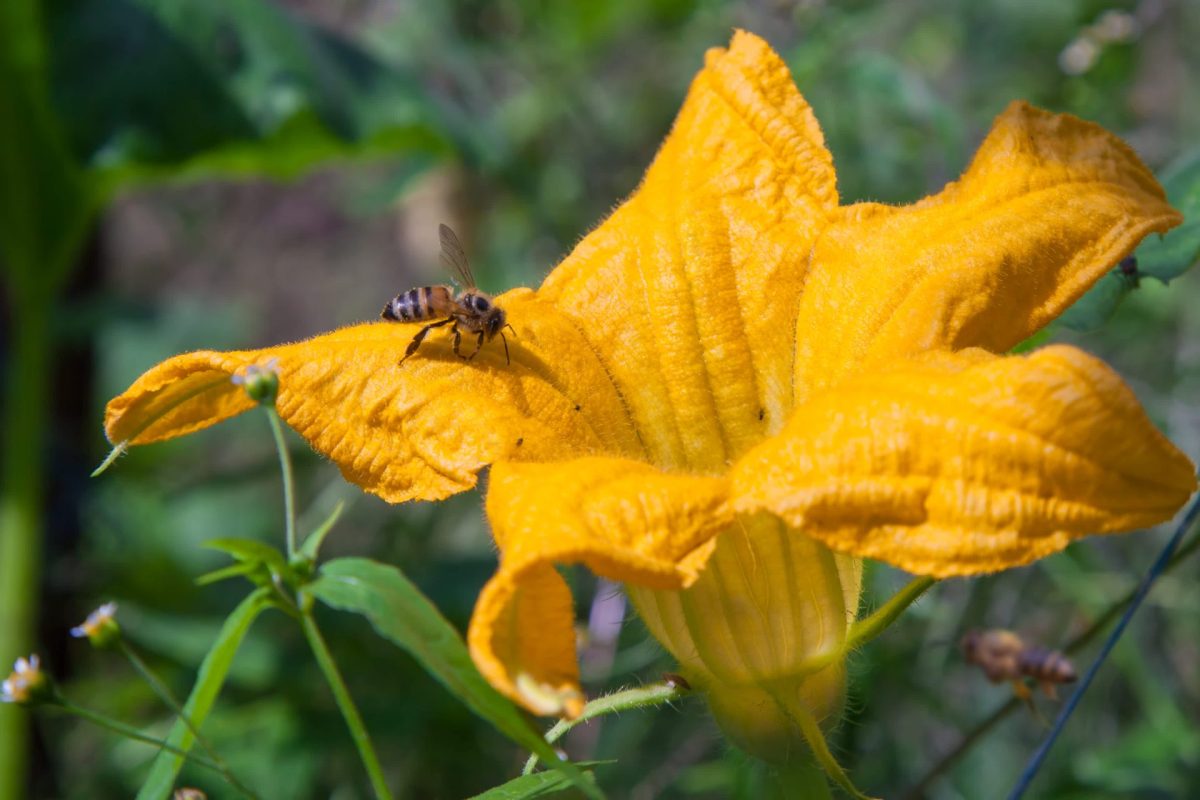
Researchers and officials said "Pollinator Week" carries a lesson that lasts beyond the event itself: Neatly maintained lawns do little for the species that pollinate plants and support the food supply.
When pollinator populations fall, the consequences extend far beyond gardens and wildflowers, reaching grocery stores, farms, and dinner tables.
What's happening?
As the Hartford Courant reported, experts across Connecticut used this year's Pollinator Week to highlight how much people depend on bees, butterflies, birds, bats, and other pollinating animals.
Dr. Kelsey Fisher, an assistant agricultural scientist at the state's Agriculture Experiment Station, said pollination is needed by about 75% of food crops and roughly 87% of flowering plants on Earth.
She explained to the Courant that "there's a bunch of reasons why pollinators are in decline, but the one I like to focus on most is creating suitable habitat for pollinators. We can talk about pesticide use, climate change, or habitat loss. But the thing we personally have control over is what we put in our backyards."
Fisher summed up part of the issue plainly: "Our lush beautiful green lawns don't provide all of the resources that our pollinators need."
TCD Picks » Quince Spotlight
💡These best-sellers from Quince deliver affordable, sustainable luxury for all




Why does it matter?
Pollinators help reproduce more than 180,000 kinds of plants and upward of 1,200 crops used by people, meaning their decline can threaten ecosystems, biodiversity, and food production all at once.
Conventional turf lawns can be costly and resource-intensive while offering little habitat value. Meanwhile, native flowers or rewilded lawns can support pollinators while also helping to reduce maintenance costs.
Homeowners who help local pollinators will usually save money on their yards, making it an easy win-win.
What's being done?
Connecticut is leading other states in expanding pollinator habitat on public land. The state Department of Transportation's pollinator program now includes 167 conservation areas covering around 260 acres, per the Courant.
Connecticut Department of Transportation Commissioner Garrett Eucalitto told the outlet: "We remain committed to creating safe, thriving habitats for pollinators across Connecticut. These species play a vital role in our food systems and in sustaining our ecosystems."
Many of the marked roadside conservation areas are near highway ramps, medians, and shoulders, and they are meant to bloom throughout the summer.
Homeowners can contribute by planting native species, which for Connecticut include plants such as bee balm, buttonbush, columbine, goldenrod, highbush blueberry, New England aster, New Jersey tea, and swamp milkweed.

Get TCD's free newsletters for easy tips, smart advice, and a chance to earn $5,000 toward home upgrades. To see more stories like this one, change your Google preferences here.






