


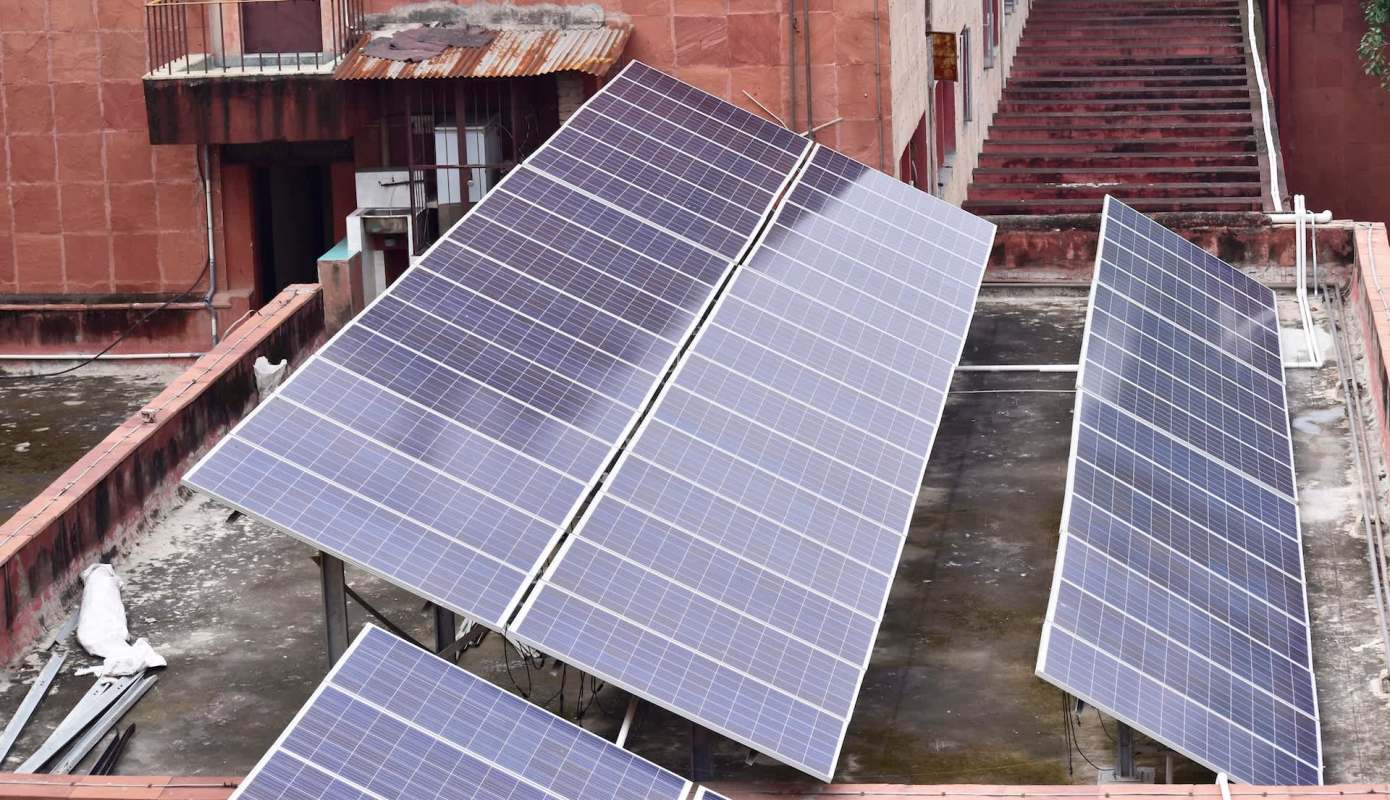
For one homeowner in Old Delhi, India, switching to rooftop solar comes with an unexpected trade-off.
Here's what to know
Uday Thakur, who lives in the crowded Hauz Qazi neighborhood, rents out part of his terrace for a mobile tower. He'd have to give up that space to install solar.
Limited rooftop space and complicated access could hamper Delhi's solar rollout. The city aims to give 230,000 eligible households rooftop systems at no upfront cost, with a March 2027 target, according to Mint, as reported by CarbonCopy.
Thakur is reluctant to give up more terrace space because the potential savings do not seem worthwhile to him. His subsidized monthly electricity bill is about ₹1,500–₹1,700 (about $16 to $18) for a household of seven in a 70-square-yard home.
Homes with just one or two rooms account for more than 60% of households in Delhi, CarbonCopy noted, citing a 2021 Indian Express report.
For households considering residential solar, some $0-upfront solar leases may offer electricity savings of hundreds of dollars per month, depending on the home and agreement. EasyHome's free explorer tool helps homeowners estimate possible savings and find vetted local installers.
More background
Vikram Dhawan, 58, lives in Subhash Nagar in West Delhi and has already applied for the program, according to CarbonCopy. He and his wife live in a roughly 50-square-yard home, and the chance to avoid installation costs appealed to him.
Despite repeated follow-ups, Dhawan said he continues to hear that no vendor has been selected for the program.
Crushed by your bills? See instant solar savings from vetted installers in just a few clicks With energy prices through the roof, there's never been a better time to go solar — and EasyHome can help you find the best prices from the best installers in your area. EasyHome takes the guesswork and headaches out of energy upgrades by showing you estimated savings from a network of vetted local partners. To get started, just enter your ZIP and share a few details about your home — seeing your estimate is really that easy. |

Signing up vendors, assessing sites, completing installation, and connecting to the grid must all happen before the March 2027 deadline. In the meantime, willing residents are waiting for the promised benefits.
Shared ownership presents another obstacle.
Pradeep Kumar Sarkar, president of a CR Park Residents' Welfare Association, jointly owns his three-story house with family members. They may eventually add another floor, which could require moving the panels.
For residents in similar situations, questions remain about installation requirements and who would pay for relocation or repairs.
What can be done?
Debajit Palit, who heads the climate change and energy transition centre at Delhi's Chintan Research Foundation, recommended using shared rooftops in residential societies to power common areas like elevators and hallway lights, according to CarbonCopy. This could help lower shared electricity expenses.
Building managers and resident associations would need to assess available space and decide how the electricity is used. Palit also pointed to balconies as another possibility, provided they receive enough sunlight and allow for safe installation.
For households weighing how to use limited installation space, EasyHome also offers options for exploring battery storage. Pairing solar with batteries can help manage electricity costs and provide backup power during outages.
Still, CarbonCopy reported that shared-roof and balcony systems would need regulatory and technical backing, along with clear rules on who installs, maintains, and uses the systems.
Beyond the physical limitations, public awareness remains a challenge. Sarkar, an architect who previously taught at the School of Planning and Architecture, said many residents still expect solar to require a large outlay.
"There is no campaign as such," Sarkar said of outreach efforts.
Where can I learn more?
For homeowners, finding room for panels is just one part of deciding whether solar makes financial sense.
• In India, adding a battery stretches solar payback from 3.3 years to over nine.
• A California family's "free" solar offer could mean $71,000 in payments, commenters warn.
• A U.K. homeowner finds solar loan payments would outweigh savings from a small rooftop system.
• A New York co-op uses a $232,000 loan to install solar without extra owner contributions.

Get TCD's free newsletters for easy tips, smart advice, and a chance to earn $5,000 toward home upgrades. To see more stories like this one, change your Google preferences here.






