


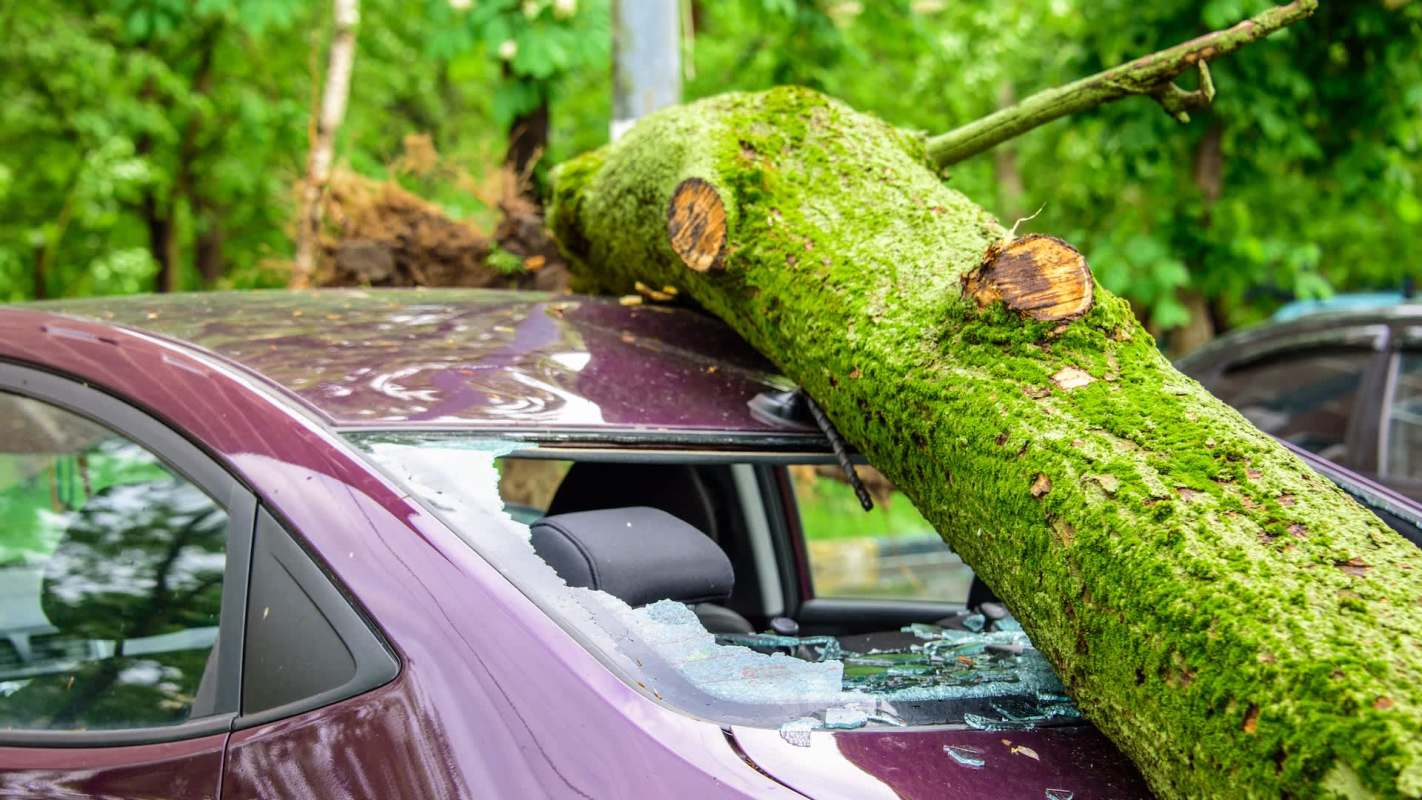
A windstorm can turn a backyard tree into an expensive mess in moments, and figuring out who pays isn't always as simple as checking where the tree was rooted.
In Ohio, one driver was left sorting through that problem after a neighbor's oak came down on a car in the driveway, leaving about $6,000 in damage.
Here's what to know
In a Reddit post, the driver said an insurance adjuster explained that this kind of damage is usually handled under the driver's own comprehensive coverage as an "act of God" when a storm topples a tree that appeared healthy.
So the neighbor would not be responsible just because the tree grew on their property. At the same time, the post in the r/legaladvice subreddit described circumstances that could complicate the claim.
"I have photos from two months ago showing large dead branches and visible fungal growth on the trunk, and I mentioned it to my neighbor in a text at the time asking if they were planning to have it looked at," the original poster said.
They added that the neighbor never replied to that message and later refused to share insurance information.
TCD Picks » Quince Spotlight
💡These best-sellers from Quince deliver affordable, sustainable luxury for all




"I do have my own comprehensive coverage and could go that route, but my deductible is $1,000 and I'd rather not eat that cost if the tree was genuinely a known hazard beforehand," they noted.
More background
Ownership alone does not always determine liability when a tree comes down in a storm. A major issue is often whether the owner knew, or reasonably should have known, that the tree was dangerous before it fell.
That is why the photos and text could be important. Signs such as dead branches, obvious disease, or an earlier warning may help show the damage was tied to a known risk, not just sudden weather. Redditors had some simple advice for the OP.
"File the claim with your insurance and they'll go after your neighbors insurance if they are liable," one wrote.
In other words, the car owner may be able to get repairs moving through their own policy first and let the insurance companies fight over fault later.
Similar stories appeared throughout the thread, with people describing neighbors or absentee owners who ignored repeated warnings about risky trees. One commenter said that in their situation, the city eventually stepped in, cut down a hazardous tree, and sent the bill to the owner after those warnings were ignored.
What can be done?
If the driver has the right coverage, a common first step is to open a claim with their own insurer. That may require paying a deductible at the start, though the insurance company may later seek reimbursement if the evidence points to the neighbor's negligence.
"You are paying your insurance company to do this," a user reminded the OP. "Let them do what you are paying for."
Where can I learn more?
Other neighbor disputes show how tree problems can spiral when warnings go ignored.
• A homeowner was left with thousands in property damage after warnings about a dead tree.
• Before-and-after photos showed a neighbor destroyed a decades-old tree, and legal threats followed.
• Over-mulching left one homeowner fearing a tree could fall on their house.

Get TCD's free newsletters for easy tips, smart advice, and a chance to earn $5,000 toward home upgrades. To see more stories like this one, change your Google preferences here.






