


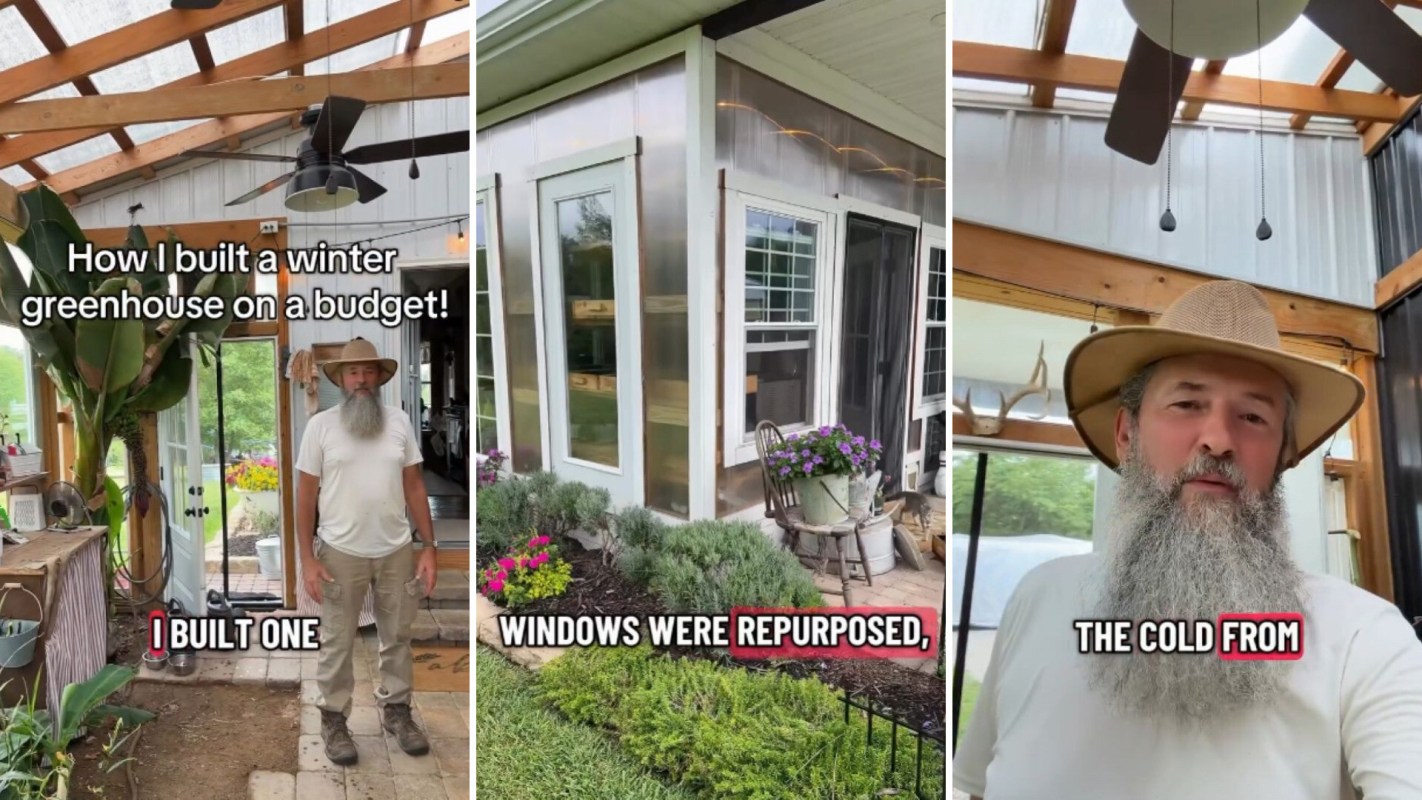
Bananas are not what most people expect to find growing inside an Ohio greenhouse, especially one built to make it through winter. But one homesteader's practical setup is challenging that assumption in a way that has drawn attention online.
Instead of relying on a polished greenhouse kit, the build appears to follow a simpler idea: use available materials, insulate carefully, and create enough warmth to keep plants growing.
Here's what to know
Instagram creator The Bearded Builder shared a post showing a four-season greenhouse in Ohio that was built in response to skepticism about how useful such a structure could be in winter.
The greenhouse combines repurposed windows with a polycarbonate roof, buried insulation around the perimeter, and a wood-burning cookstove for heat, the creator said.
The creator said, "Everyone told us a greenhouse in Ohio wouldn't do much through the winter … so we built one that could."
Rather than functioning only as a place to get seedlings started ahead of the season, the greenhouse is also producing "things you wouldn't exactly expect to see thriving in Ohio … including bananas," the creator said.
TCD Picks » Quince Spotlight
💡These best-sellers from Quince deliver affordable, sustainable luxury for all




More background
Many people would like to extend their growing season, but a new greenhouse kit can be expensive, and building for a cold climate may sound even more daunting.
Reusing old windows may help lower upfront costs, while insulation and a sturdier roof can make a bigger difference when the goal is year-round growing rather than simply shielding plants from wind and rain.
Extending a harvest into colder months can help households get more from a backyard garden, potentially reduce produce costs, and ease the frustration of losing plants to early frosts.
Keeping a greenhouse warm through an Ohio winter takes planning, fuel, and ongoing attention, which means it may be more realistic for some households than for others.
What can be done?
Season extension can involve several layers: sunlight, insulation, ventilation, and cost.
That could mean starting with a smaller cold frame, hoop house, or modest greenhouse instead of trying to recreate a fully heated structure all at once. Repurposed materials can help keep a project more affordable, but they still need to be sturdy, weather-ready, and installed safely.
If winter growing is the goal, insulation around the base and a roofing material that balances light and durability can matter just as much as the walls. Anyone considering a heat source should also think carefully about ventilation, moisture, fire safety, and local building requirements.
Even borrowing one or two ideas from the build — such as salvaging old materials or improving heat retention — could help gardeners keep growing further into the cold season without paying for a high-end greenhouse.
The creator said the greenhouse's lack of polish is part of what they like about it. "It's definitely not fancy, but that's one of my favorite parts about it. Sometimes the best thing you can do with old materials is give them an entirely new purpose."

Get TCD's free newsletters for easy tips, smart advice, and a chance to earn $5,000 toward home upgrades. To see more stories like this one, change your Google preferences here.







