


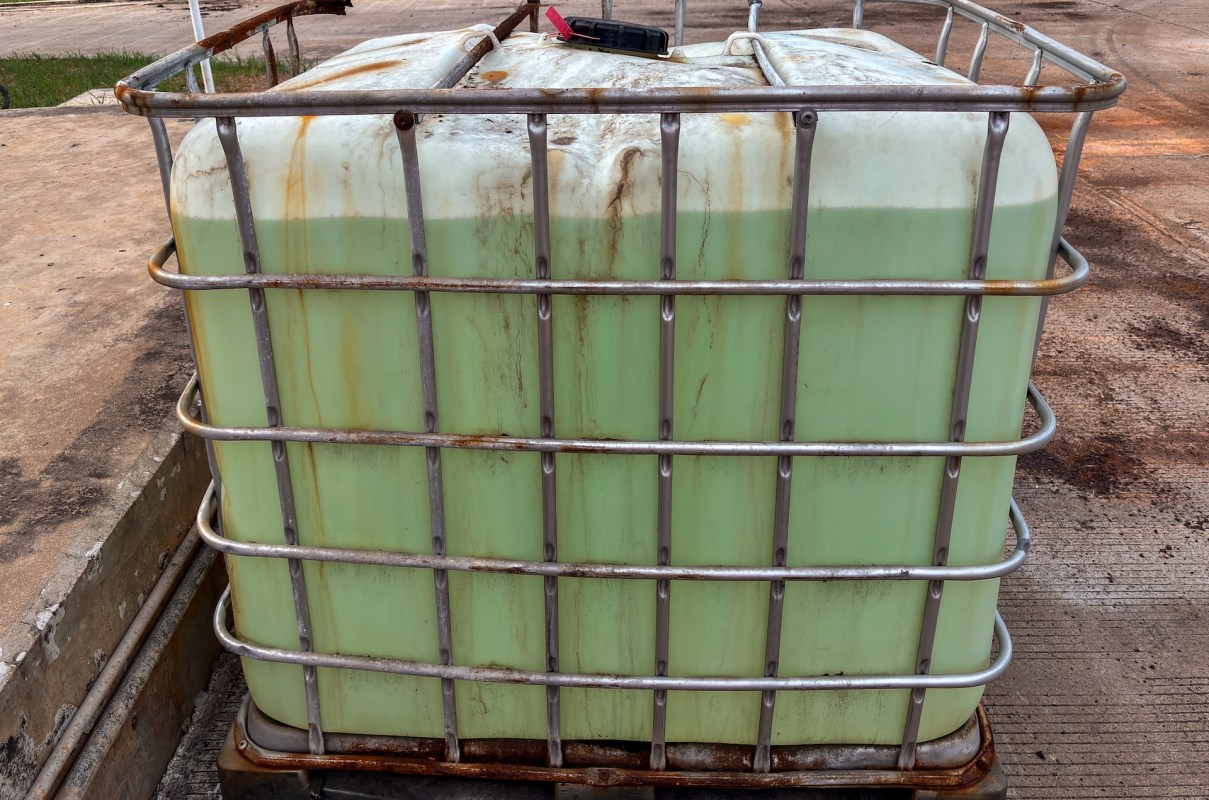
Water deliveries in central Queensland, Australia, can cost about $350, or $500 Australian dollars, and one r/OffGrid poster said they were weighing that expense with only around 400 gallons left out of roughly 6,000 gallons of on-site storage.
Under that pressure, they asked whether an IBC tote that had previously held herbicide could be thoroughly rinsed and used as a short-term way to transport water.
Here's what to know
The discussion in a Reddit thread focused on limited container options and a shrinking water supply. The poster wrote, "I have 6,000 gallons of water storage (admittedly half are new); I'm down to about 400 gallons of water," and said that most nearby IBCs were either of unknown origin or had previously held oil, leading them to ask whether a former herbicide tote could be cleaned well enough for temporary household water hauling.
Commenters largely rejected the idea, particularly if the water might ever be used for drinking. One summed up that view with, "Just no. Food grade or bust."
Much of the pushback centered on the risk of residue remaining even after washing. A commenter who identified themselves as a weed scientist wrote, "Do not use these totes for drinking water, washing water, or for watering your plants." Others similarly argued that repeated rinsing would not necessarily make a tank safe after chemical use.
Some replies made the health concern even more explicit. One wrote, "Never for potable water," while another said, "If you don't care about your health, it's a great idea."
TCD Picks » Quince Spotlight
💡These best-sellers from Quince deliver affordable, sustainable luxury for all




More background
The poster said the immediate aim was to refill enough water to reach "at least 1,000 gallons (for emergency buffer and fire fighting)."
Commenters also pointed to how persistent leftover residues can be in reused containers. One described a family member's old pickle tote that continued affecting the taste and smell of water 15 years later, while another said a tote that had carried sunflower oil still left water smelling like it despite "a hot pressure washer, detergents, everything."
What can be done?
The clearest advice from the thread was to reserve household water for containers meant for that purpose. As one commenter put it, if the supply might ever be consumed, "Absolutely not. If you think you might ever drink the water (even in an emergency only), it has to be either a virgin food-safe tank or a tank that you can verify has only ever had food in it."
Some commenters said the safer route was to purchase unused storage. One noted, "You can always buy them brand new — never used," and added that proper above-ground plastic or stainless cisterns would be the better choice.
Where can I learn more?
For a closer look at how off-grid households manage water, these articles cover drinking water systems, reuse strategies, and emergency collection.
• One off-grid homeowner showed off a clean drinking water setup.
• Other off-gridders relied on effective methods of reusing water to stretch limited supplies.
• Long-time preppers turned to collecting and using water from barrels when shortages hit.
• One homeowner offered a warning for those considering off-grid life without understanding site conditions.

Get TCD's free newsletters for easy tips, smart advice, and a chance to earn $5,000 toward home upgrades. To see more stories like this one, change your Google preferences here.






