


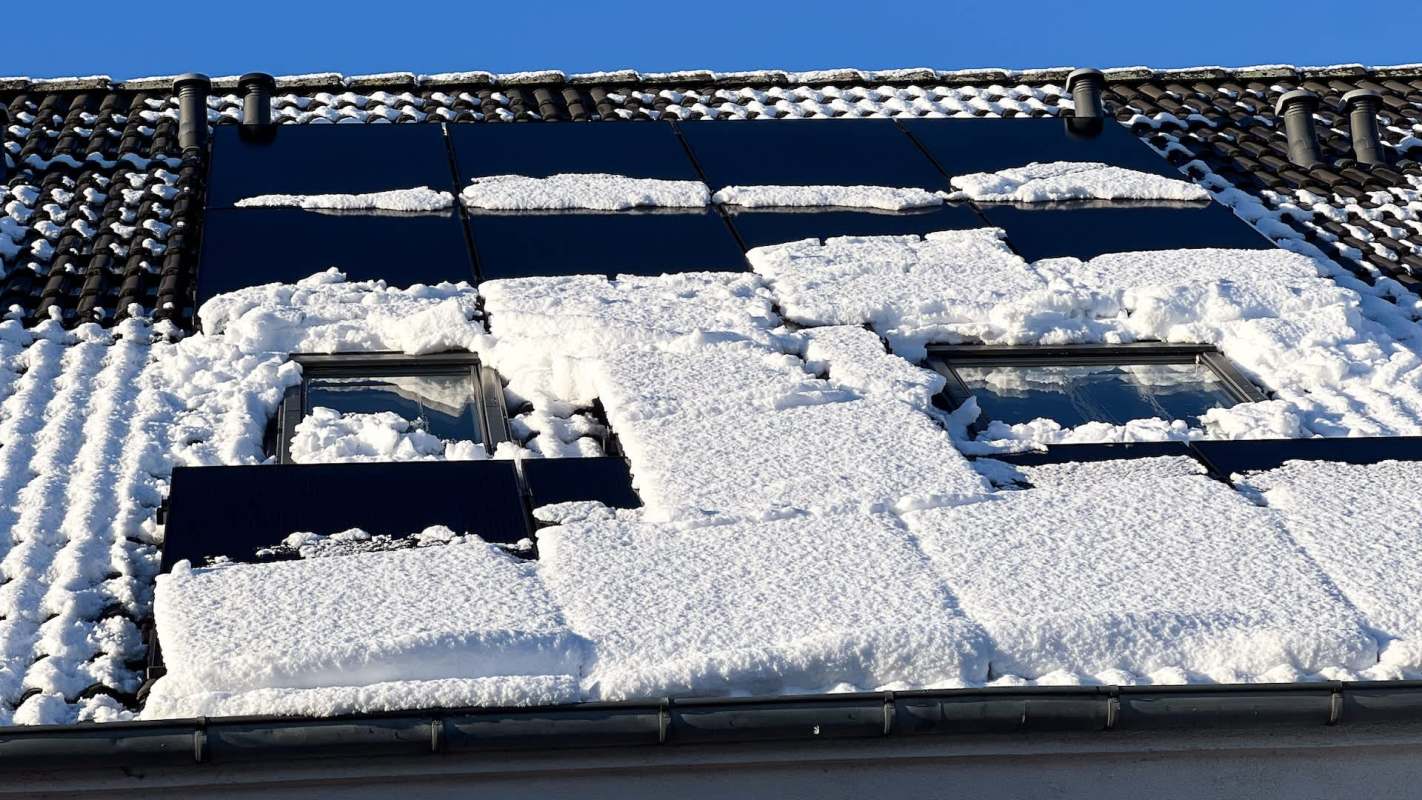
A couple in an off-grid home in northern New Mexico had to melt snow just to flush their toilets after winter snow covered their rooftop solar panels.
Here's what to know
A couple seeking a more self-sufficient lifestyle got a stark reminder that energy independence can come with real tradeoffs when they lost power to their well pump after snow covered their solar panels.
In a first-person essay for Business Insider, the homeowner recounted what happened after she and her husband, John, moved onto a 40-acre property with a straw-bale house, solar power, a well, and a septic system.
At first, she wrote, the home felt like a natural continuation of the self-sufficient lifestyle the couple had practiced while traveling full-time in a van outfitted with solar panels.
The trouble intensified in winter after they shifted their solar setup from a standalone mount to the roof, where snow coverage became much harder to deal with.
The homeowner wrote, "Blocked solar panels meant no power, which meant the water pump stopped working inside our well. No working water pump meant no running toilets."
TCD Picks » Quince Spotlight
💡These best-sellers from Quince deliver affordable, sustainable luxury for all




The situation became urgent during a holiday visit from relatives as family members gathered snow from the courtyard, melted it, and used the water to get the toilets working again.
More background
She also wrote that trash created another inconvenience because there was no regular pickup service. The couple stored garbage in bins, secured the lids so animals could not get in, and made an approximately hour-long round trip to the dump.
What could have been an infuriating chore became a reminder to be more aware of what they consumed and pushed them away from disposable products and toward habits that created less waste.
Wild animals were another problem. After noticing one of the dogs acting strangely near a workshop, she discovered a badger underneath the building. A local game warden later advised them on ways to deter the animal, and the couple used human urine and mothballs to keep it away.
As she wrote, "Sure, living off-grid meant hauling our own trash, evicting badgers, and occasionally melting snow just to flush a toilet — but every once in a while, the rest of our world lost power, and we didn't even notice."
What can be done?
Panel placement, snow-removal access, water backups, and waste-disposal plans can all make a major difference and are worth keeping in mind.
If you're exploring that route, EnergySage can help you compare competitive bids from local installers without giving up your contact information unless you decide to move forward with one. That can make it easier to weigh costs, equipment options, and backup-power features.
Where can I learn more?
The articles below explore questions about winter solar performance, off-grid reality, and backup plans. They get into the practical details that matter most, from panel access and system design to what installation choices can cost.
• At one off-grid home, snow-covered panels still produced power once the sun broke through.
• After two years off-grid, one homeowner said solar energy kept working through cold winter weather.
• For grid-tied households, EnergySage showed how solar panel costs shift with equipment and labor.
Details like panel placement and backup power go a long way toward determining how disruptive an outage becomes — especially for anyone deciding between full off-grid living and a hybrid setup.

Get TCD's free newsletters for easy tips, smart advice, and a chance to earn $5,000 toward home upgrades. To see more stories like this one, change your Google preferences here.






