


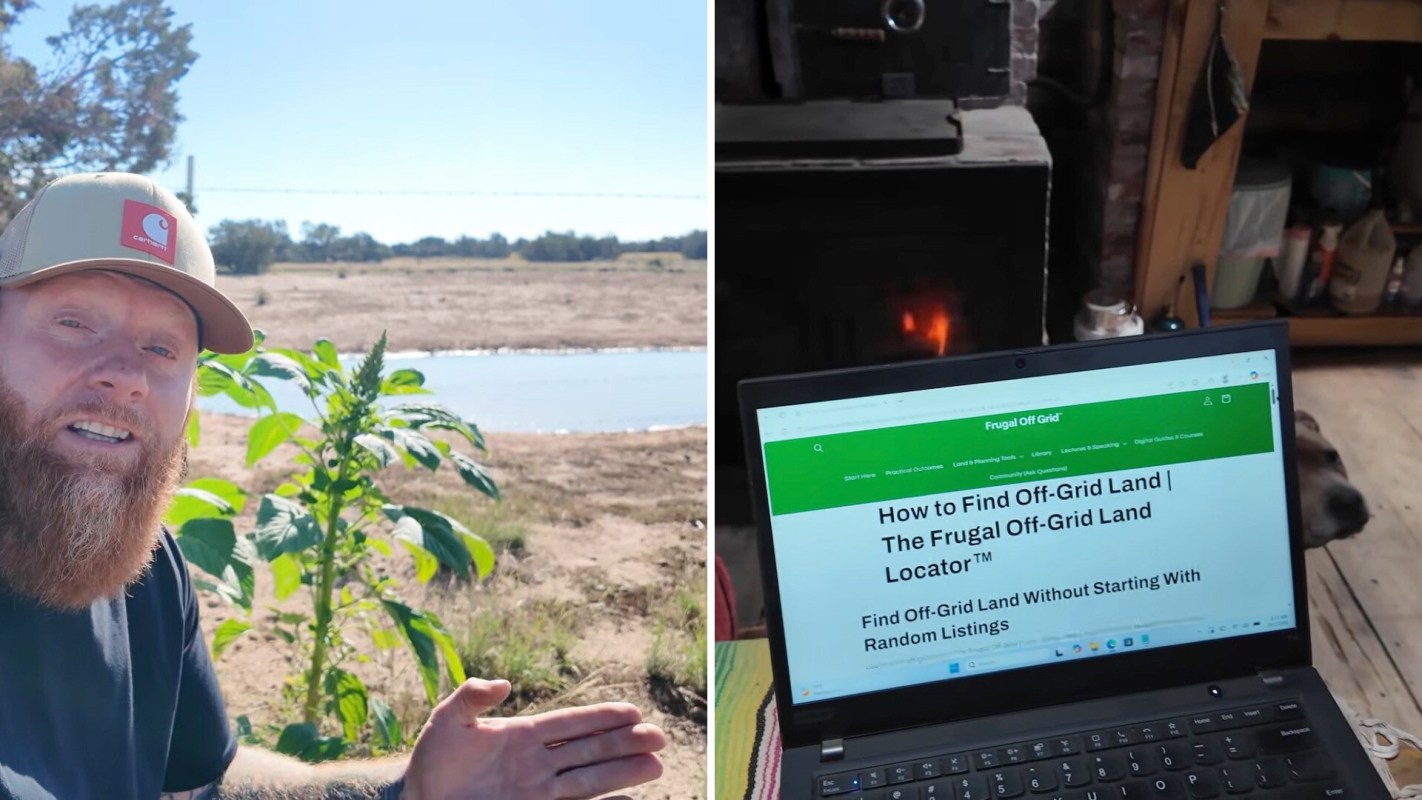
Buyers searching for cheap off-grid land in the United States often begin by scrolling real estate listings for parcels described as "unrestricted" or "no zoning," but the content creator behind Frugal Off Grid (@FrugalOffGrid) warned that this approach can lead people in the wrong direction because counties can still derail plans long after a sale is complete.
Here's what to know
In a YouTube video, the creator urged buyers to look into county requirements, access, water, and permits before investing in a listing. A parcel can appear inexpensive online while local rules still decide whether the desired homestead can actually be built there.
Speaking about standard listing websites, the creator said, "The problem is they're, you know, geared towards selling land." They warned that it can be "very painful" not to check a listing's claims first if a buyer later discovers "there were some inaccuracies."
The caution centered in part on terms that can sound especially attractive to people shopping on a tight budget. Labels like "unrestricted land" and "no zoning" do not necessarily mean full freedom, because county requirements may still apply even when a listing suggests otherwise.
Commenters echoed that concern, adding their own warnings. One wrote, "You need to physically go look at it or you don't know what you're getting. Lots of scams too," while others agreed that listings should not be treated as the whole story.
More background
Off-grid living is often marketed as a more affordable path to land ownership, particularly for people who feel shut out of the traditional housing market. The creator's main point was that a lower price tag does not eliminate the need for due diligence, and overlooking even one rule can turn a bargain into an expensive mistake.
TCD Picks » Quince Spotlight
💡These best-sellers from Quince deliver affordable, sustainable luxury for all




The creator tied that warning to their own experience. They said they moved off-grid from a camper van without much money or resources. Frugal homesteading may be appealing, they suggested, but costly lessons after a purchase remain a very real risk.
Buyers, the creator said, should not assume a county is off-limits just because it has rules. "Just about every county you call is going to sound scary and intimidating at first because there's rules," they said, while adding that those rules are "not impossible to follow."
Even when buyers think they have found a looser arrangement, counties often still require basics like septic systems or permits. One commenter said Australia can present its own obstacles, with limits on how long someone can camp on a property and trade-licensing requirements that can completely reshape an off-grid plan.
What can be done?
Rather than picking land first, the creator recommended starting with the county. Their suggested order was to find out what a county allows, search for land there afterward, and only then use a checklist to review access, water, and other due-diligence details before moving ahead.
They also directed viewers to a free land-search tool on their website that can be used "three times every day" and draws from a broader mix of websites than standard real-estate portals. The creator added that they have also identified "hundreds" of counties that may work for off-grid homesteading.
To protect a limited budget, the creator recommended contacting the county directly and asking questions. They said county officials may be "surprisingly more willing to work with you than you think," even if the first conversation sounds intimidating or expensive.
The creator also discussed a free four-step system for people starting out with limited money and little experience. Paid resources are available as well, they said, but "you don't have to buy anything."
Where can I learn more?
These stories explore real-world issues that can make or break an off-grid plan. They cover inspections, rising interest in off-grid living, and low-budget moves.
• A contractor said a real-world understanding of site conditions matters before going off-grid.
• In Maine, more and more residents are choosing off-grid homes to escape utility costs.
• In Tennessee, one family moved off-grid with almost no money and made it work.

Get TCD's free newsletters for easy tips, smart advice, and a chance to earn $5,000 toward home upgrades. To see more stories like this one, change your Google preferences here.






