


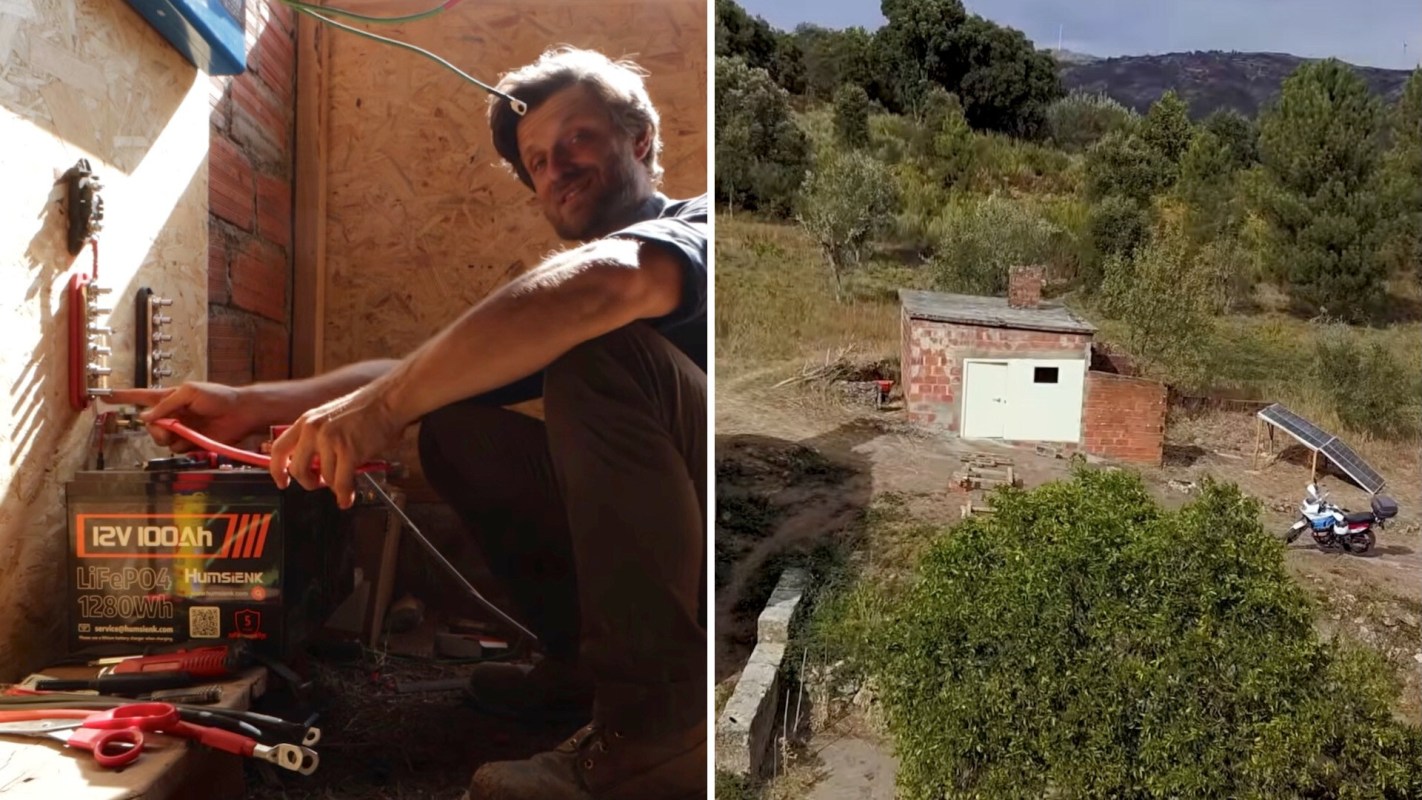
Turning an old stone ruin into something secure and livable is not glamorous work, but it was a necessary part of the process for a content creator building an off-grid homestead in Spain.
The content creator recently shared a video of his homesteading process: completing a first room that can finally be locked, closed off, and better protected from the elements. He also showed the process of installing solar panels for power generation.
Here's what to know
In the YouTube video, the creator worked on the off-grid solar setup, adding "a new battery, inverter, and cables," though the electrical portion "started out difficult to say the least due to a missing tool." Alongside that upgrade, the old ruin project proceeded with installing a wooden wall, door, and window, followed by weatherproofing the timber as rain approached.
The creator described the milestone this way: "This repaired ruin is the closest thing to being a home on the homestead."
Commenters praised the craftsmanship and skilled electrical work. One commenter wrote, "Excellent job on the enclosed electrical room. Your homestead is coming along nicely." Another added, "The room looks fantastic. You did an excellent job."
More background
For many people interested in off-grid living, the appeal lies in greater independence and lower recurring utility costs. The work shown here is slow, physical, and detail-heavy, and that kind of lifestyle may not be realistic or desirable for every household.
TCD Picks » Quince Spotlight
💡These best-sellers from Quince deliver affordable, sustainable luxury for all




Batteries and inverters are essential parts of an off-grid energy system because they help store energy and convert it into usable power. When those systems are unreliable, anything that uses the downstream electricity can be negatively affected.
Commenters also noticed the harsher environmental backdrop shown in the video. One wrote, "As an Australian....I instantly recognize/relate/empathize with the fire burnt landscape in your intro." The comment pointed to the emotional weight of rebuilding in a damaged landscape, alongside the logistical challenges.
What can be done?
Most people are not going to take on the task of restoring a ruin on their own, and this lifestyle is not simple, but there are many takeaways from this creator's adventure.
Prioritizing function over finish is a helpful step. Securing doors and windows, sealing out water, and protecting electrical equipment can help prevent bigger expenses later. Planning carefully before beginning power upgrades also matters, since missing tools or parts can quickly slow progress.
Even smaller steps, such as improving storage, weatherproofing an outbuilding, or creating a safer workspace, can make a home more durable and functional without requiring a full off-grid transition.
Where can I learn more?
These stories follow many of the same themes as the repaired ruin project: energy independence, solar choices, and the practical tradeoffs that come with both. They also address the questions of cost, access, performance, and the day-to-day of off-grid living.
• One off-grid homeowner said solar still works in winter, challenging a stubborn misconception.
• A cabin owner turned rooftop solar panels into an upstairs deck during rebuilding.
• EnergySage's COO detailed interconnected factors behind solar prices, from equipment to installation.
These articles offer useful context for anyone weighing backup power, off-grid upgrades, or a gradual move toward energy independence. Questions about reliability, affordability, and access come up in projects well beyond a single repaired room.

Get TCD's free newsletters for easy tips, smart advice, and a chance to earn $5,000 toward home upgrades. To see more stories like this one, change your Google preferences here.






