


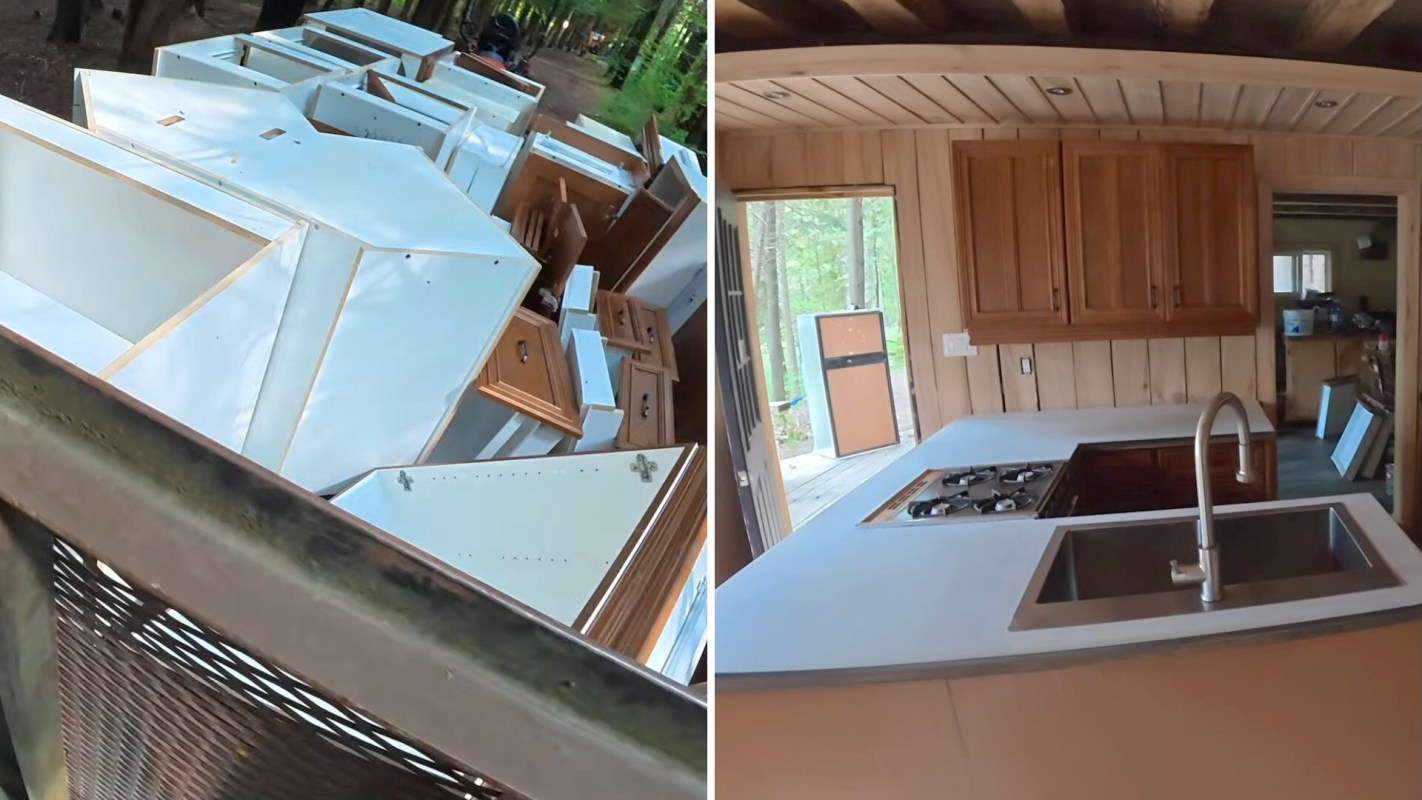
An off-gridder who focuses on self-reliance turned a pile of used cabinets into a finished cabin kitchen with concrete counters, under-cabinet lighting, and a working sink, showing that secondhand materials can still produce a polished result.
Here's what to know
In a detailed build video posted to YouTube, Kevin from Kevin Builds (Modern Self Reliance) (@ModernSelfReliance) documented how a salvaged kitchen set was reworked for an off-grid cabin, and the final makeover looked very intentional.
Two pieces largely set the terms for the whole install: the sink base and the corner lazy Susan cabinet. Around them was a full secondhand kitchen collection with upper cabinets, base cabinets, and cabinet doors, but Kevin said those two units are "the rocks and the hard places when it comes to installing a used kitchen" because "you can't really change them."
Instead of purchasing new countertops, Kevin poured concrete counters on-site. Other older pieces were kept in service too, including a reused stainless steel sink, salvaged under-cabinet lighting, and an older Wedgewood propane stove.
The price difference was a major part of the appeal. Kevin said this kitchen "would probably be in the neighborhood of between 30 and $40,000," while the cabin version came down to nine bags of cement — "Nine times over five bucks. $45."
More background
It was not simply a matter of dropping used cabinets into place. Kevin had to cut down cabinet boxes, resize a drawer to fit beneath the stove, and build around the quirks of an off-grid cabin, including its compact footprint and existing heating lines in the floor.
TCD Picks » Quince Spotlight
💡These best-sellers from Quince deliver affordable, sustainable luxury for all




Because the cabin is off-grid, the plumbing had to follow a different logic. The sink was connected to a cistern-fed cold-water line, and the drain was designed to keep water moving downhill and remain easy to empty; as Kevin explained, there was no trap because "you don't have a trap on an off-grid because ... they freeze."
This was not presented as a simple weekend upgrade for the average homeowner. It involved welding, concrete forming, cabinet modifications, and enough saved materials on hand that Kevin could pull from past finds instead of making repeated trips to the store.
Keeping functional cabinets, fixtures, and lighting in circulation can reduce disposal waste while also lowering renovation costs.
What can be done?
Rather than forcing the salvaged pieces into a showroom-perfect plan, Kevin treated the sink base and lazy Susan as fixed points and built the rest of the layout around them.
The finished reuse included solid maple doors, working towel holders, and under-cabinet lights. A discarded sink from the original kitchen went back into service, and it was matched with a found faucet instead of a new fixture.
The older propane stove was kept, which meant widening its opening for a tight fit instead of discarding it. Elsewhere, one cabinet was cut down to fill a narrow gap, and filler strips finished the run.
Kevin spent hours refining the layout, fabricating concrete countertop forms, and smoothing the finished surface.
As he put it, "There's so much waste in this world that you can repurpose a lot of the times."
Where can I learn more?
This cabin kitchen is one example of the improvising that off-grid living often requires. The articles here dig into similar scenarios.
• In one cabin redo, solar panels on the upstairs deck became a useful second-story feature.
• In Tennessee, moving off-grid with almost no money still led to a workable homestead.
• One homeowner learned that a real-world understanding of an off-grid property matters before rebuilding.

Get TCD's free newsletters for easy tips, smart advice, and a chance to earn $5,000 toward home upgrades. To see more stories like this one, change your Google preferences here.






