


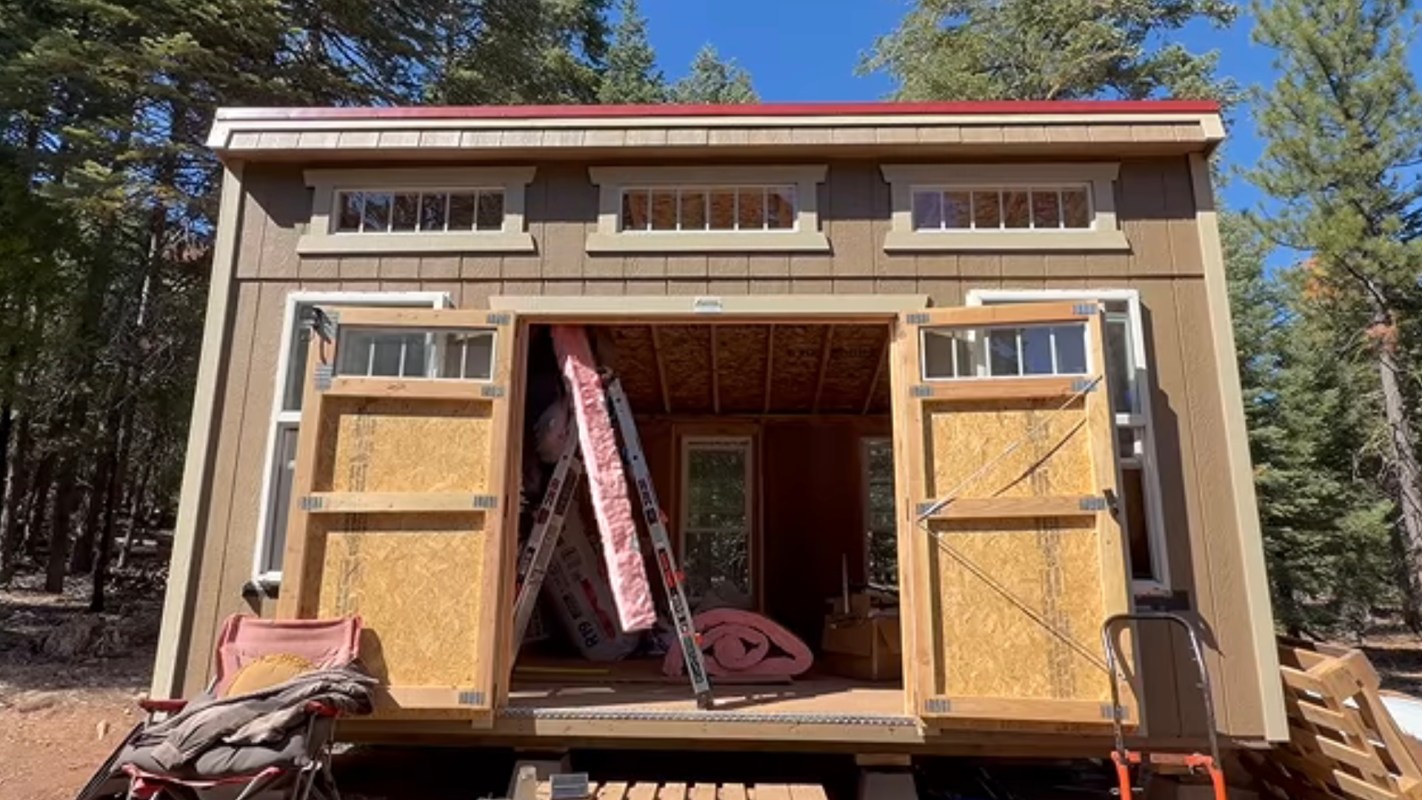
As winter approaches, a content creator trying to insulate an off-grid cabin discovered the ceiling insulation they bought wouldn't fit the rafters.
Even so, the one-person build continued toward a sealed tiny-house shell and the next stage of the project: cedar siding.
Here's what to know
In a YouTube video, Toby Rose (@tobyroselonesome) showed what it was like to handle the insulation work alone while racing cold weather. The original plan called for R19 insulation in the ceiling, but the batts were sized for 24-inch-on-center framing rather than the cabin's 16-inch-on-center rafters.
"I've got to get this insulation finished before winter hits," the creator said. Later, after realizing the mistake, they added: "I don't know what happens to my brain when I go to Home Depot."
Rather than forcing the material to fit, the builder decided to return it and use leftover R15 insulation instead. Even small measurement mistakes can cost valuable time, energy, and money during a DIY build.
The creator said off-grid living is not a shortcut or simply an aesthetic. "You have to put in the unglamorous, invisible work. You have to measure the studs, haul the heavy batts, handle the scratchy insulation, and seal out the cold. You have to build the comfort from scratch."
TCD Picks » Quince Spotlight
💡These best-sellers from Quince deliver affordable, sustainable luxury for all




More background
Working alone, Rose said, often takes more time but suits the way she thinks and problem-solves. "Installing long bats of insulation on this ceiling all by myself is a great example of that," she said.
One commenter wrote, "I feel exactly the same way you do about working alone. A lot of it for me is to be able to work at my own pace, which is slow."
At the same time, others pointed to practical concerns that come with building in a small space. One commenter cautioned, "Before installing the insulation on the ceilings you should install attic insulation baffles so the condensation can dissipate through your vents."
Off-grid or shed-style living can reduce housing costs and material expenses in some cases — Rose said she milled her own siding and "saved thousands of dollars there" — but it also requires planning, construction knowledge, and a willingness to deal with mistakes, discomfort, and safety considerations.
What can be done?
Double-check framing dimensions before buying materials. Matching insulation width and R-value to wall, floor, or roof framing can prevent an extra trip to the store and a lot of wasted effort.
Ventilation matters too. As commenters noted, moisture control in ceilings and roofs can become a serious issue if an assembly is not designed properly. That is especially true in smaller spaces, where temperature swings and condensation can have an outsized effect on comfort and durability.
Downsizing or taking on more DIY work can save money, but off-grid living isn't practical for everyone, and it comes with trade-offs that many conventional homes avoid.
More accessible changes include improving efficiency, prioritizing insulation and weatherization, and taking on manageable projects that boost comfort and cut energy waste without requiring a full lifestyle overhaul.
By the end of the project, Rose summed up the exhaustion, saying, "This insulation took much longer than I planned."
Where can I learn more?
For more on the day-to-day realities of off-grid living, these stories look at everything from setup decisions to winter performance. They cover power planning, contractor warnings, heating help, and the infrastructure challenges that come with cabins away from utilities.
• On Reddit, a brand-new cabin owner got crucial advice on power right off the bat.
• A contractor shared a real-world understanding of what off-grid buyers face.
• An off-grid tiny homeowner used a stunning greenhouse to ease winter heating demands.
• Dry-cabin residents traded creative solutions for bathing when plumbing was not an option.

Get TCD's free newsletters for easy tips, smart advice, and a chance to earn $5,000 toward home upgrades. To see more stories like this one, change your Google preferences here.






