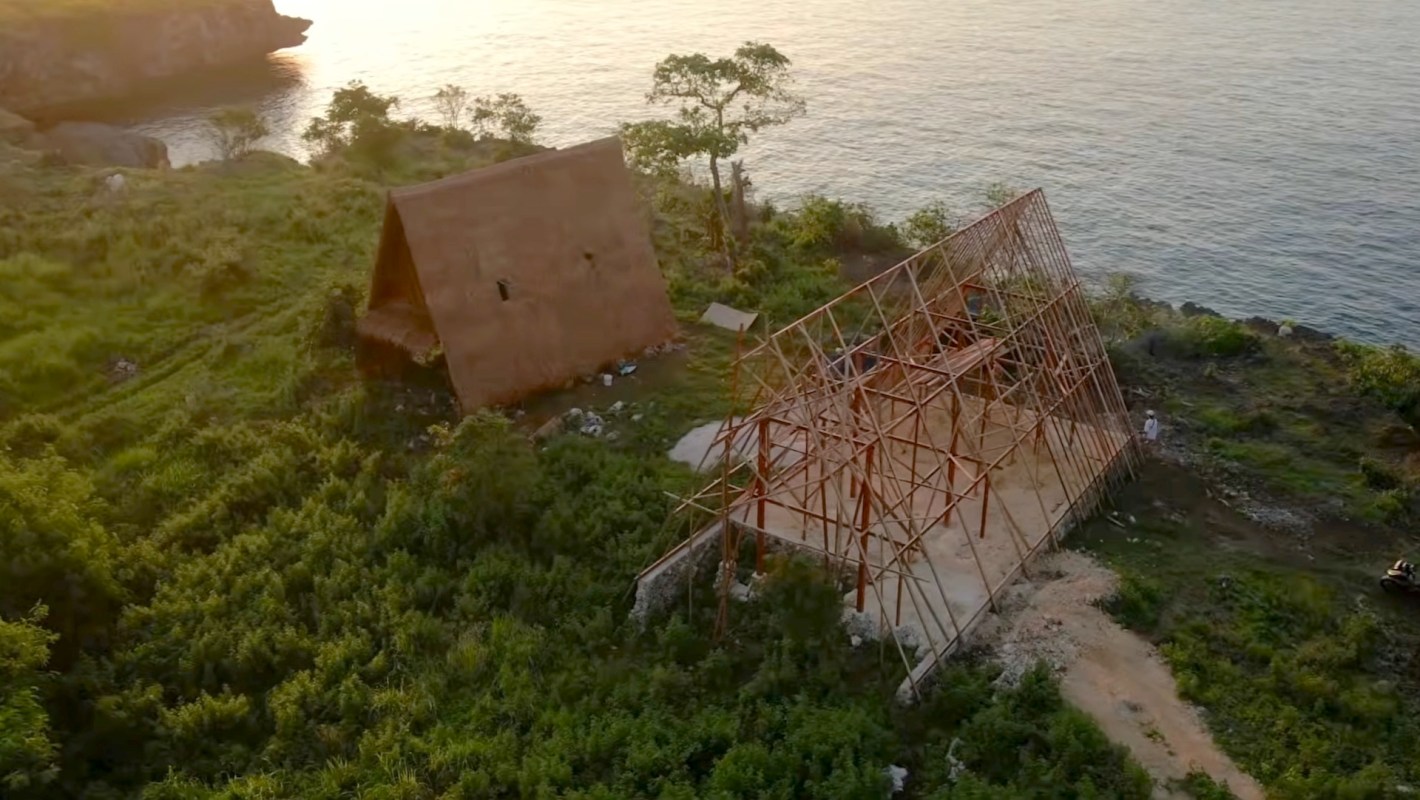
Us_Tripping (@us_tripping), a couple documenting their oceanfront homestead on Indonesia's Sumba island, said a string of construction mistakes cost them $59,000, even though they believed they had taken the right precautions.
Here's what to know
Before construction unraveled, they said they tried to do things properly: they hired a respected architect, used a lawyer and notary, and paid for the required permits, including an environmental permit.
But after moving from Dubai to begin a wooden home project on remote Sumba, they said those steps still did not protect them from serious setbacks, as the creators explained in their video.
When they returned to the site, they said major defects had already piled up: the foundations were in the wrong place, the lumber was poor quality, the workmanship was bad, and termites had appeared.
They traced the biggest loss to what they described as their worst decision — relying on a contractor after paying a large deposit and stepping away from daily oversight.
In the end, they said the original work had to be torn down and rebuilt from scratch.
TCD Picks » Quince Spotlight
💡These best-sellers from Quince deliver affordable, sustainable luxury for all




They also said their payment setup made the situation worse. Putting 50% down at the start of each project, they argued, weakened accountability, and they now advise using smaller payments linked to clear, visible milestones instead.
One commenter wrote, "There is always 15% for when things go wrong."
More background
Looking back, the couple said they planned too much before they fully understood what local conditions would allow. Rather than designing so far ahead, they now say they would begin with a small home base, live there for several months, and expand only after learning more about local labor, supply routes, and practical limits.
They also reworked their material choices to reflect what Sumba already offers, including local stone, teak, and rock quarried from the land. In their view, using locally available materials could help cut shipping costs, reduce weather-related delays, and limit replacement issues over time.
What can be done?
One lesson for anyone planning a custom build, off-grid or not, is to avoid treating the job as one large leap. Breaking the work into smaller phases, inspecting progress often, and keeping deposits lower through milestone-based payments may make it easier to catch problems before they become expensive.
They also said people should verify property boundaries for themselves, even when the paperwork seems in order, and site markers appear official. In their case, they said the markers were off by 6.6 feet (2 meters), and that error grew more significant across the length of the lot.
Being there in person is still the better safeguard, they said, but remote monitoring may help when a site visit is not possible.
One commenter suggested installing cameras to watch key parts of the job from afar, writing, "if you have electricity on site, install CCTV -- it also keeps the workers honest(-ish)."
As the creator put it, "Do not trust. Verify yourself."
Where can I learn more?
The Sumba build is a sharp reminder of how quickly a project can go sideways when large deposits, limited oversight, and too much trust are part of the plan. The articles below dig into many of the same challenges, from spotting solar scams to getting a clearer picture of off-grid costs and learning curves.
• Across the U.S., homeowners lost thousands to common solar scams hidden in contracts and sales pitches.
• After predatory calls, a new homeowner asked Reddit how to find a company that's legit.
• At EnergySage, homeowners saw solar panel costs shift with equipment, labor, and financing.
• For one off-grid homeowner, a lot to learn here meant sizing solar before moving ahead.
• One rural homeowner turned to solar after a six-figure quote for grid hookup.
They point back to the same lesson from Sumba: the appeal of independence is real, but so is the need for careful vetting and a budget that leaves room for surprises.

Get TCD's free newsletters for easy tips, smart advice, and a chance to earn $5,000 toward home upgrades. To see more stories like this one, change your Google preferences here.