


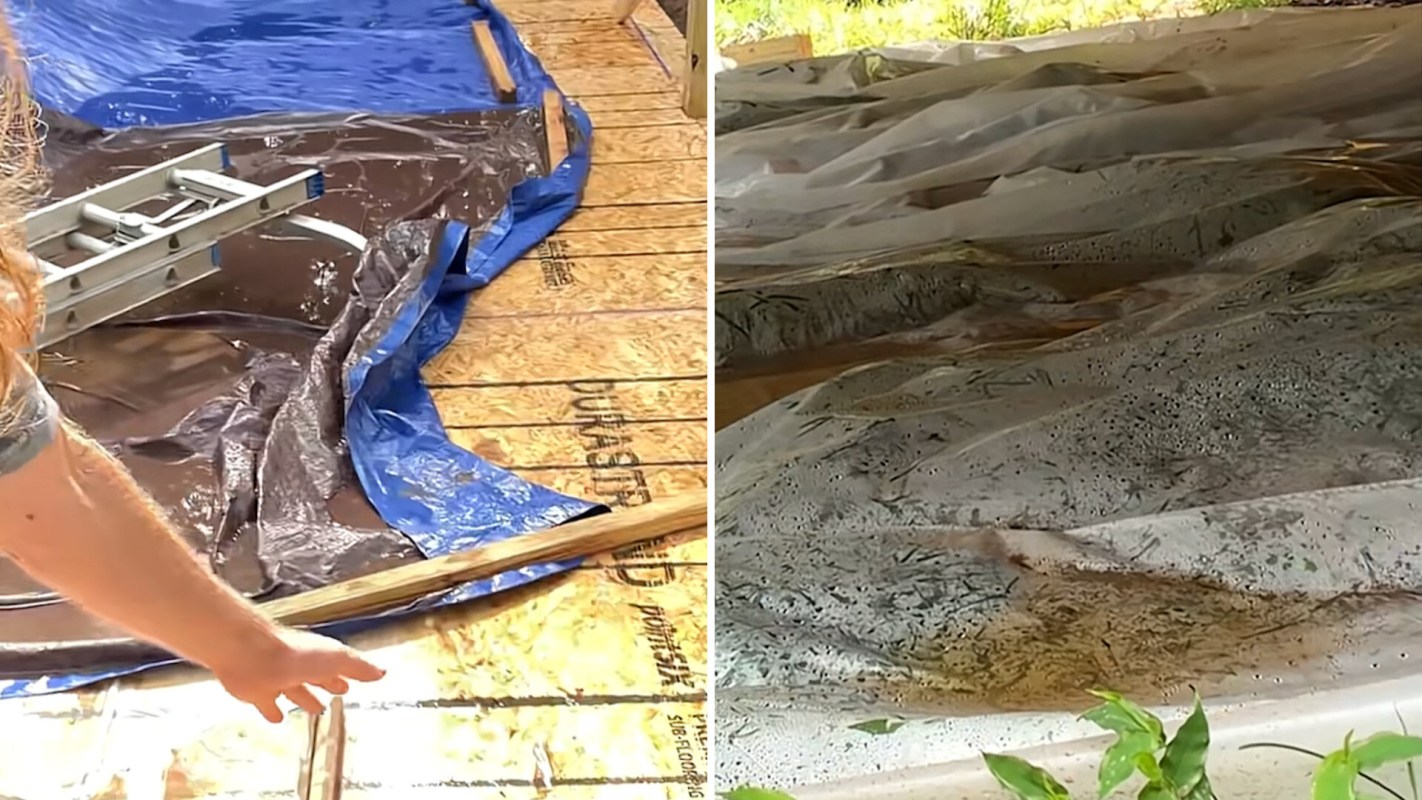
What happens when a fresh subfloor goes down before a building is fully dried in? One off-grid builder offered the answer in real time after a storm soaked the newly installed surface, underscoring for anyone building or renovating how much project timing can matter.
Here's what to know
In a video posted to TikTok by Nate Petroski (@natepetroski), the off-grid content creator captured a frustrating but instructive moment after the subfloor had just been installed when heavy rain moved through before the structure was fully protected. The clip was labeled as the sixth installment.
Before the storm, the builder had weighed whether to insulate the floor immediately to avoid having to crawl underneath and do it later. "You really want to insulate before you put your flooring on, cause it's so much easier," Petroski explained.
@natepetroski The storm soaked the subfloor #narrowayhomestead #offgrid #construction #storm #subfloor #water #soaked #part6 ♬ original sound - Nate Petroski
The video shows why waiting can be the safer call. When rain falls onto the new floor and eventually drips through it, moisture exposure can soak insulation before the shell is sealed. As he put it, "But you run the risk of getting moisture in that. Until you have a roof on and have the building dried in."
Fiberglass, the builder said, can go in at a later stage after the structure has dried out more and the weather has cooled.
Rather than trying to make the space weather-tight right away, Petroski said leaving it open would let moving air help dry things out. "And instead I'm able to just leave it completely open up here. And just allow airflow and ventilation to take care of everything," he said. Drying out exposed wood is often easier than dealing with insulation that has trapped moisture.
TCD Picks » Quince Spotlight
💡These best-sellers from Quince deliver affordable, sustainable luxury for all




What can be done?
Instead of sealing in the floor assembly too soon, the builder's plan was to let the framing and subfloor dry with airflow first and return to insulation afterward. The builder said postponing fiberglass also makes sense because "it's an easier time to work with fiberglass" in the cooler season.
As Petroski put it, "It makes sense to wait until you for sure no longer have a moisture problem."
Where can I learn more?
If this rain-soaked subfloor has you thinking about the bigger realities of off-grid living, these stories show how people handle them in practice.
• On Reddit, a homeowner offered a real-world understanding of off-grid building limits.
• In an off-grid cabin, one resident sought help while making ends meet without water.
• In a dry cabin, homeowners found creative bathing solutions when plumbing was unavailable.

Get TCD's free newsletters for easy tips, smart advice, and a chance to earn $5,000 toward home upgrades. To see more stories like this one, change your Google preferences here.






