


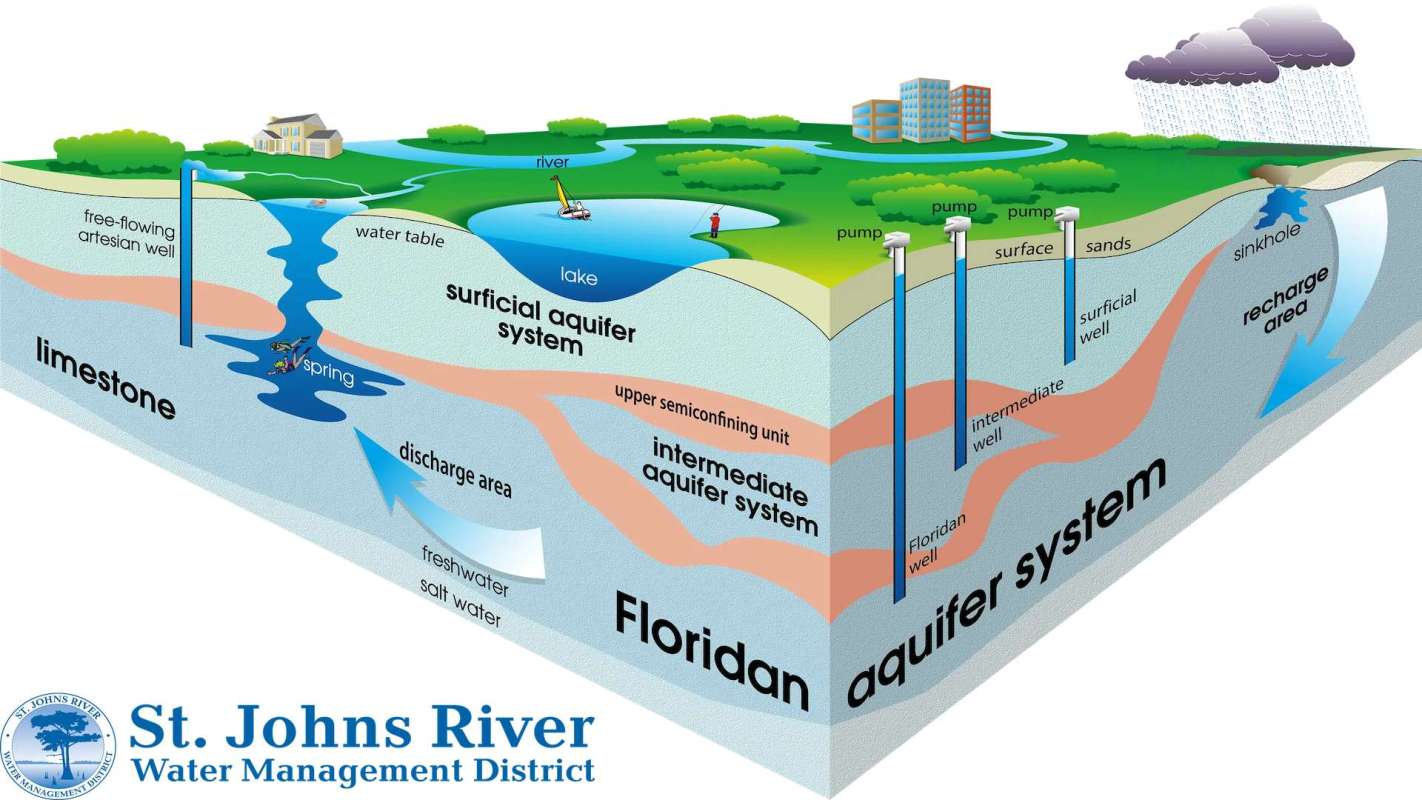
A stubborn water shortage in Northeast Florida is doing more than turning lawns brown. The St. Johns River Water Management District says the region's groundwater supply is under serious strain, and some springs are already drying up.
Here's what to know
The aquifer, a major water source for homes, businesses, and ecosystems, extends from Georgia and South Carolina into Central and West Florida. According to News4Jax, Duval and St. Johns counties are each more than 15 inches below their 12-month average rainfall totals.
Clay Coarsey, the St. Johns River Water Management District's director of Water Supply and Assessment, said signs of the shortage are already visible in places west of Duval County.
"A number of springs to the west of Duval County over in Alachua County have started drying up due to the low rainfall conditions," Coarsey said.
September brought some rain to North Florida, but Coarsey said it did little to erase the shortfall built up over roughly a year of below-normal precipitation.
"That one month hasn't made up for the 11 months prior deficit in rainfall," Coarsey said.
TCD Picks » Quince Spotlight
💡These best-sellers from Quince deliver affordable, sustainable luxury for all




Phase 3 rules remain in place for residents of Duval and St. Johns counties, limiting outdoor watering to once per day.
More background
Aquifers work like natural savings accounts for water. When rainfall stays consistently low, groundwater levels can drop, springs can weaken, and communities can become more vulnerable to future dry spells.
Rain that falls during the autumn can do more to recharge groundwater, Coarsey said, because shorter days, lower evaporation, and reduced plant water use leave more moisture available to soak into the ground.
What's being done?
Phase 3 watering restrictions in Duval and St. Johns counties are meant to curb unnecessary outdoor water use while groundwater supplies recover.
Broad irrigation reductions can ease pressure on the aquifer during prolonged shortages. Officials are asking residents in Duval and St. Johns counties not to irrigate more than one day a week, to inspect irrigation systems regularly, to fix or replace broken sprinkler heads, and to add rain sensors to their irrigation systems. They also advise watering early in the morning or late at night.
Recovery will depend heavily on sustained rainfall, not just one or two wet stretches. Because groundwater recharge takes time, even beneficial storms may not bring immediate relief.
Coarsey was specific about the rainfall needed for recovery: "A little over 30 inches or so over the next 3 months would be needed above and beyond your everyday rainfall."
Where can I learn more?
These articles cover similar stories that show the risks of flooding, storm damage, and other extreme weather impacts.
• Across Central Florida, tropical moisture means flash flood risks grow even as drought persists.
• In Florida, Hurricane Milton deepened agricultural losses, adding pressure on growers statewide.
• In North Dakota, heat flipped to bitter cold within days.
• Experts warn public infrastructure is crumbling as extreme weather drives up repair costs.
• In New York City and New England, a once-in-1,000-year rain event triggered deadly flooding across multiple states.

Get TCD's free newsletters for easy tips, smart advice, and a chance to earn $5,000 toward home upgrades. To see more stories like this one, change your Google preferences here.






