


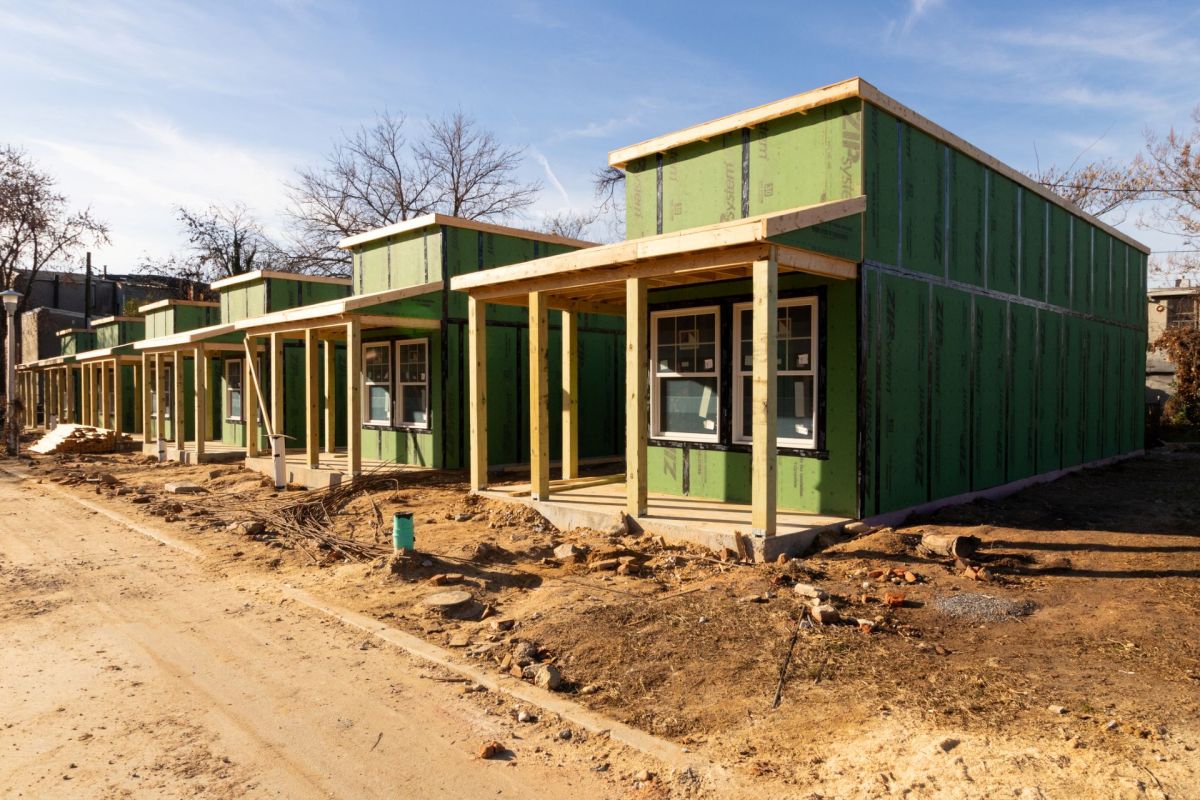
A new tiny-home community in North Carolina is giving formerly incarcerated women a place to build independent lives, with homes shaped by their own experiences.
Here's what to know
The North Carolina Housing Finance Agency provided most of the roughly $1.1 million used to build Benevolence Farm's seven tiny homes. Construction is complete on the development, North Carolina's first tiny-home community for formerly incarcerated women, according to WUNC.
Each home will have laundry machines, a kitchen, and a full bathroom, along with a bedroom and a small living area.
Benevolence Farm executive director Kristen Powers credited formerly incarcerated co-designers with shaping details such as sleeping arrangements and natural light. The women helped design both the interiors and exteriors.
"They made sure the beds were on the ground floor as bunked or lofted beds reminded them of prison," Powers said.
More background
Benevolence Farm does not exclude women because of their convictions; its support after incarceration includes temporary housing and employment training regardless.
TCD Picks » Quince Spotlight
💡These best-sellers from Quince deliver affordable, sustainable luxury for all




"They chose these joyful colors, making sure that none of them called back to what you might find in prisons, jails, or psychiatric hospitals. The co-designers required that we center natural light with the option to close out the world with curtains and blinds," Powers explained about the tiny homes.
The ribbon-cutting took place on land once home to the ancestors of Vivette Jeffries-Logan, a citizen of the Occaneechi Band of the Saponi Nation.
"We welcome you to our land, friends," Jeffries-Logan said at the ceremony.
What's being done?
Mona Evans helped design the neighborhood after having been incarcerated herself. She said the project would allow women to manage households of their own without facing judgment, WUNC reported.
"They will learn how to manage these homes, communicate their needs, build relationships with neighbors, manage their responsibilities, and develop the skills they need to eventually transition into permanent housing," Evans said.
Plans called for residents to move in by winter 2026.
Co-designer Linda Cayton, who was formerly incarcerated, said, "For someone like me that knows what it feels like to lose almost everything… I cannot overstate the significance of this community. Because sometimes rebuilding a life begins with something as simple and profound as having a place to call your home."

Get TCD's free newsletters for easy tips, smart advice, and a chance to earn $5,000 toward home upgrades. To see more stories like this one, change your Google preferences here.






