


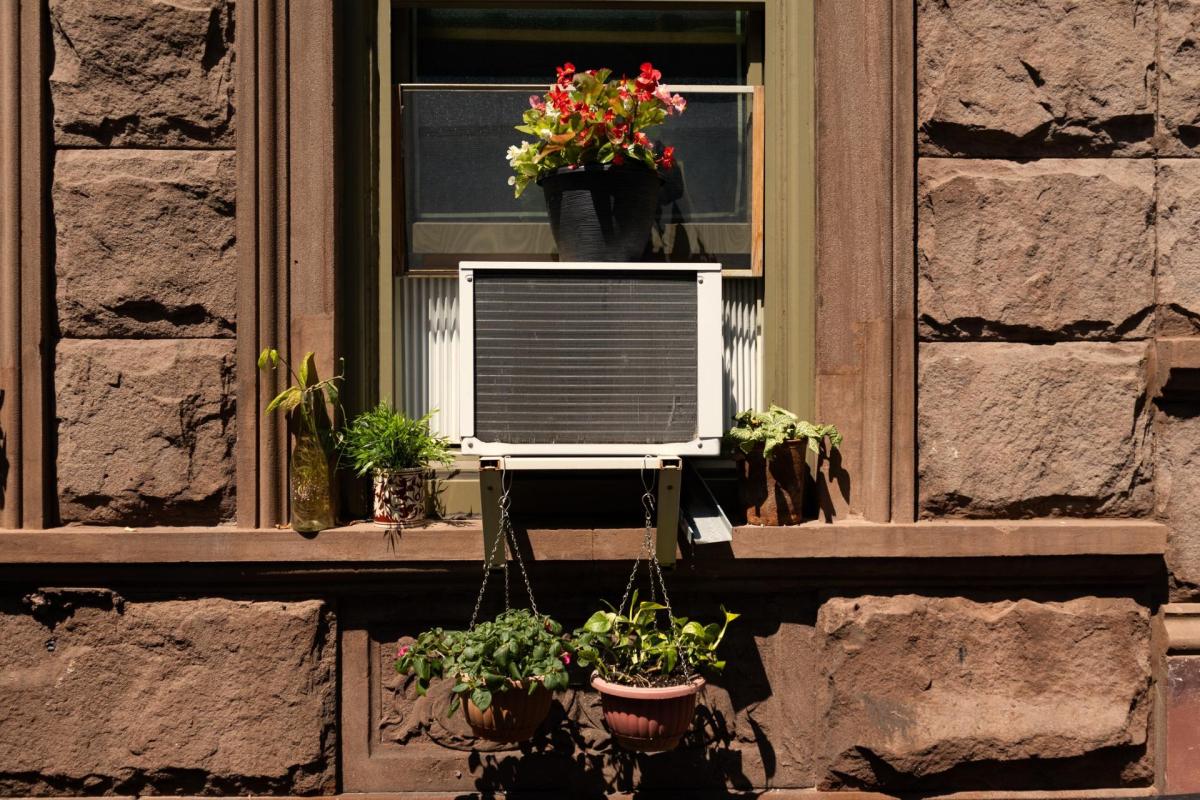
During a heat dome that pushed New York City temperatures into the triple digits, one household stayed cool with window air conditioners and got paid for it.
Here's what to know
Through a program from Every Electric, New York City residents can receive batteries that support window AC use during Con Edison demand-response events, with participants earning about $150 per air conditioner each year for reducing stress on the electric grid.
In a first-person account, Ars Technica reported that the batteries are refilled overnight from ordinary wall outlets and later supply the apartment's AC units during the city's scorching heat dome.
Andrew Wang, co-founder and CEO of Every Electric, told Ars Technica, "Being able to make air conditioners drop off the grid without actually impacting the comfort of residents was really awesome to see."
Adding battery storage is one of the best ways to protect your home during outages, save money on energy, and move closer to going off-grid. It can keep critical devices running and shift electricity use away from expensive peak periods, as this New York City example showed.
Homeowners can explore EnergySage for information about home battery storage options, including competitive installation estimates. EnergySage has teamed up with the electrification brand Qmerit to guarantee you get the best price on home battery storage solutions. For a lower-cost backup option, Pila offers plug-and-play batteries priced at a fraction of what a whole-home backup system would cost.
More background
Wang and co-founder Richard May originally connected during postdoctoral research at Columbia's Electrochemical Energy Center. They launched Standard Potential Company in 2023 around sodium-ion batteries, then later pivoted to distributed home storage and took on the Every Electric name in 2026.
The first summer pilot, in 2025, placed 100 batteries in 65 households. By summer 2026, the program had grown to around 2,000 batteries serving about 1,000 households.
Save $10,000 on solar panels without even sharing your phone number Want to go solar but not sure who to trust? EnergySage has your back with free and transparent quotes from fully vetted providers in your area. To get started, just answer a few questions about your home — no phone number required. Within a day or two, EnergySage will email you the best options for your needs, and their expert advisers can help you compare quotes and pick a winner. Solar panels can save you more than $50k over their 25-year lifespan, and EnergySage can help you save as much as $10k on installation. Which begs the question — isn't that worth an email or two? |

That works out to about four megawatt-hours of storage — roughly the size of a single utility-scale battery block, except distributed in smaller units across apartments and houses throughout the city.
The model is especially relevant in New York City, which has upwards of 2 million rental homes. More than 80% of the city's housing stock is over 50 years old without central air, making residents reliant on window AC units.
Users have included households in Queens and Brooklyn, with some also pairing the batteries with plug-in solar panels to maximize benefits.
What's being done?
Every Electric loans out batteries for a refundable deposit, lowered from $50 to $30 per unit. Residents can also buy one outright for $650.
To get started, residents plug the batteries into wall outlets, register the serial numbers, and connect the units to home Wi-Fi. From there, the systems charge overnight during lower-demand hours and discharge when AC use rises.
The company uses the Bluetti Elite 200 V2 — a 2-kilowatt-hour lithium iron phosphate battery. In addition to running any 120V plug-in air conditioner, it has outlets for devices including fans, air purifiers, laptops, phones, routers, and even refrigerators during blackouts.
The rollout has not been without problems. During extreme heat, voltage reductions from Con Edison contributed to an apartment breaker tripping, which led Every Electric to update battery firmware to lower that risk in older buildings with aging wiring.
Even so, the waitlist exceeded 15,000 batteries in 2026, and the company aims to deploy more than 10,000 batteries in 2027.
"We have new utility territories that are coming to us—they're seeing that you can drop-ship literal megawatt hours to customers as a solution," Wang said. "So we're certainly looking at how to map this model onto new markets."
Where can I learn more?
For more examples of how batteries and cooling technology can cut power use and ease grid strain, check out these stories.
• Across New York, plug-in batteries kept renters cool while easing pressure on the grid.
• Sonnen customers are turning home batteries into virtual power plants that can trim bills.
• In Puerto Rico, households are using shared battery networks to strengthen backup power.
• Buildings are adopting ice battery cooling systems to shift heavy AC demand off-peak.
• Engineers have created a radically redesigned air conditioner that could slash energy costs.

Get TCD's free newsletters for easy tips, smart advice, and a chance to earn $5,000 toward home upgrades. To see more stories like this one, change your Google preferences here.






