


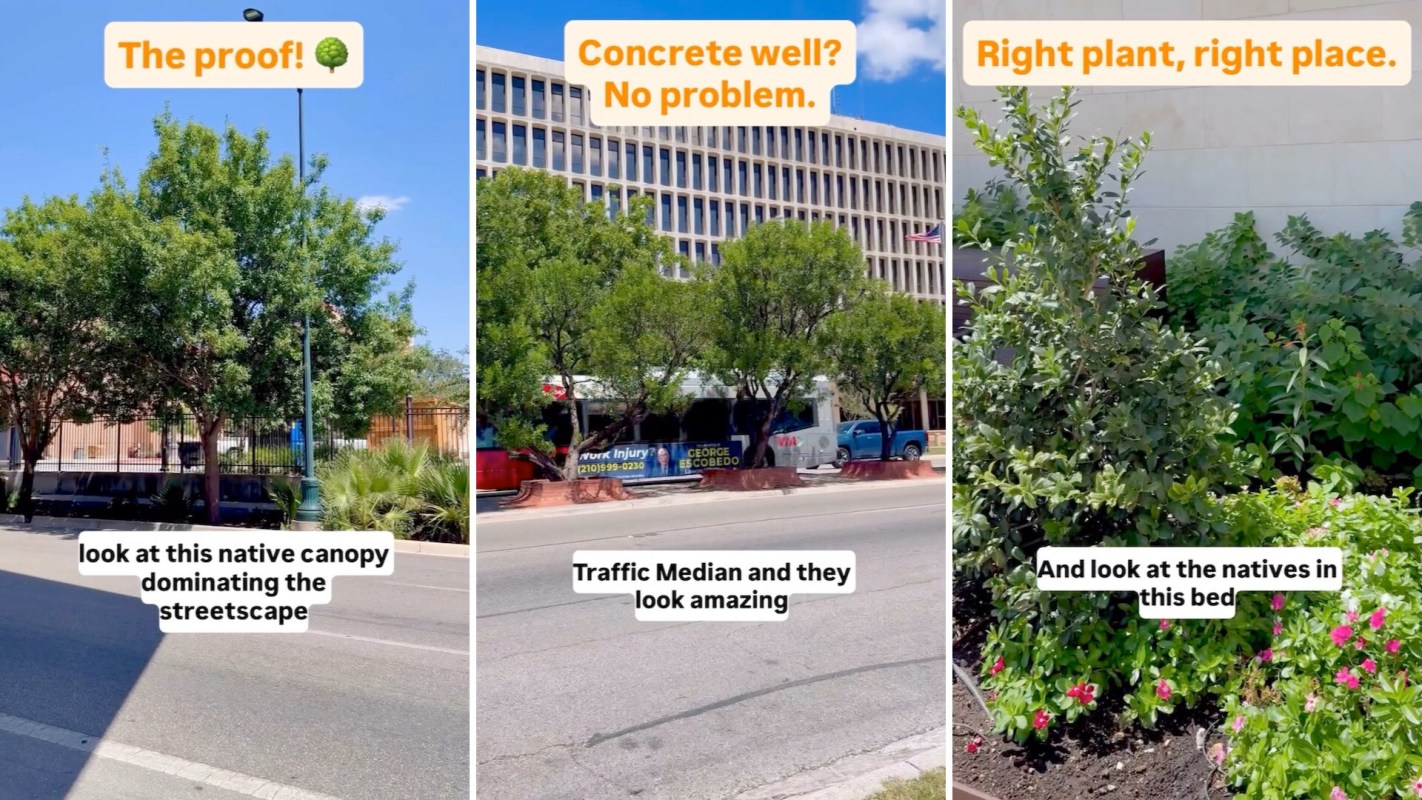
One San Antonio landscape professional is challenging a familiar objection to using native trees in cities — the idea that urban heat makes them impractical.
In the video, filmed among street plantings, the creator said tree failures often have less to do with the species itself than with how the surrounding planting space is designed.
Here's what to know
The San Antonio-based creator behind Glass Root Garden (@glassrootgarden) used an Instagram post to argue that native trees are not inherently unsuited to city conditions.
Rather than viewing urban landscapes as too harsh for local species, the post said many Central Texas natives are already adapted to the same pressures cities create. As the caption put it, "Central Texas natives evolved for extreme heat, drought, and shallow soils. Making them perfectly built for urban heat islands."
As cities work to add more tree cover for shade, cleaner air, and cooling, when trees fail, people may blame the climate or take it as evidence that only imported species can survive. The creator instead said many losses trace back to "terrible, suffocating planting spaces" that restrict roots, water access, and growth.
More background
In places such as San Antonio, where drought and extreme heat are recurring concerns, plant choices can either fit the climate or work against it.
TCD Picks » Quince Spotlight
💡These best-sellers from Quince deliver affordable, sustainable luxury for all




Native plants are often a practical solution because they are adapted to local rainfall, soils, and seasonal changes. A native plant lawn or partial lawn replacement can also reduce the time and money spent on mowing, maintenance, and water bills.
Some options — such as native ground covers, clover, buffalo grass, and xeriscaping — can reduce resource use while still creating attractive outdoor spaces. And even replacing just part of a lawn can bring noticeable benefits, particularly in hot, dry climates.
What can be done?
Matching plants to the site and creating planting spaces that support them means providing enough soil volume, reducing compaction, improving drainage, and allowing room for roots to spread instead of confining trees to tiny cutouts surrounded by concrete.
The same idea can apply at home. Swapping even a section of turf for native plants or upgrading to a natural lawn can reduce watering needs and ongoing yard work. Clover and buffalo grass are two low-maintenance options, while xeriscaping can dramatically reduce outdoor water use in drier regions.
The TCD Guide's page on rewilding your yard offers practical ways to add habitat and lower maintenance without tearing everything out at once.
In that sense, the post shifted the urban-tree discussion away from whether native plants are tough enough and toward whether planting design gives them a real chance to succeed. As the creator wrote, "It's not about searching the globe for tougher exotic species, it's about choosing the right native for the right place, and giving it a decent place to grow."

Get TCD's free newsletters for easy tips, smart advice, and a chance to earn $5,000 toward home upgrades. To see more stories like this one, change your Google preferences here.






