


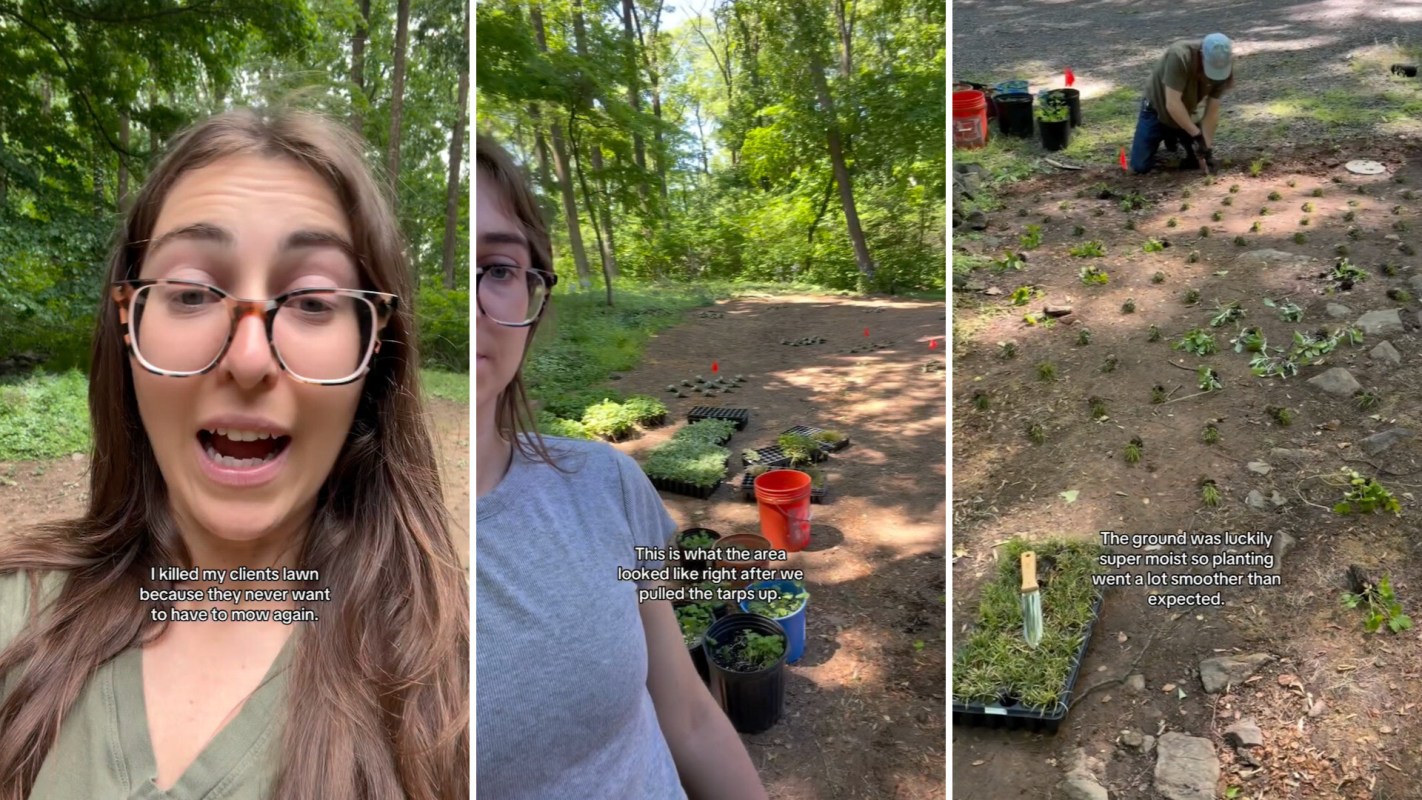
A gardener's dramatic "lawn killing" project is drawing attention online after concerned commenters assumed the newly cleared yard would turn into a muddy mess.
Instead, the client is getting a no-mow native landscape designed to handle shade, rocks, clay, and even moderate foot traffic once established — with much less upkeep over time.
In an Instagram reel, ecological gardener and small-business owner Drea (@dreanaturegirl) shared a client project that replaced a traditional lawn with a matrix of low-growing native plants.
"I killed my client's lawn because they never want to have to mow again," she said in the video.
The post showed the yard just after tarps were removed, prompting some viewers to worry the area had simply been left bare.
Drea responded that she had spent "many hours" selecting plants suited to the site's mix of shade, rocks, dry patches, and moist clay.
TCD Picks » Quince Spotlight
💡These best-sellers from Quince deliver affordable, sustainable luxury for all




The project took roughly six days to plant and followed a matrix-style layout. She said the area used carex and other low-growing species, and that she added an all-natural fertilizer to help it fill in faster.
In her caption, Drea described the original lawn as "barely used, not providing anything for the environment, and constantly being mowed."
A native-plant alternative to a conventional lawn can reduce mowing, trimming, and watering, saving homeowners time and money. Lower irrigation needs can also mean lower water bills, especially in places where standard grass struggles without frequent watering.
Unlike a basic turf lawn, native plantings can also support pollinators and create habitat, making outdoor spaces more beneficial for the surrounding environment.
Homeowners do not have to fully transform their yards to see those benefits. Even a partial replacement can reduce maintenance while making a landscape more resilient.
Other lower-maintenance alternatives include clover, buffalo grass, and xeriscaping, depending on local climate and how the yard is used.

Get TCD's free newsletters for easy tips, smart advice, and a chance to earn $5,000 toward home upgrades. To see more stories like this one, change your Google preferences here.






