


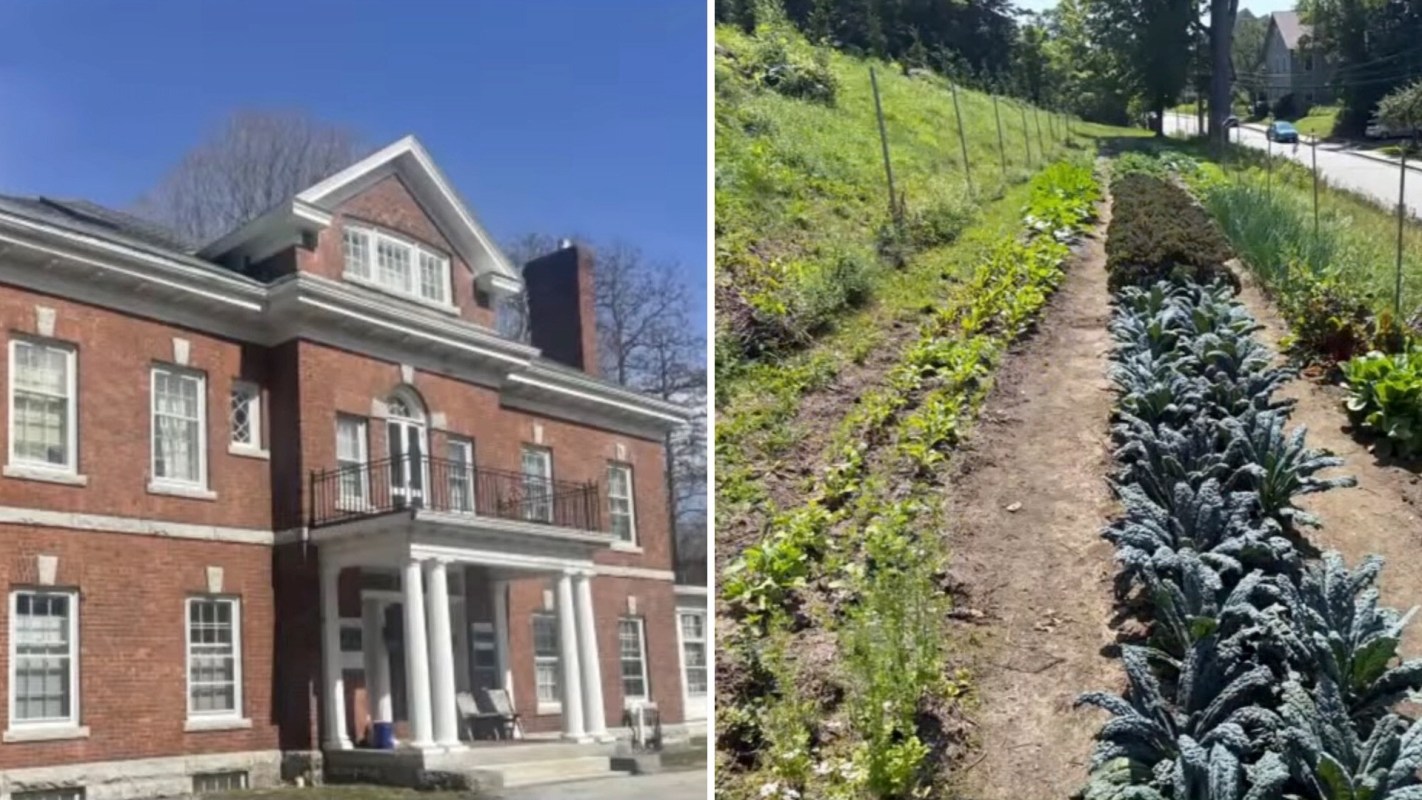
In Montpelier, Vermont, a mansion dating to 1907 is being repurposed in an unexpected way.
After about a decade as office space, the property is now becoming a shared-living community called Threshold Village, and its former parking area has been planted with peas, oats, and tillage radishes.
What's happening?
According to The Bridge, the colonial-style house sits on 3.6 acres and is being renovated to include 13 bedrooms, eight bathrooms, and around 3,000 square feet of common space, including a spa and movement room.
Organic farmer Tom Stearns, who founded High Mowing Organic Seeds in 1996, is leading the effort with collaborators that include consultant and activist Geraldine Vatan. The team said the project is meant to function not as a standard rental property but as an intentional community centered on shared power, care, and belonging.
In Stearns' view, the project is meant to test different ways of living. He told The Bridge, "We have not figured out how to live with each other and how to live on the planet. I think we need laboratories to experiment and learn new ways of being."
Instead of relying on a traditional consensus model, the community plans to use sociocracy, with members participating in circles devoted to topics such as food, land, finances, membership, and stewardship.
TCD Picks » Quince Spotlight
💡These best-sellers from Quince deliver affordable, sustainable luxury for all




Why does it matter?
One appeal of shared living is the ability to combine resources and lower expenses. The Bridge reported that residents pay between $1,250 and $1,750 a month, which includes utilities, pantry basics, farm produce, and access to an electric smart car, and 5% of those fees goes into an emergency fund for unexpected costs such as car repairs, job loss, or health issues.
There are also environmental considerations: renovating an existing structure can avoid some of the waste tied to new construction, and turning a former 30-car parking lot into growing space shifts that land toward food production.
The arrangement is still taking shape, and the group is continuing to work through issues including ownership and how to handle resident turnover.
What's being done?
The Bridge reported that Stearns bought the property in 2025 for $2 million through a low-profit, mission-driven LLC financed by credit union loans and community solidarity funding. The long-term aim is co-ownership, which the group believes better reflects its values.
Vatan has described her job as "making sure there's no rot in the seed," and she has said inclusion is a core part of the project. "We want everybody at the table," she said, per The Bridge. "And yes, it's going to be a safer place for people who are different. But the idea is not to create a clique."
Even without adopting the full model, people can still cut costs by sharing transportation, splitting pantry staples, growing food in overlooked spaces, or setting up emergency savings with housemates or relatives.
Kelsey Poli, who left banking during the pandemic and then spent time in retreat centers and intentional communities, put it this way, per The Bridge: "I've realized that I'm nourished in spaces where I can fully, freely be myself."
Stearns describes Threshold Village as "really a laboratory — a social experiment."
Vatan, for her part, is already thinking long term: "I'm asking the universe … send us lifers, please."

Get TCD's free newsletters for easy tips, smart advice, and a chance to earn $5,000 toward home upgrades. To see more stories like this one, change your Google preferences here.






